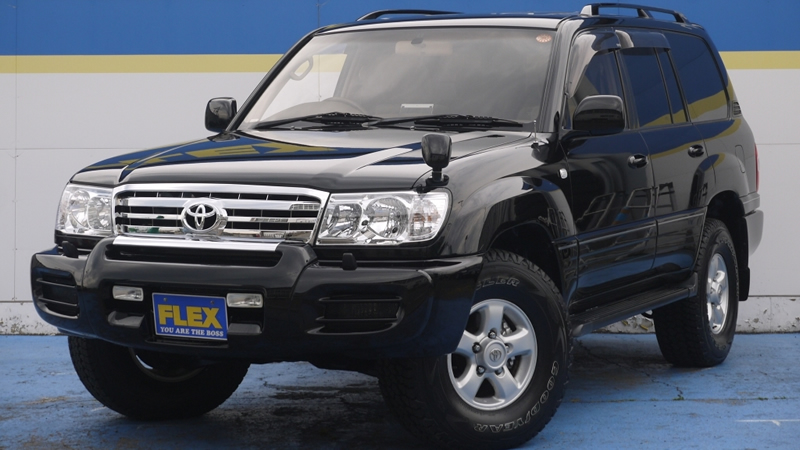
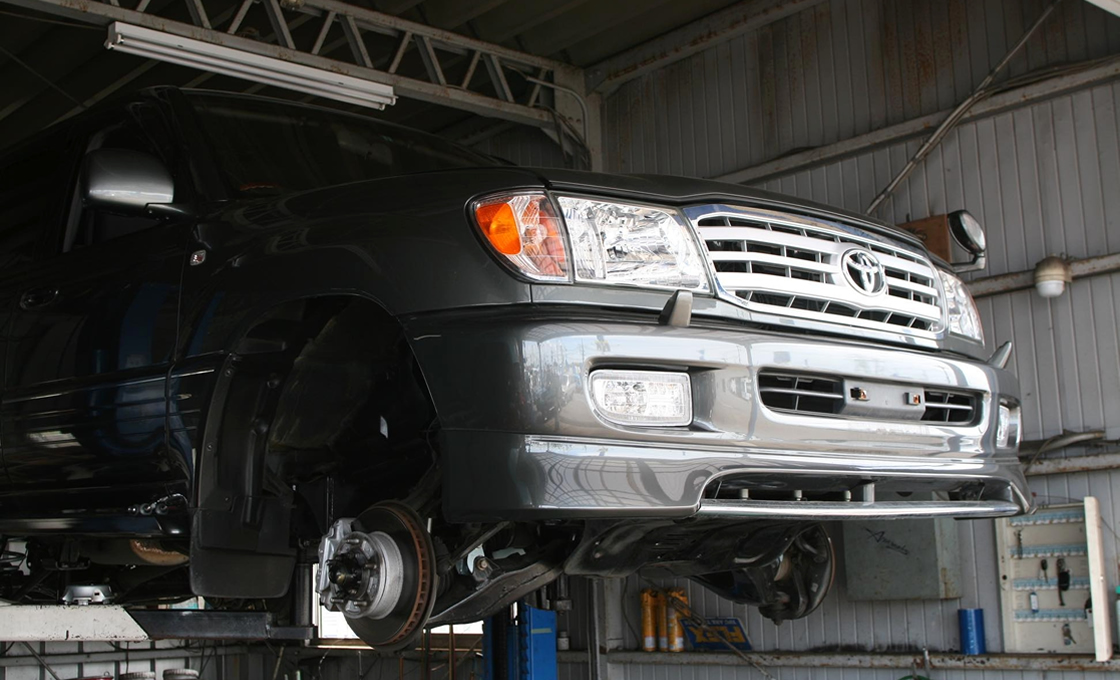
The Toyota Land Cruiser 100 Series was sold in the US for ten model years, from 1998 through 2007. It was the first Land Cruiser with a V8 and the first with independent front suspension, and it kept the same 4.7L engine family the whole way through.
That makes the years look alike. They are not. The traction systems, the transmission, the airbags, and the engine output all changed along the way, and a 1999 and a 2006 suit very different owners.
We sell 100 Series Land Cruisers imported from Japan, and we have handled many US-market trucks as well. This guide walks through every model year, shows what actually changed, and explains which years fit which kind of buyer. It also covers the Japanese-market trucks, which followed their own timeline.
- 100 Series Best Years: The Quick Answer
- 100 Series Model Years at a Glance
- Year-by-Year Changes
- Best 100 Series Years to Buy
- 100 Series Years to Approach With Caution
- Is the 100 Series Reliable? Common Problems by Year
- Land Cruiser 100 vs. Lexus LX 470: Which Years Line Up
- What a 100 Series Costs in 2026: Prices by Year
- JDM 100 Series Years: What Changes When You Import
- Which 100 Series Year Should You Buy?
- What to Check Before Buying Any Year
- Frequently Asked Questions
- Conclusion
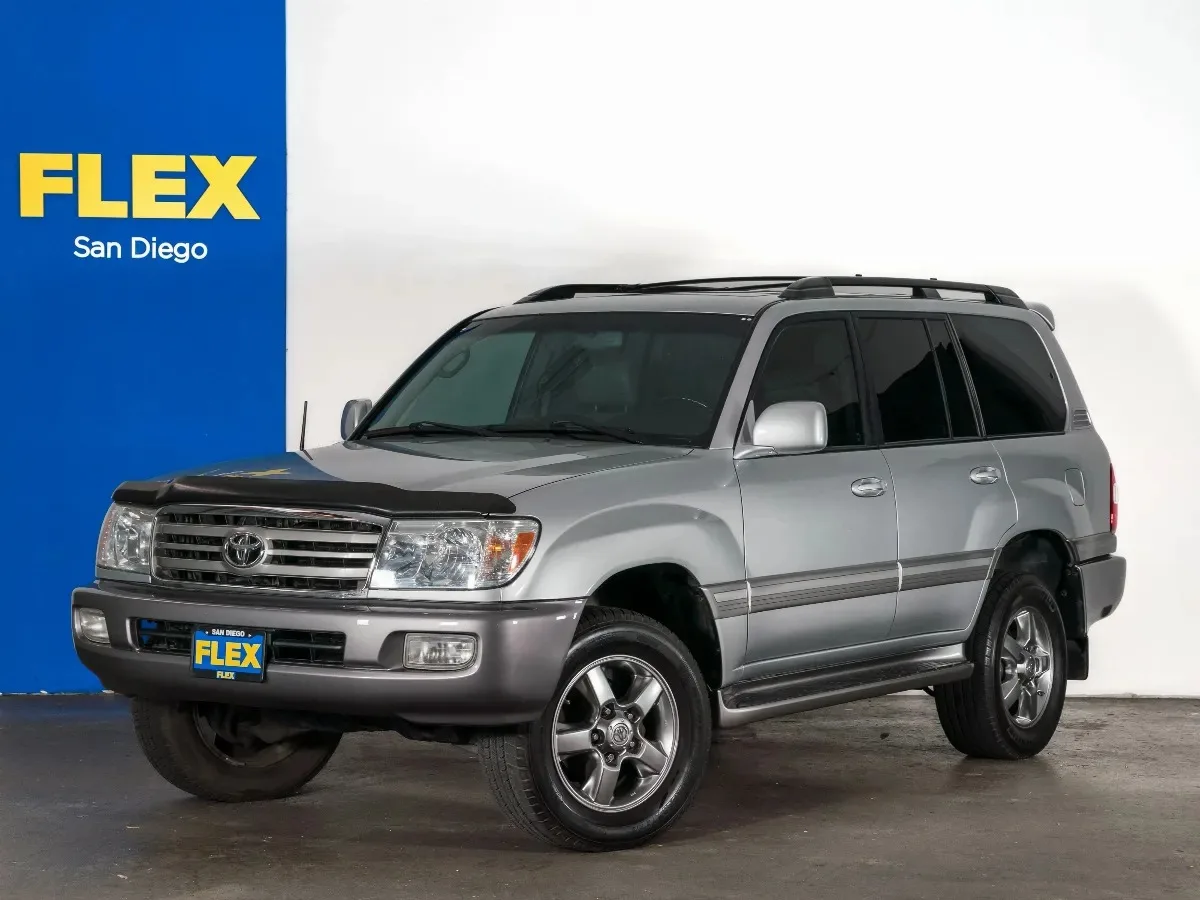
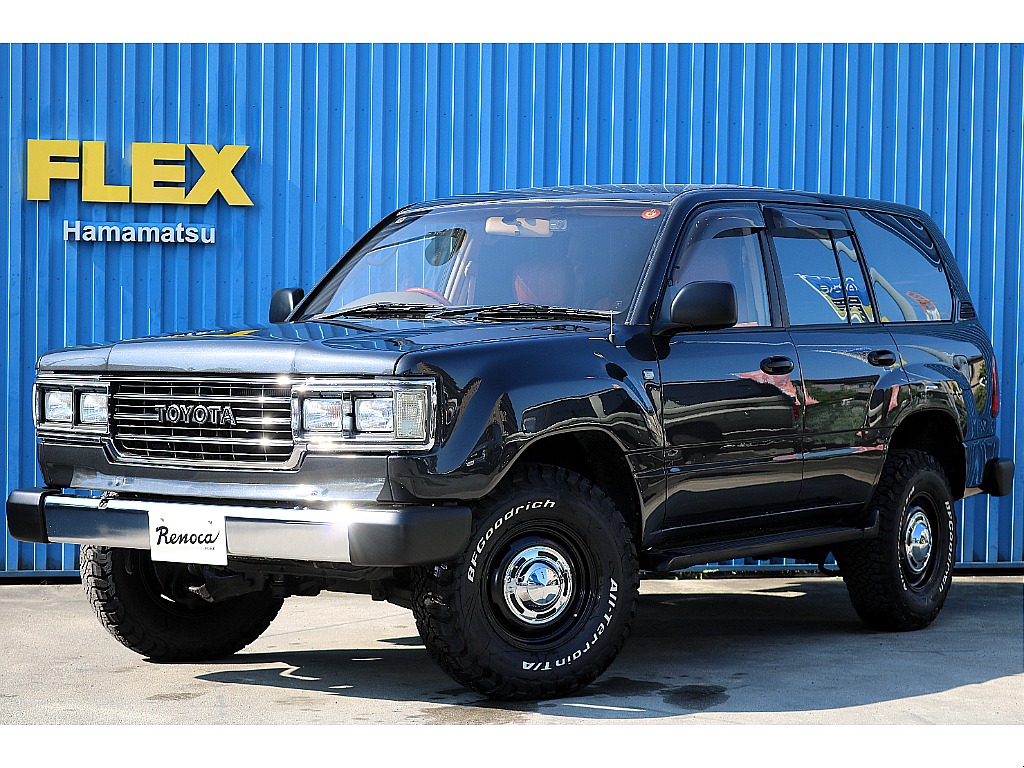
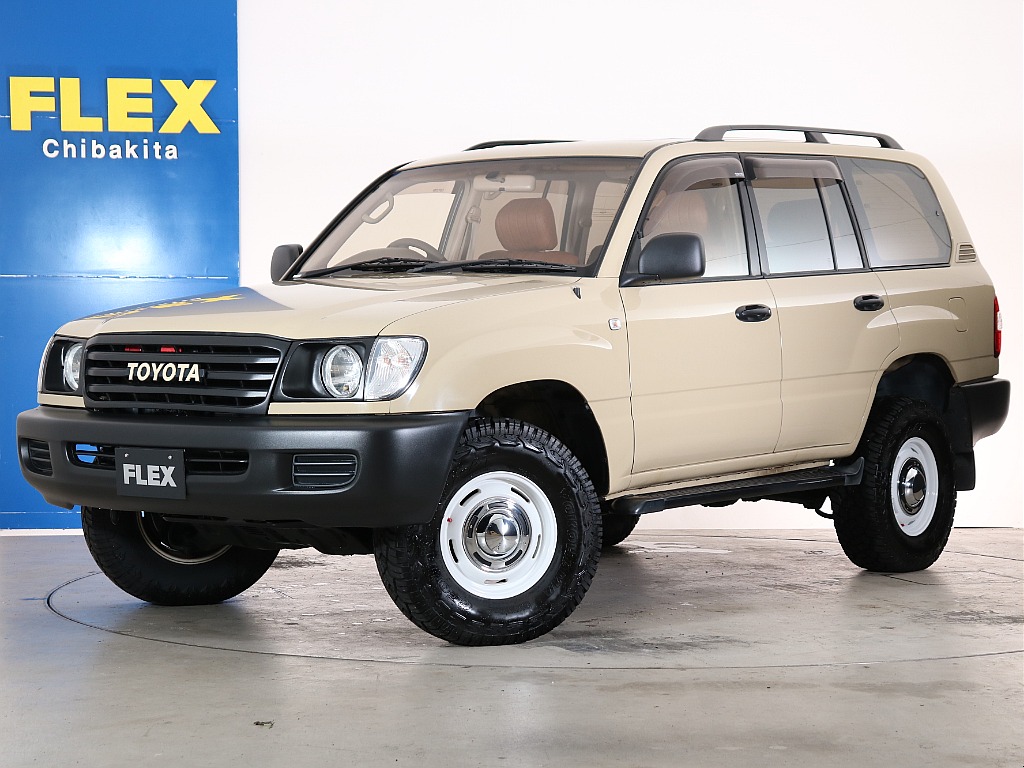
100 Series Best Years: The Quick Answer
| Pick | Years | Why |
|---|---|---|
| Best for most buyers | 2003–2005 | Five-speed automatic, traction and stability control, optional side and curtain airbags, and no height-control suspension to maintain |
| Most power | 2006–2007 | VVT-i raised output to 275 hp for 2006; height-control suspension became an option, so check which setup a truck has |
| Budget pick | 2000–2002 | Traction and stability control became standard for 2000, with the simpler four-speed automatic |
| Off-road pick | 1998–1999 | The only US years with an optional factory rear locking differential, but no traction or stability control |
| Approach with caution | Any year without records | Condition and service history matter more than the model year |
No 100 Series year is a true “year to avoid.” NHTSA lists no safety recall for US-market Land Cruisers from 1998 through 2002, and the recalls on later years are an airbag control module on trucks with curtain airbags and a labeling issue. The differences below are about equipment and age, not about one year being built badly.
100 Series Model Years at a Glance
Every US-market 100 Series has the 4.7L 2UZ-FE V8, full-time four-wheel drive with a locking center differential, and an automatic transmission. The table shows what changed. Figures for 2001 through 2007 come from Toyota’s US brochures for each year. Figures for 1998 through 2000 come from Toyota’s own history of the model, Consumer Guide, and the specialist shop Slee Off-Road.
| 1998–1999 | 2000–2002 | 2003–2005 | 2006 | 2007 | |
|---|---|---|---|---|---|
| Output | 230 hp, 320 lb-ft | 230 hp, 320 lb-ft | 235 hp, 320 lb-ft | 275 hp, 332 lb-ft | 265 hp, 310 lb-ft |
| Transmission | 4-speed automatic | 4-speed automatic | 5-speed automatic | 5-speed automatic | 5-speed automatic |
| Traction and stability control | Not offered | Standard | Standard | Standard | Standard |
| Rear locking differential | Optional | Not offered | Not offered | Not offered | Not offered |
| Side and curtain airbags | Not offered | Not offered | Optional | Optional | Optional |
| Height-control suspension (AHC) | Not offered | Not offered | Not offered | Optional | Optional |
| Standard wheels | 16-inch | 16-inch | 17-inch (18-inch from 2005) | 18-inch | 18-inch |
Toyota’s brochures call the traction system Active TRAC in 2001 and TRAC from 2002. Owners usually call it A-TRAC, and we use that name below.
For full dimensions and equipment, see our Land Cruiser 100 Series specs guide. Our guide to the early, mid-term and late 100 Series differences follows the Japanese-market changes.
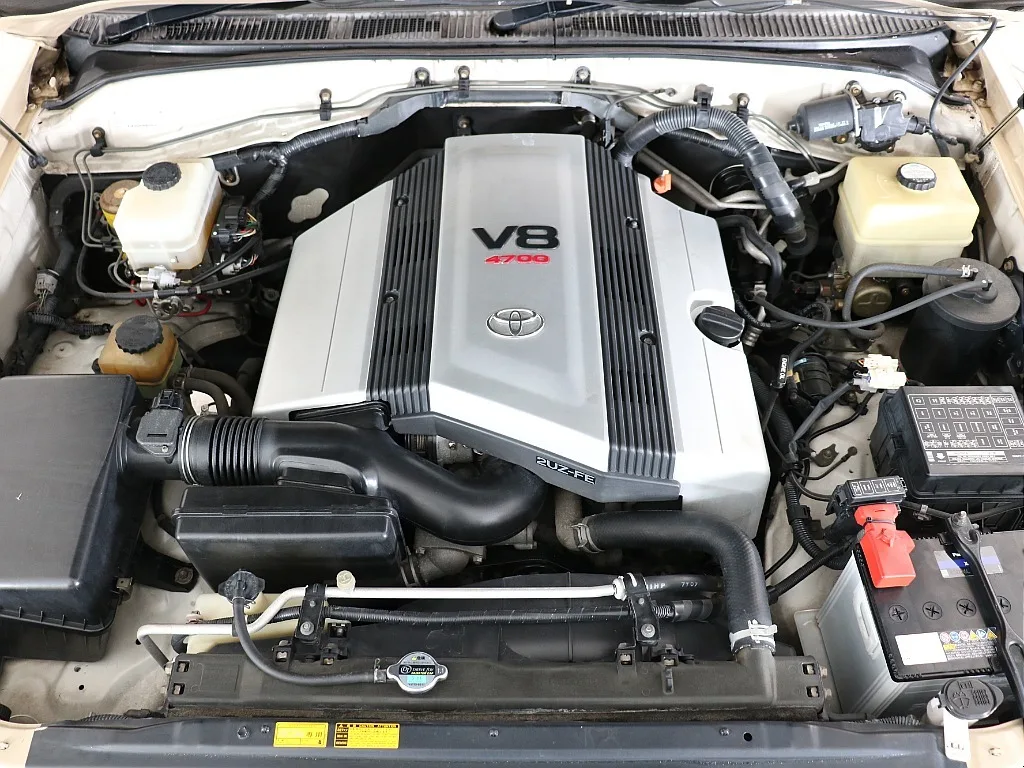
Year-by-Year Changes
1998 Toyota Land Cruiser
The 100 Series arrived for 1998 with a 230-hp 4.7L V8, the first V8 in a Land Cruiser, and the model’s first independent front suspension. Toyota says the new chassis was 50 percent stiffer than before. The truck seated five, with a third row as an option.
According to Slee Off-Road, an electric rear locking differential was optional, and the front differential used two pinion gears. For a buyer today, a 1998 is the simplest 100 Series: no stability control and no traction control, and a rear locker if the first owner ordered it.
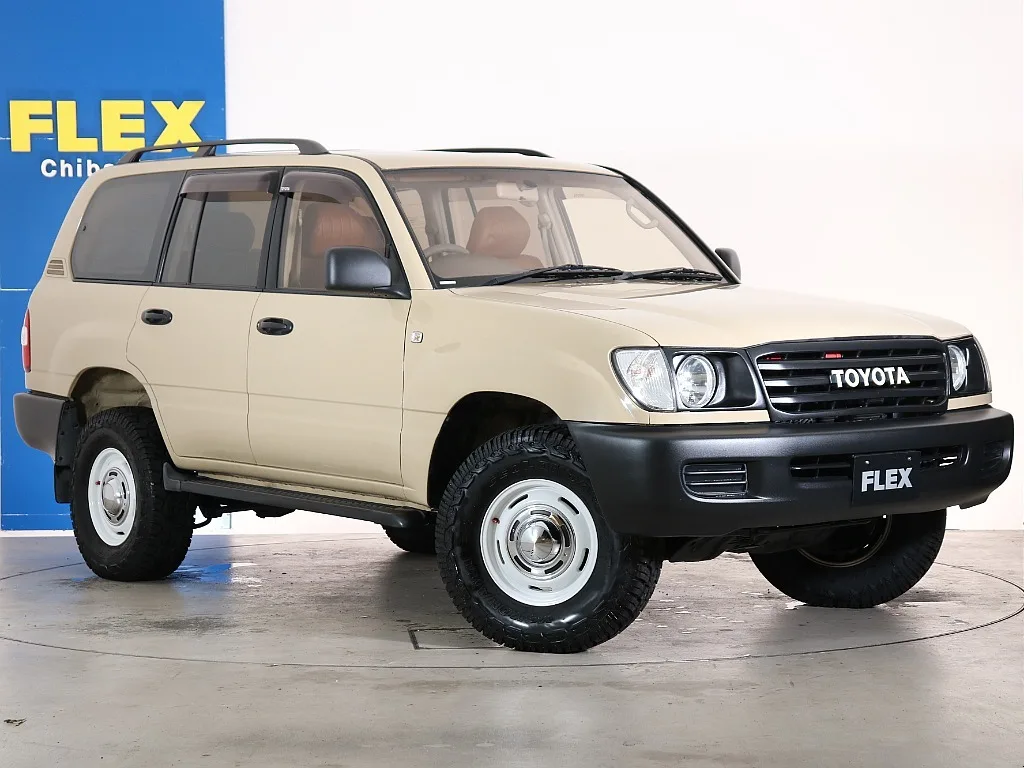
1999 Toyota Land Cruiser
The 1999 truck was nearly unchanged. Consumer Guide lists one addition, rear air conditioning as an option that came with the third-row seat. The rear locker option continued.
If you want a US-market 100 Series with a factory rear locker, 1998 and 1999 are the only years to look at. Check that the locker is actually fitted, because it was an option.
2000 Toyota Land Cruiser
This is the first big change. Consumer Guide reports that traction control and stability control became standard for 2000, along with a moonroof and leather seats. Slee Off-Road adds that the rear locker option was dropped and the front differential changed from two pinion gears to four.
For most drivers the 2000 truck is the better road vehicle, since A-TRAC brakes a spinning wheel on its own. The trade is that no later US-market 100 Series could be ordered with a rear locker.
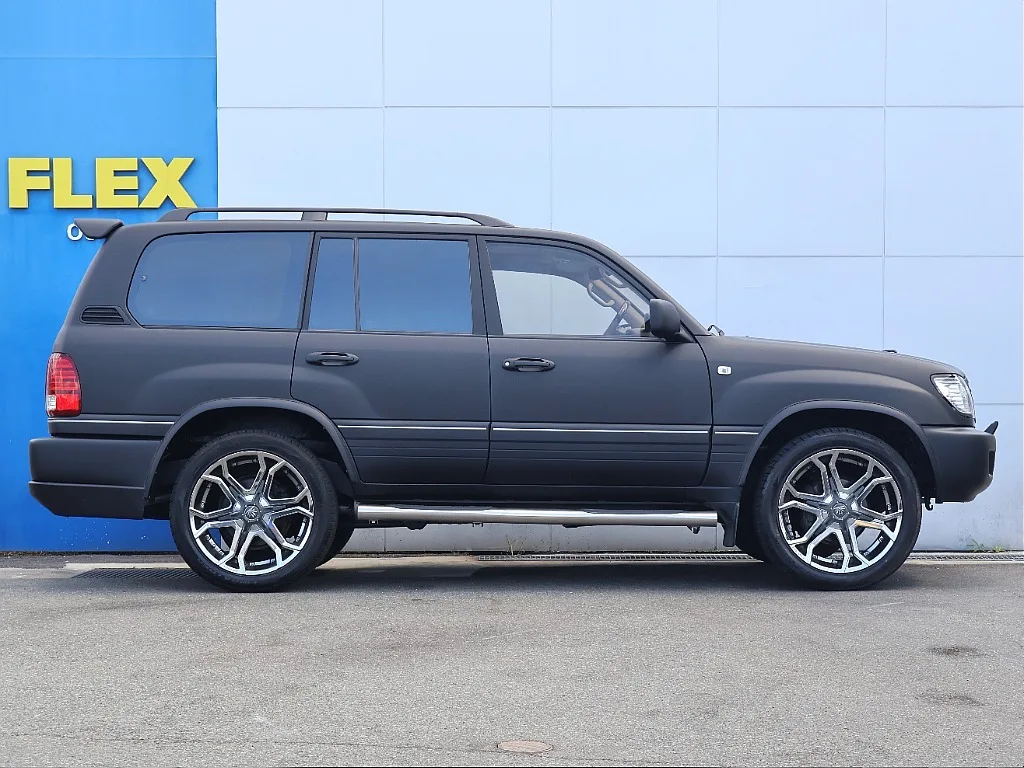
2001 Toyota Land Cruiser
Toyota’s 2001 brochure adds a DVD-based navigation system with a 7-inch screen as an option. The engine stayed at 230 hp, and the brochure lists towing capacity at 6,500 lb with the right hitch.
A 2001 with navigation has an early screen that few owners rely on now. It is not a reason to pay more, and it is not a fault.
2002 Toyota Land Cruiser
The third-row seat and an independent automatic rear climate system became standard for 2002, according to Toyota’s 2002 brochure. That made every truck an eight-seater. The four-speed automatic and 230-hp rating carried over.
This is the last year of the four-speed. Some general “years to avoid” lists single out 2002, but we found no recall or Toyota bulletin that supports doing so.
2003 Toyota Land Cruiser
The 2003 model year brought the mid-cycle update. Toyota’s 2003 brochure shows a five-speed automatic in place of the four-speed, 235 hp, 17-inch wheels with 18-inch wheels as a new option, and a rear axle ratio of 4.10 in place of 4.30. Seat-mounted side airbags and side curtain airbags for the first two rows became options.
The brochure also lists a power tilt and telescoping steering wheel and steering-wheel audio controls as standard. For highway driving, the extra gear is the change most likely to matter.
2004 Toyota Land Cruiser
Toyota’s 2004 brochure shows the same engine and transmission as 2003. The navigation option gained a backup camera, Bluetooth, and voice control.
Slee Off-Road notes that the transmission dipstick was deleted for 2004. A Toyota service bulletin confirms that Land Cruisers from 2004 on use WS transmission fluid, which is not compatible with the earlier fluid.
2005 Toyota Land Cruiser
The only change we could confirm for 2005 is that 18-inch wheels became standard, as Toyota’s 2005 brochure shows. Output stayed at 235 hp.
The 2005 is the last year before the engine update. If you want the five-speed in a truck outside the 2006–2007 secondary air injection bulletin, this is the newest year that fits.
2006 Toyota Land Cruiser
For 2006 the V8 gained VVT-i variable valve timing. Toyota’s 2006 brochure lists 275 hp and 332 lb-ft, and Toyota’s price announcement calls that an increase of 40 hp over 2005. The same announcement adds an optional hydraulic height-control suspension, known as AHC. Before 2006, AHC was not offered on the US-market Land Cruiser. The same announcement lists a new grille, headlamps and taillamps for 2006.
Consumer Guide lists 2006 as unchanged. Toyota’s own documents show otherwise, so we follow Toyota.
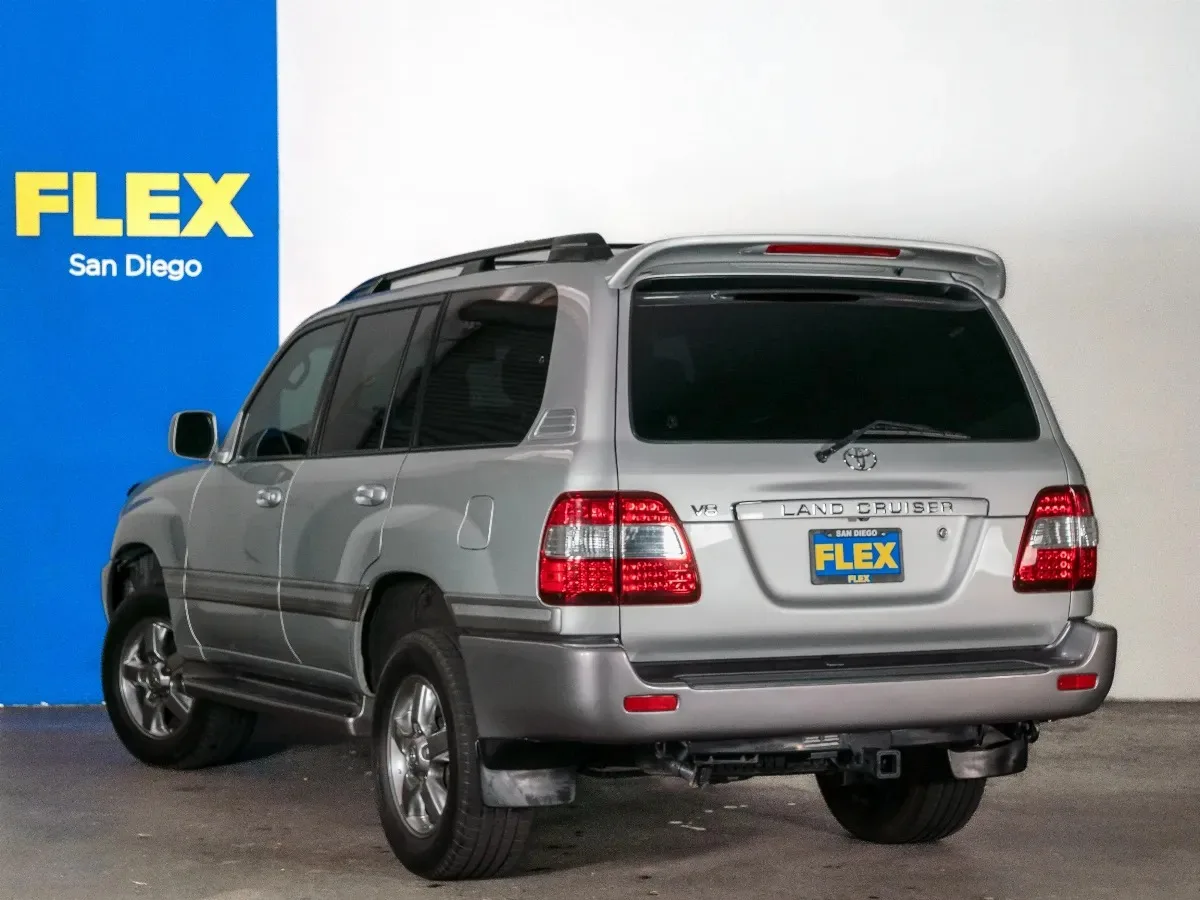
2007 Toyota Land Cruiser
The final year lists 265 hp and 310 lb-ft in Toyota’s 2007 brochure, down from the 2006 figures. We found no Toyota document that explains the change, and no evidence of a hardware difference. The 2007 brochure also lists a tire pressure monitor as standard. Toyota’s 2006 price announcement already describes it as standard, although the 2006 brochure does not list it.
The 200 Series replaced the 100 for the 2008 model year. If you are also considering that generation, see our Land Cruiser 200 best years guide.
Best 100 Series Years to Buy
2003–2005: The Best Years for Most Buyers
These three years have the five-speed automatic, standard traction and stability control, and the option of side and curtain airbags. They do not have the height-control suspension, and they are not covered by the 2006–2007 emissions bulletin described below.
Some owners reach the same answer. In an Expedition Portal thread on this question, at least three of the nine people who replied on the first page pointed to 2003 or later, and one of them summed it up as “03 and up is what you want.”
2006–2007: The Most Power
The VVT-i engine is the strongest in the US-market 100 Series, and these are the newest trucks. Two points need checking. First, AHC was an option in these years, so find out whether a truck has it. Second, a Toyota service bulletin covers check-engine lights caused by the secondary air injection system on 2006 and 2007 Land Cruisers.
Neither point rules these years out. They do mean a 2006 or 2007 deserves a closer look at its service history than a 2005.
2000–2002: The Budget Pick
These years add traction and stability control to the original four-speed truck. They share the 230-hp engine with the early trucks and have the four-pinion front differential that Slee Off-Road describes.
For a buyer who wants a 100 Series for daily use and trips, and does not need the fifth gear, these years cover the essentials.
100 Series Years to Approach With Caution
Several websites tell readers to avoid 1999, 2000, and 2002. We checked their reasoning. The lists rely on owner complaint counts of roughly 15 to 40 per model year, collected over more than 20 years, and none cites a recall or a Toyota bulletin. We do not think that supports avoiding a year. The points below are the ones we would weigh instead.
1998–1999: No Traction or Stability Control
These trucks have no A-TRAC and no stability control, which are difficult to add later. They also have the two-pinion front differential. Some owners on IH8MUD report breaking front differentials during hard off-road driving. On the first page of one thread that collects these reports, four of the nine failures were 1998 or 1999 trucks, and the rest were later ones.
The appeal is real as well. These are the only US years with the optional rear locker, and some off-road owners choose them for that reason.
Any Year With No Maintenance Records
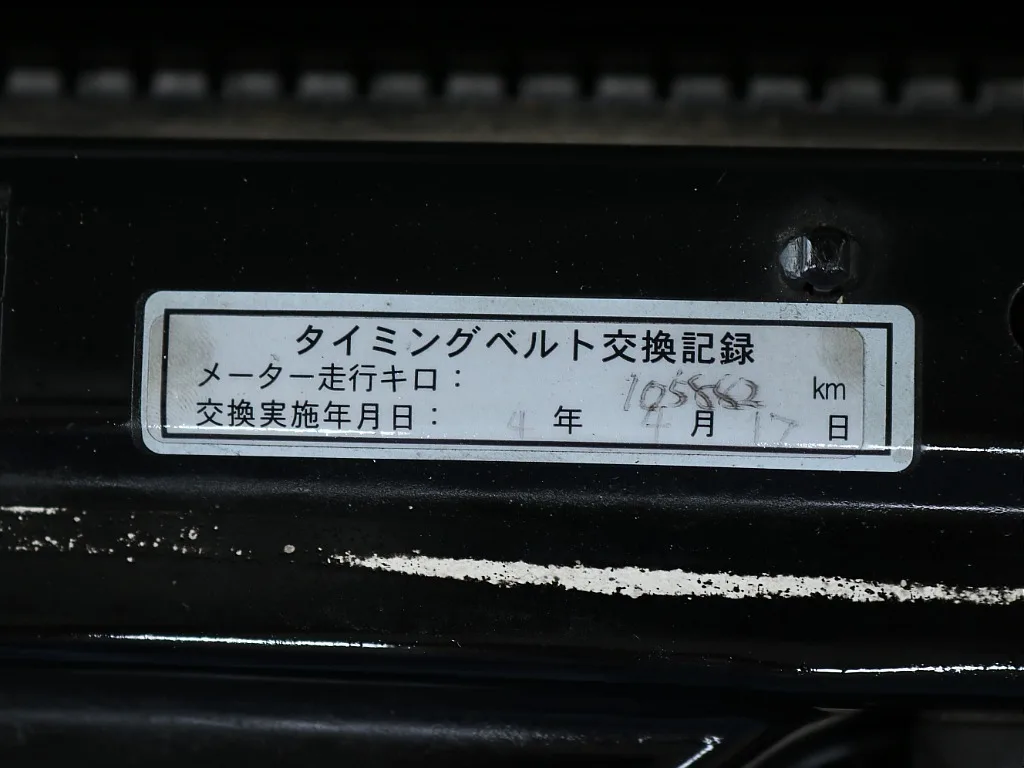
A 100 Series is now 19 to 28 years old. A 2001 with a full file of receipts is a safer purchase than a 2006 with none. Ask for proof of the timing belt service in particular, because it is due on a schedule rather than by symptom.
Is the 100 Series Reliable? Common Problems by Year
The 100 Series has a strong reputation, and nothing in the recall record contradicts it. NHTSA lists no recall for 1998 through 2002 US-market trucks. For 2003 through 2006 trucks with side curtain airbags, recall 16V065 replaces an airbag control module that could deploy the curtain airbags unexpectedly. Ask whether that recall was completed.
The items below are age and mileage issues that owners and specialist shops report.
Timing Belt and Water Pump on the 2UZ-FE
The 2UZ-FE uses a timing belt. Toyota’s 2006 maintenance guide calls for replacement at 90,000 miles or 108 months, and the specialist shop CARspec gives the same 90,000-mile interval for the engine and describes a job where the water pump was replaced along with the belt. On a truck with no record of the service, plan to do it soon after purchase.
Front Differential on 1998–1999 Trucks
As noted above, 1998 and 1999 trucks use a two-pinion front differential and later trucks use four. Slee Off-Road reports the change without calling the early unit faulty. Owners on IH8MUD disagree about how common failures are. Several of the reports they share involve a front wheel lifting or hopping and then gripping suddenly off-road. For road use, we would not treat this as a reason to pass on an early truck.
Exhaust Manifold Cracks
CARspec describes a ticking noise caused by a small crack in the driver’s-side exhaust manifold as a “fairly common complaint” on this engine. The noise often fades as the engine warms up. Listen to a cold start before you buy. The sources we found do not tie this to particular model years.
Brake Booster, Starter and Heater Tees
Three more items come up often among owners, and none is tied to a model year.
- Brake booster and master cylinder: in an IH8MUD poll of 1,879 owners, 72.5 percent said they had never had a total or near-total brake failure. Most of those who had were past 150,000 miles. Owners in a 2026 thread reported shop quotes of about $2,000 to $4,000 for the replacement.
- Starter: Slee Off-Road notes that the starter contacts can wear and that the starter sits under the intake manifold. Ask a shop for a labor quote before assuming it is a quick job.
- Heater tees: a long-running IH8MUD thread describes plastic fittings in the heater hoses near the firewall that become brittle and can crack, which drains coolant. Its author suggests replacing them as a cheap precaution at the 90,000-mile service.
Rust and Frame Condition
Rust depends on where a truck has lived, not on its year. In one IH8MUD thread, a Montana owner of a 2002 truck reported a hole in the rear crossmember and thinning rear body mounts, and a Michigan owner of a 2000 truck described cutting out rusted rocker and frame sections. Look at those areas first on any truck from a cold-weather region.
Land Cruiser 100 vs. Lexus LX 470: Which Years Line Up
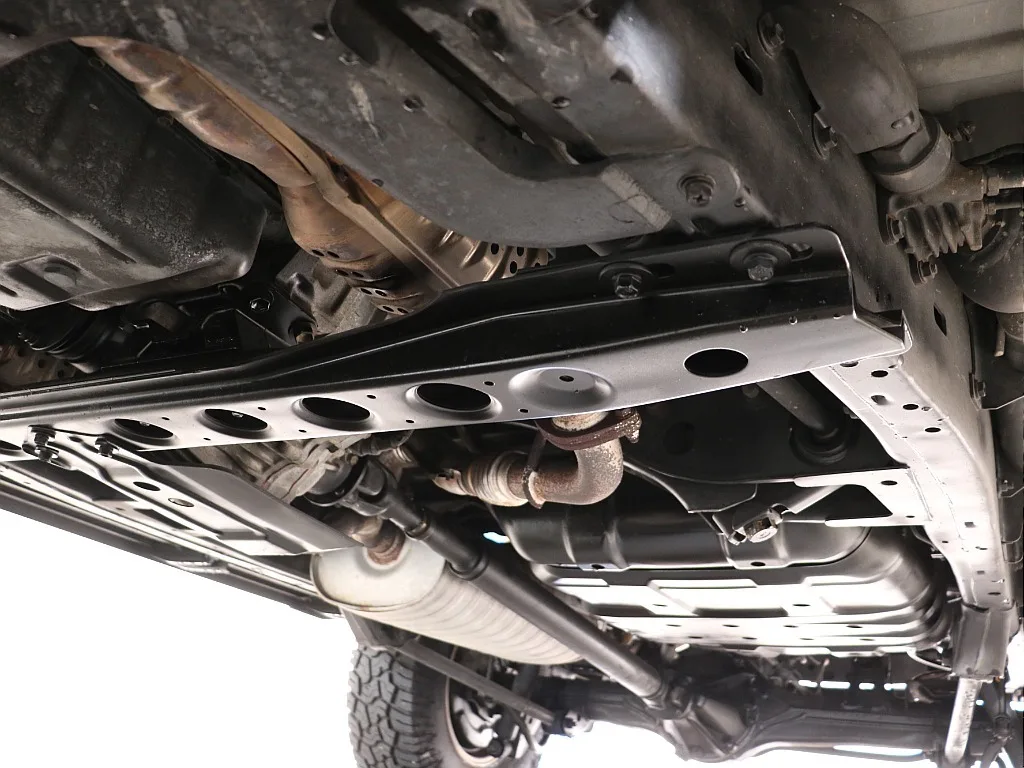
The Lexus LX 470 shares the 100 Series platform and engine, and it was sold over the same 1998 to 2007 model years. The main mechanical difference is the suspension. According to Slee Off-Road, the LX 470 had height-control and adaptive suspension as standard equipment from 1998, while the Land Cruiser only offered AHC as an option from 2006.
That gives a simple rule. If you want the conventional suspension, look at a Land Cruiser from 1998 through 2005, or check the options list on a 2006 or 2007. If you want the adjustable ride height, the LX 470 has it in every year. Our guides to Lexus LX 470 reliability and LX 470 towing capacity cover that model in detail.
What a 100 Series Costs in 2026: Prices by Year
Mileage and condition move 100 Series prices more than the model year does. The auction tracker OldCarsData showed these figures for completed auction sales in US dollars over the previous 12 months, as of November 19, 2026.
| Measure | Price |
|---|---|
| Median sale price | $19,500 |
| Middle half of sales | $14,000 to $33,375 |
| Top 10 percent of sales | $48,000 and up |
The site’s recent results show the spread. From November 1 through 18, 2026, trucks with more than 170,000 miles sold for $12,000 to $20,500 on Bring a Trailer, and a 1999 with about 175,000 miles sold for $33,750 on Cars & Bids. Trucks with about 70,000 miles sold for $25,250 to $44,000, and a 2004 with 25,000 miles reached $65,000.
The tracker also lists medians by model year, but each year has only 5 to 25 sales, so one low-mileage truck can shift the number. We would not read those figures as proof that one year is worth more than another.
Our own trucks are priced individually. You can see current prices on our Land Cruiser 100 inventory page. Listed prices do not include tax or transport, and each listing page shows the total for your location or lets you request a total estimate.
JDM 100 Series Years: What Changes When You Import
Toyota launched the 100 Series in Japan on January 19, 1998. The Japanese-market trucks are right-hand drive and followed their own schedule, so US model-year rules do not carry over. Equipment such as airbags, traction control, and emissions hardware differs from US-market trucks, and it should be checked on each vehicle.
As of November 19, 2026, the three 100 Series trucks we have available for import are Japanese-market gasoline models: one from 1998 and two from 2000, in VX Limited and VX Limited G Selection grades.
Gasoline Models: The 2UZ-FE
Japanese-market wagons use the same 4.7L 2UZ-FE engine family. Toyota’s 1998 launch release rates it at 235 PS, which is about 232 hp. Toyota’s 2007 release for the 200 Series describes VVT-i as an addition on the new model.
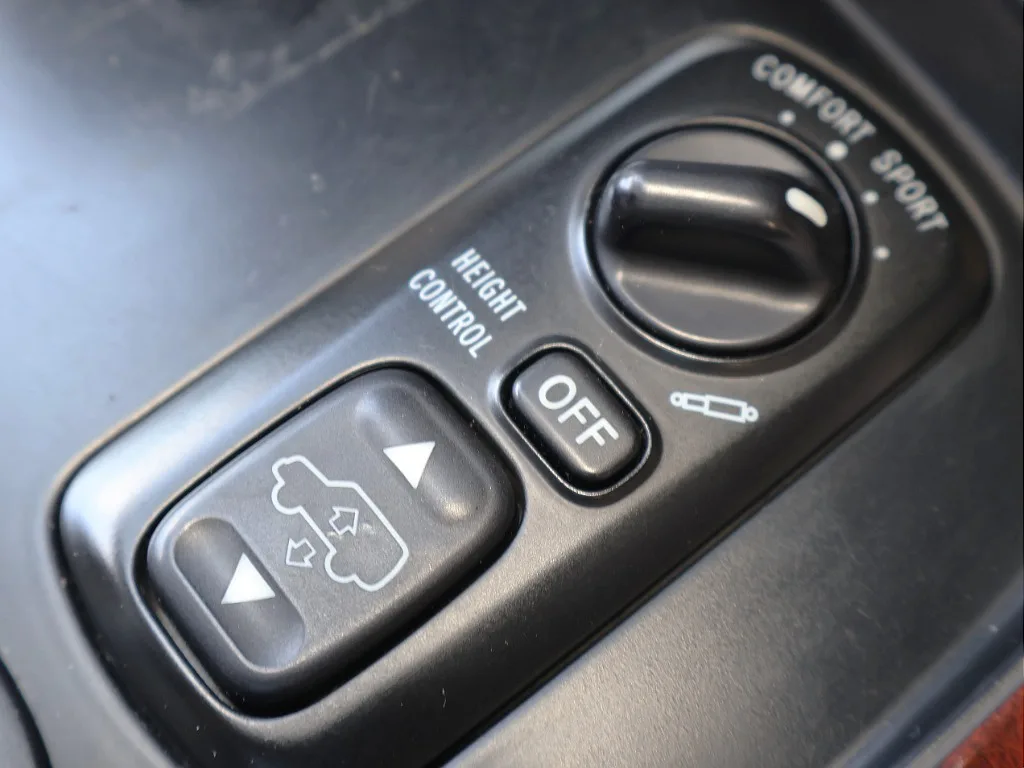
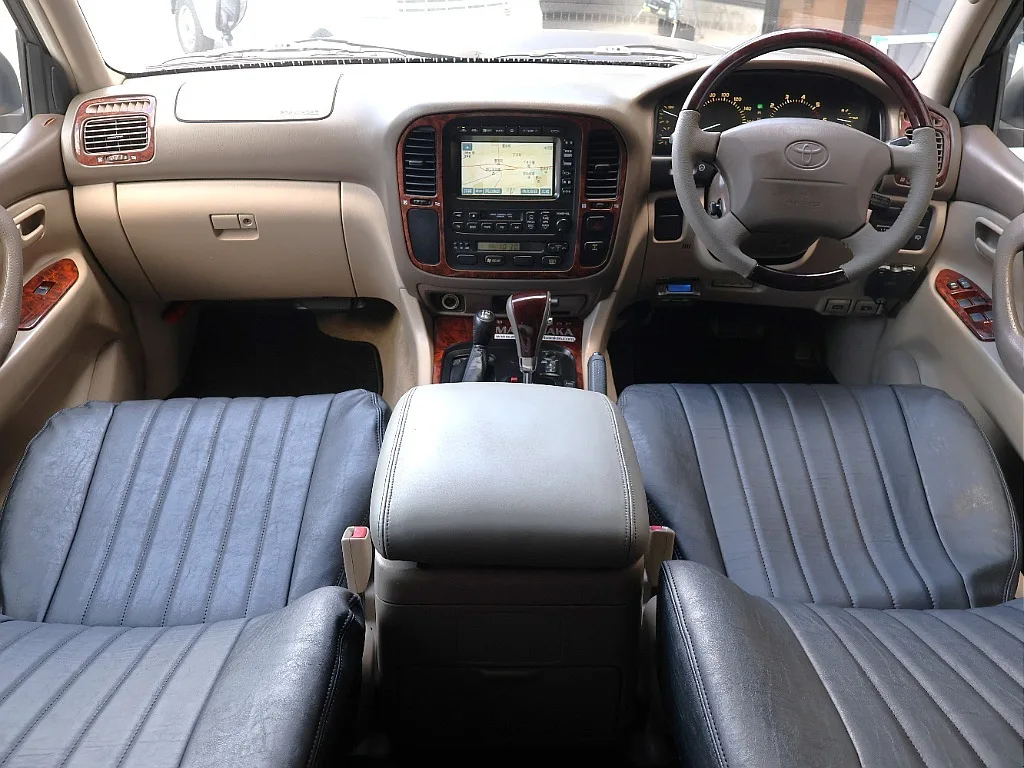
The launch release lists the height-control suspension as an option on the VX Limited. One of the 2000 VX Limited G Selection trucks we have available has the height-control switch and the comfort and sport damper dial, so it is an AHC truck. Ask which suspension a specific truck has, because it changes the maintenance picture in the same way it does on an LX 470.
Diesel Models: The 1HD-FTE
Japan also received a 4.2L turbo diesel, the 1HD-FTE, which was never sold in the US. Toyota’s launch release rates it at 205 PS, about 202 hp. Toyota’s price list from the April 2005 update still includes the diesel, and recall No. 2585 below lists diesel trucks built as late as June 2007, so it stayed in the lineup through the end of the model’s run in Japan.
The 105 Series, with a solid front axle and older six-cylinder engines such as the 1HZ diesel, was built for other markets and does not appear in Toyota’s Japanese releases. Our guide to the Land Cruiser 100 diesel covers the 1HD-FTE in more detail.
Diesel buyers should check state rules before choosing a truck. The California DMV says a direct import vehicle cannot be registered there unless it is modified and tested under the state’s direct import program, and that diesel vehicles cannot be converted at this time. Confirm your own state’s requirements before you buy.
Which JDM Years Are Legal to Import Now
Under US import rules, a vehicle that is at least 25 years old can be imported without meeting current federal safety standards. The 25 years are counted from the date of manufacture, so check the build month. As of November 2026, that covers 100 Series trucks built through November 2001.
This matters for the transmission. Toyota’s August 5, 2002 update brought the five-speed automatic to Japan. Going by that on-sale date, the updated trucks start to reach 25 years in mid-2027. No Japanese-market 100 Series that can be imported today has the five-speed automatic. These trucks have the four-speed automatic or, on some diesel VX vans, a five-speed manual.
Japan’s transport ministry lists two recalls that we could confirm for the 100 Series, No. 2585 and No. 3739. Both cover trucks built from late July 2002 onward, so neither applies to the years that are importable now. Our guide to JDM Toyotas that become legal to import in 2027 explains how the 25-year count works.
Which 100 Series Year Should You Buy?
- Daily driving and road trips: 2003–2005, for the five-speed and the conventional suspension.
- Towing: any year from 2001 on is rated at 6,500 lb in Toyota’s brochures. The 2006–2007 trucks have the most power.
- Off-road builds: 1998–1999 with the factory rear locker, or 2000 and later for A-TRAC and the four-pinion front differential.
- Lowest purchase price: 2000–2002, bought on condition.
- A diesel or a low-mileage truck: a Japanese-market import from 1998 through 2001.
If you are still deciding between generations, our Used Land Cruiser Buying Guide compares the 60, 70, 80, 100, and 200 Series.
What to Check Before Buying Any Year
- Timing belt record. Look for a receipt within the last 90,000 miles or nine years.
- Cold start. Listen for a ticking noise that fades as the engine warms.
- Brakes. Check for brake warning lights, and ask whether the booster or master cylinder has been replaced.
- Suspension type. Confirm whether a 2006–2007 truck or a Japanese-market truck has AHC.
- Airbag recall. On 2003–2006 US-market trucks with curtain airbags, confirm recall 16V065 was done.
- Rust. Inspect the rear crossmember and rear body mounts.
- Rear locker. On a 1998 or 1999, confirm the option is fitted and engages.
- Build date. On an import, confirm the month of manufacture for 25-year eligibility.
Our older guide on how to buy a used Land Cruiser 100 has more on inspection.
Frequently Asked Questions
What years is the 100 Series Land Cruiser?
In the US, the 100 Series covers model years 1998 through 2007. In Japan, Toyota sold it from January 1998 until the 200 Series replaced it in September 2007.
What is the best year for the 100 Series Land Cruiser?
For most buyers, 2003 through 2005. Those years have the five-speed automatic and standard traction and stability control, without the optional height-control suspension. Condition and records still matter more than the year.
Which 100 Series years have a rear locker?
In the US, an electric rear locking differential was an option on 1998 and 1999 trucks only, according to Slee Off-Road. It was dropped for 2000, when A-TRAC became standard.
How much can a 100 Series Land Cruiser tow?
Toyota’s US brochures for 2001 through 2007 list a towing capacity of 6,500 lb with the appropriate hitch, which was sold separately. Consumer Guide gives the same 6,500 lb figure for the generation as a whole.
What gas mileage does a 100 Series get?
The EPA’s current ratings are 12 mpg city and 15 to 16 mpg highway, with a combined figure of 13 or 14 mpg, for every model year from 1998 through 2007. You can check each year at fueleconomy.gov.
Can you import a diesel 100 Series to the US?
Yes, once it is 25 years old by month of manufacture. As of November 2026 that means trucks built through November 2001. State registration rules vary, and California has its own requirements, so confirm your state’s rules before you buy.

Conclusion
Every 100 Series year has something going for it. The 2003 through 2005 trucks are the best all-round choice, the 2006 and 2007 trucks have the most power, the 2000 through 2002 trucks are the budget pick, and the 1998 and 1999 trucks are the ones with the factory rear locker.
Whichever year you choose, buy on condition and records first, and model year second. If a diesel or a low-mileage truck appeals to you, a Japanese-market 100 Series opens up options the US lineup never had.
Looking for a JDM of your dream?
As one of the top Land Cruiser vendors in Japan, our specialists will assist you to acquire your dream vehicles.