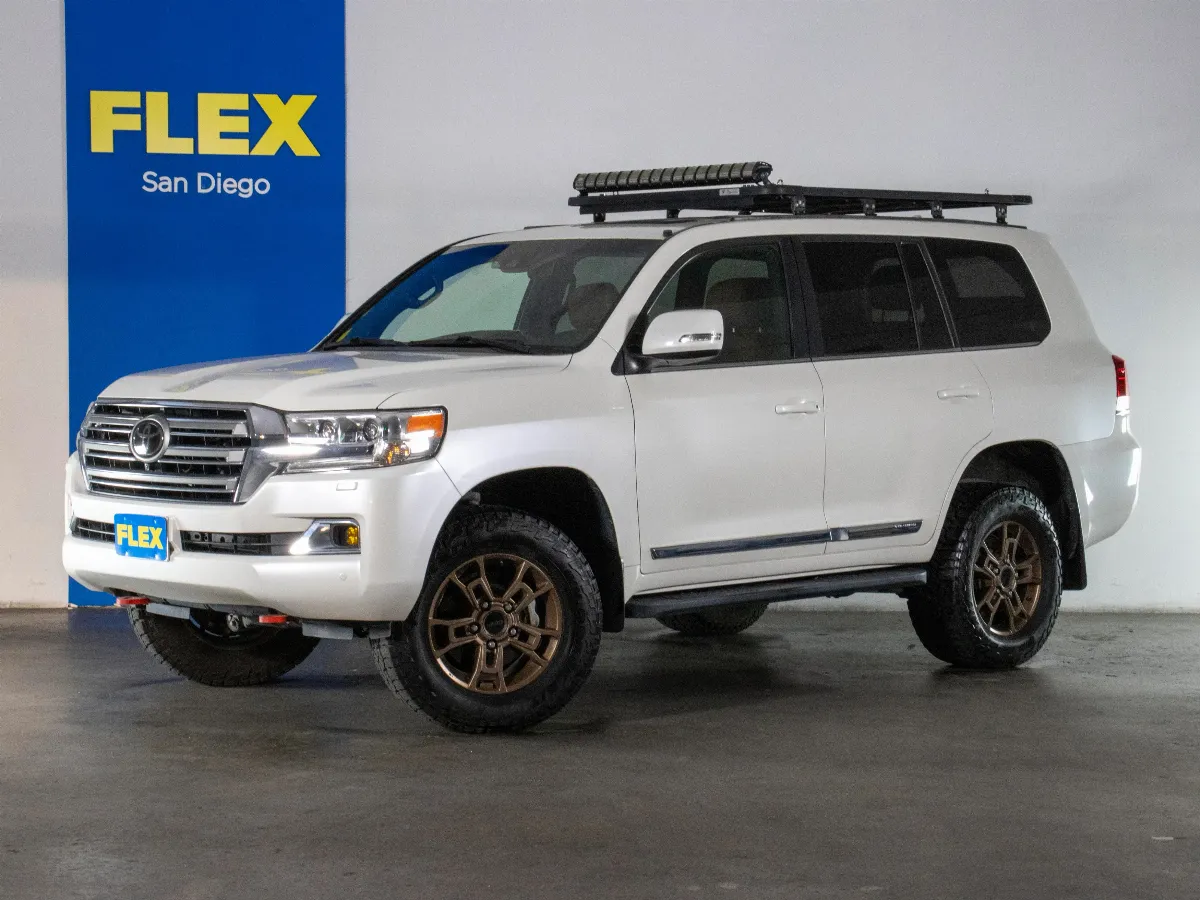
The Toyota Land Cruiser 200 Series is one of the most respected used SUVs you can buy in the US. Sold here from the 2008 through 2021 model years, it pairs a 5.7L V8 with full-time four-wheel drive, a body-on-frame chassis, and the kind of build quality that keeps these trucks running long after most luxury SUVs have been scrapped.
But “200 Series” covers 14 model years, two transmissions, and two very different-looking trucks. A 2009 and a 2019 may share a name and an engine, yet they’re priced tens of thousands of dollars apart, and they carry different risks on the used market.
This 2026 guide breaks down the best Land Cruiser 200 years, the years to approach with caution, and exactly what to check before you buy, so you can match the right model year to your budget and how you plan to use the truck.
- Quick Summary: Land Cruiser 200 Series Model Years at a Glance
- Is the Land Cruiser 200 Series Reliable?
- Best Years for the Land Cruiser 200 Series
- Land Cruiser 200 Series Years to Avoid (or Approach With Caution)
- Pre-Facelift vs. Post-Facelift: Which 200 Series Should You Buy?
- Common Land Cruiser 200 Problems to Check (All Years)
- Used Land Cruiser 200 Buying Checklist
- How Much Does a Used Land Cruiser 200 Cost in 2026?
- Land Cruiser 200 vs. Lexus LX 570: Which Is the Better Used Buy?
- How We Evaluated Land Cruiser 200 Model Years
- Final Thoughts
- FAQs
Quick Summary: Land Cruiser 200 Series Model Years at a Glance
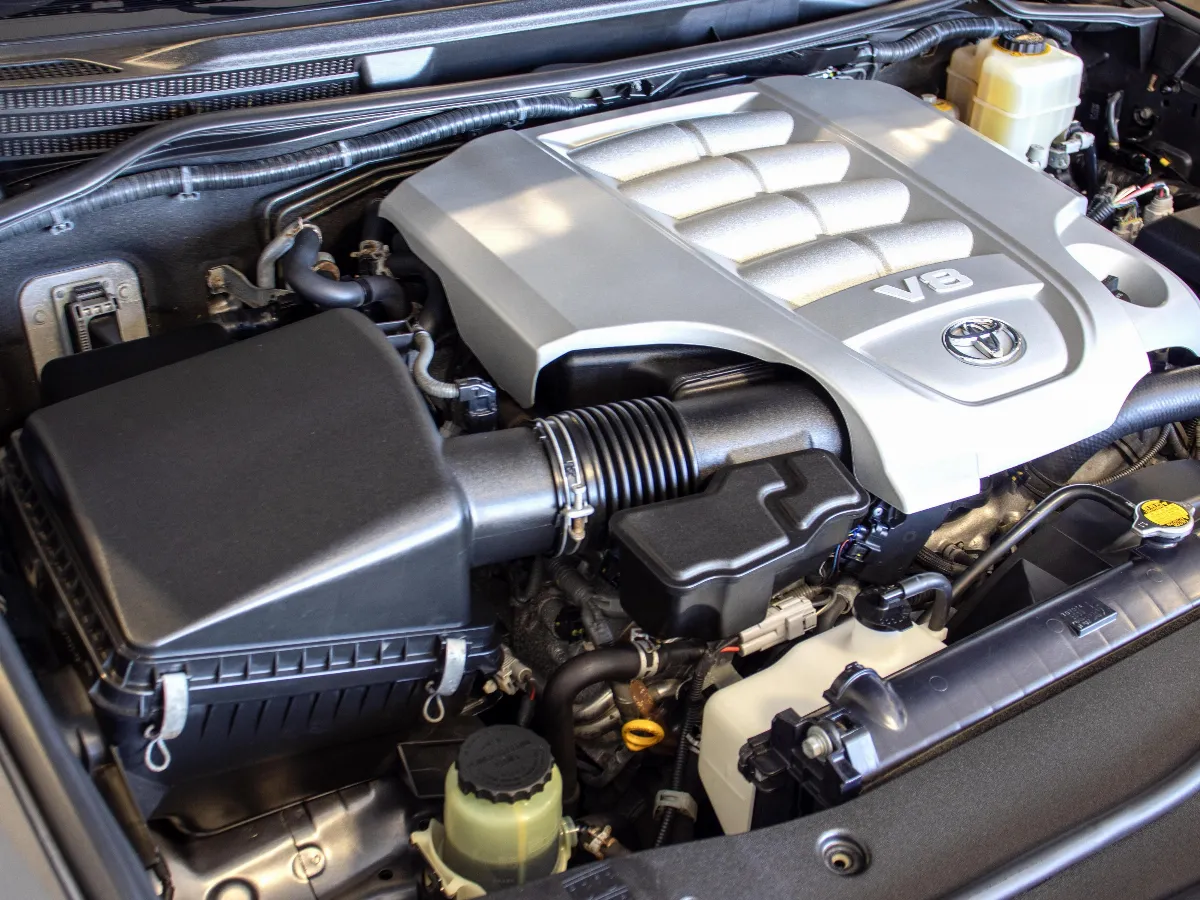
Every US-market 200 Series uses the same 5.7L 3UR-FE V8, rated at 381 hp and 401 lb-ft of torque. What changes from year to year is the transmission, the styling, and the standard equipment. Two updates divide the run into three phases:
| Model Years | Phase | Transmission | Key Changes | Our Verdict |
|---|---|---|---|---|
| 2008 | Early pre-facelift | 6-speed automatic | All-new 200 Series launch; KDSS and Crawl Control introduced | △ Caution |
| 2009–2012 | Early pre-facelift | 6-speed automatic | Carryover years with minor equipment changes | △ Condition-dependent |
| 2013–2015 | Mid-cycle update | 6-speed automatic | New grille, HID headlamps, LED DRLs; most former options made standard | ○ Best value |
| 2016 | Major facelift (first year) | 8-speed automatic | New exterior and dash, 8-speed, Toyota Safety Sense P standard | ○ Check carefully |
| 2017–2018 | Post-facelift | 8-speed automatic | Refined facelift trucks with modern safety tech | ◎ Recommended |
| 2019–2021 | Final run | 8-speed automatic | Most refined; Heritage Edition added for 2020 and 2021 | ◎ Best overall |
In short: 2019–2021 are the best overall, 2013–2015 are the best value, and 2008 plus high-mileage early trucks deserve the most scrutiny. Toyota ended US sales of the Land Cruiser after the 2021 model year, so every 200 Series you’ll find today is a used truck.
Is the Land Cruiser 200 Series Reliable?
Yes. The 200 Series is widely regarded as one of the most durable SUVs Toyota has sold in the US. The 3UR-FE V8 uses timing chains rather than a timing belt, the drivetrain was engineered for markets where a breakdown can mean being stranded in the desert, and the chassis is overbuilt for a vehicle that most owners use on pavement.
That said, “reliable” doesn’t mean “problem-free.” The 200 Series has a short, well-documented list of weak spots, mostly in the cooling system and engine seals. None of them are deal-breakers on their own, but they’re expensive if you don’t know to look for them. The cooling and seal issues are covered in detail in the common-problems section below.
How Many Miles Can a Land Cruiser 200 Last?
With consistent maintenance, it’s common to see 200 Series trucks running strong past 200,000 miles, and many owners report well over 300,000. Because the engine and drivetrain are so robust, maintenance history matters far more than the number on the odometer. A 160,000-mile truck with a replaced radiator, documented fluid changes, and a resealed cooling system is often a safer buy than an 80,000-mile truck with no records at all.
Reliability Ratings by Model-Year Range
| Model Years | Overall Reliability | Main Things to Watch | Owner Satisfaction |
|---|---|---|---|
| 2008–2012 | ★★★★☆ | Age-related cooling system wear, radiator cracks, oil seepage | High |
| 2013–2015 | ★★★★★ | Radiator cracks, valley plate coolant leaks at higher mileage | Very High |
| 2016–2018 | ★★★★☆ | Early 8-speed shift complaints (mostly 2016), radiator on pre-2018 units | Very High |
| 2019–2021 | ★★★★★ | Few patterns reported; verify open recalls by VIN | Very High |
Best Years for the Land Cruiser 200 Series
2019–2021: The Most Refined 200 Series (Including the Heritage Edition)
If budget allows, the final three model years are the easiest 200 Series to recommend. By 2019, Toyota had three full years to refine the facelifted truck and its 8-speed automatic, and these trucks are young enough that most still have low-to-moderate mileage.
Why 2019–2021 stand out:
- The proven 381-hp 5.7L V8 with the smoother, more efficient 8-speed automatic
- Toyota Safety Sense P, Blind Spot Monitor, and Rear Cross Traffic Alert as standard
- The newest examples of a truck Toyota no longer sells in the US, which supports strong resale value
- Heritage Edition (2020–2021): a special edition celebrating more than 60 years of Land Cruiser history, with bronze BBS 18-inch forged wheels, darkened exterior trim, and no running boards. The 2020 Heritage Edition was two-row only; the 2021 version added an available third row.
Watch out for: These are the most expensive 200 Series on the market, and Heritage Editions in particular carry a collector premium. Make sure you’re paying for condition and history, not just the badge, and still confirm all recall work has been completed.
2016–2018: Post-Facelift Value Pick With the 8-Speed Automatic
The 2016 model year brought the biggest update of the 200 Series’ run. According to Toyota, the Land Cruiser received new exterior and interior styling, an 8-speed automatic in place of the 6-speed, and a long list of new standard safety and tech features.
Why 2016–2018 stand out:
- 8-speed automatic with a wider ratio spread for better acceleration and highway manners
- Toyota Safety Sense P standard: pre-collision system, lane departure alert, auto high beams, and dynamic radar cruise control
- Redesigned dashboard with a 9-inch display, plus standard rear-seat entertainment and Qi wireless charging
- Modern look and safety tech at a noticeably lower price than 2019–2021 trucks
Best pick in this range: 2017 and 2018 trucks avoid most of the first-year concerns of the 2016 (covered below) while costing less than the final-run models.
2013–2015: The Best-Value Pre-Facelift Years
For buyers who want 200 Series durability without paying post-facelift prices, 2013–2015 is the sweet spot. For 2013, Toyota refreshed the styling with a new grille, HID headlamps, and LED daytime running lights, and made most formerly optional features standard, including navigation with JBL audio, rear-seat DVD entertainment, and heated second-row seats.
Why 2013–2015 stand out:
- The 6-speed automatic was fully sorted by this point, with years of real-world data behind it
- Nearly every truck is well-equipped, so you don’t have to hunt for a specific option package
- Much lower purchase price than 2016+ trucks for the same engine, chassis, and off-road hardware
- A simpler, more analog interior that many owners actually prefer
Watch out for: Most of these trucks are now past the mileage where radiators and cooling components start to fail. Ask whether the radiator has been replaced and look closely for coolant leaks (see the problems section below).
Land Cruiser 200 Series Years to Avoid (or Approach With Caution)
There’s no 200 Series model year that’s fundamentally flawed. The years below aren’t “never buy” years. They’re years where the odds of hidden problems are higher, so you should inspect more carefully and negotiate accordingly.
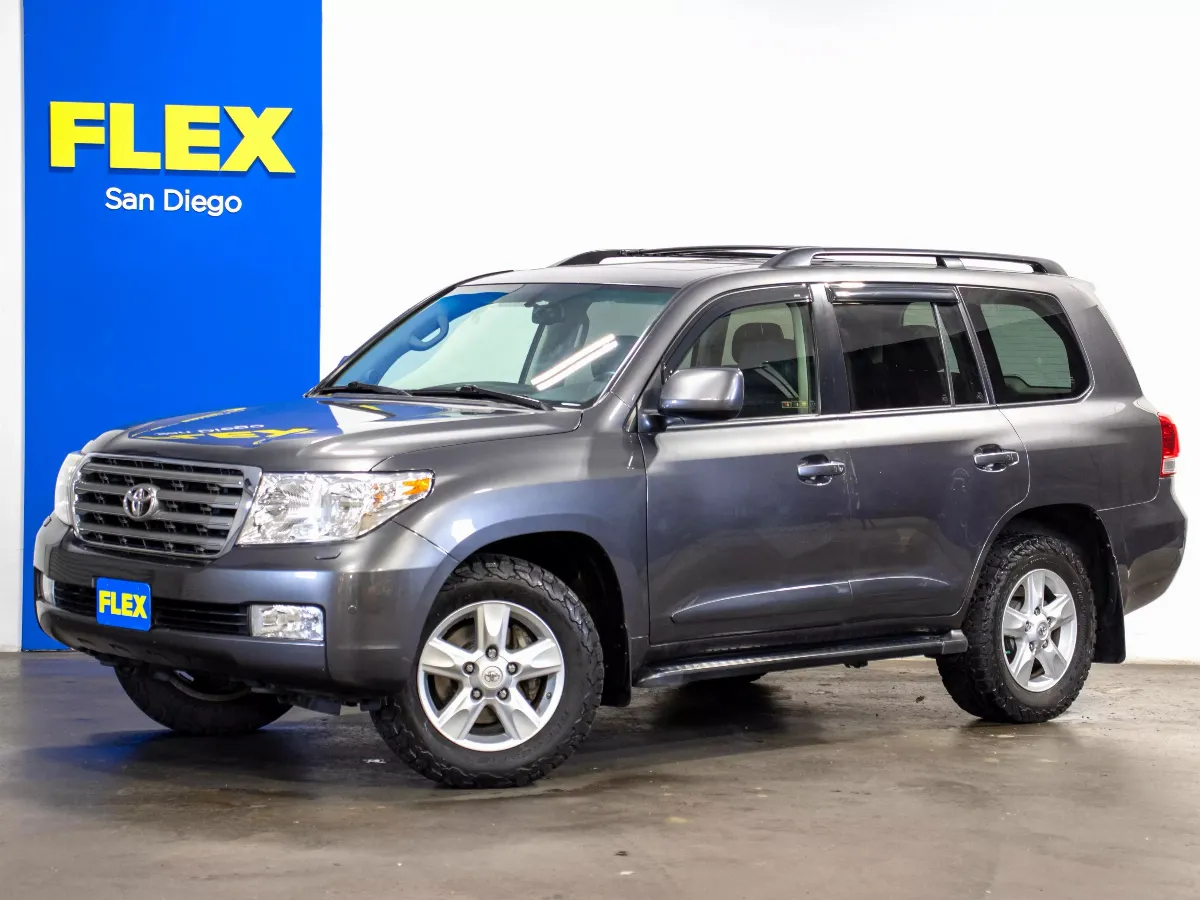
2008: First-Year Growing Pains
The 2008 was the first model year of an all-new platform, and first-year trucks always carry first-year risks. Some owners reported harsh or abrupt shifting from the 6-speed automatic, and as the oldest 200 Series, nearly every 2008 has reached the age where cooling system parts and seals are due.
Known concerns with the 2008:
- Transmission shift quality: harsh or jerky shifts reported by some owners. Check that the fluid has been serviced and that shifts are smooth when cold and warm.
- Age-related wear: original radiators, water pumps, and rubber components are well past their typical service life.
- Fewer standard features than 2013+ trucks, which can matter for resale value.
A well-documented 2008 can still be a great truck, but it should be priced like the oldest and least-equipped 200 Series on the market.
2009–2012: Aging Early Trucks With High Mileage
The 2009–2012 trucks share the same proven drivetrain as later pre-facelift years. The risk here isn’t the design. It’s age. Many of these trucks have 150,000 miles or more, have been through several owners, and may have been modified or used for heavy towing.
What to check on 2009–2012 trucks:
- Radiator: original radiators commonly crack at the top tank (see below)
- Water pump and hoses: look for crusty coolant residue around the front of the engine
- Oil seepage: check the cam towers and timing cover area for fresh oil
- Suspension: worn bushings, leaking shocks, and KDSS system condition
Bottom line: If the cooling system has already been refreshed and there are records to prove it, a 2009–2012 can be a smart buy. If not, budget for that work before you make an offer.
2016: First Year of the 8-Speed Facelift
The 2016 is a big step forward in safety and refinement, but it was also the first year of a new transmission. Some owners reported clunky gear changes and hesitation from the new 8-speed automatic.
Before buying a 2016: On the test drive, pay attention to low-speed shifts and light-throttle acceleration. Ask the seller or a Toyota dealer whether any transmission software updates have been applied. If the shifts feel smooth, a 2016 can offer post-facelift features at a lower price than 2017–2018.
🚨 BEFORE YOU BUY: Check Open Recalls by VIN
Like any vehicle, the 200 Series has been subject to safety recalls. One notable example is NHTSA campaign 18V887000, which covered about 89,740 2008–2019 Land Cruiser and Lexus LX 570 vehicles. A wire harness in the front passenger seat belt tension sensor could break and deactivate the front passenger airbags.
- What to do: Enter the truck’s 17-digit VIN into the NHTSA recall lookup before you sign anything.
- Ask for proof: Request dealer documentation showing that all recall work has been completed. Recall repairs are free at Toyota dealers.
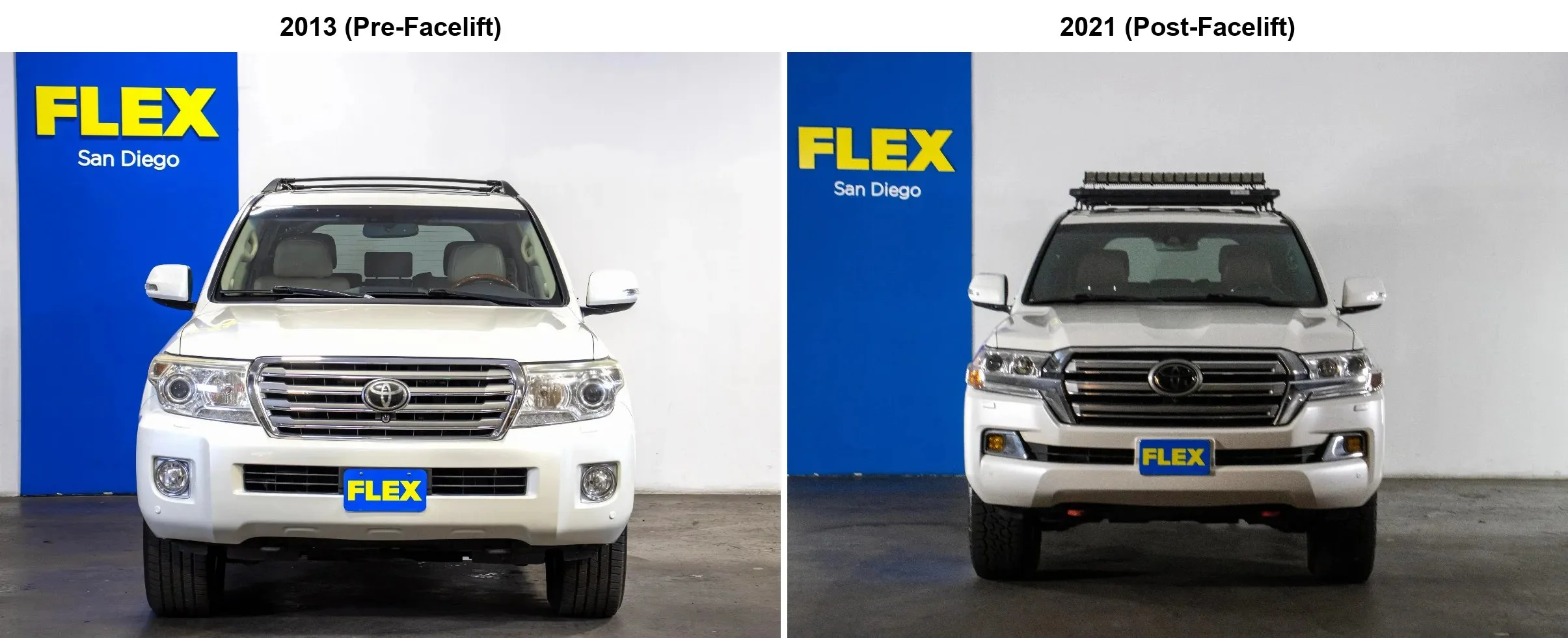
Pre-Facelift vs. Post-Facelift: Which 200 Series Should You Buy?
The biggest decision for most shoppers isn’t the exact year. It’s whether to buy a pre-facelift (2008–2015) or post-facelift (2016–2021) truck. Here’s how they compare:
| Pre-Facelift (2008–2015) | Post-Facelift (2016–2021) | |
|---|---|---|
| Engine | 5.7L V8, 381 hp | 5.7L V8, 381 hp |
| Transmission | 6-speed automatic | 8-speed automatic |
| Safety tech | Basic driver aids | Toyota Safety Sense P, Blind Spot Monitor, Rear Cross Traffic Alert standard |
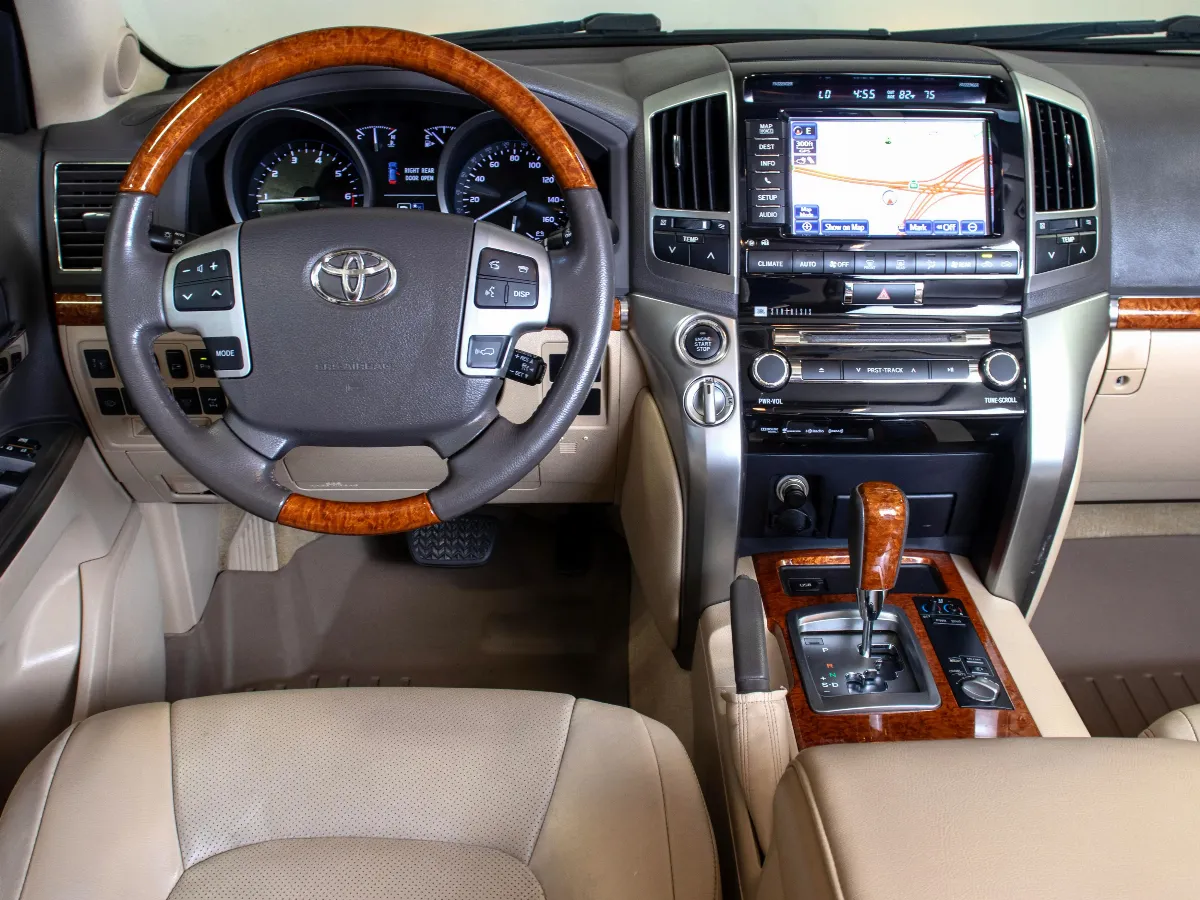
| Interior | Older dash and smaller screen; simpler controls | Redesigned dash with 9-inch display, Qi charging |
| Typical used price | Lower; best value per dollar | Higher; strongest resale value |
| Best for | Overland builds, budget-minded buyers, owners who prefer simplicity | Daily-driving families, highway commuters, buyers who want modern safety |
If you’re planning a dedicated overland or camping build, a clean 2013–2015 leaves more of your budget for a roof rack, drawers, and tires. If the truck will be your family’s daily driver, the safety tech and 8-speed of a 2016+ are worth the premium.
How to Spot a “Facelift-Converted” Pre-Facelift Truck
Because post-facelift trucks command higher prices, some pre-facelift 200 Series have been fitted with 2016+ style front ends, headlights, and taillights. These conversions aren’t illegal, but a converted 2012 is still a 2012, and it should be priced like one. Here’s how to tell:
- Check the VIN: The 10th character of the VIN shows the model year. Make sure it matches the title and the listing.
- Check the door jamb label: The manufacturer’s label on the driver’s door jamb shows the build month and year.
- Look at the dashboard: 2016+ trucks have a redesigned dash with a larger 9-inch center display. A “2016-looking” truck with the older dash and smaller screen is a pre-facelift truck.
- Count the gears: Post-facelift trucks use an 8-speed automatic. A test drive and a quick scan with a dealer or shop can confirm which transmission is installed.
- Inspect the front end: Look for uneven panel gaps, mismatched paint on the hood and fenders, and wiring adapters behind the headlights.
- Read the history report: A Carfax or AutoCheck report will list the original model year and any major body work.
Common Land Cruiser 200 Problems to Check (All Years)
These are the issues owners and mechanics mention most often. Most are age- and mileage-related rather than tied to a single model year.
Radiator Cracking at the Upper Tank
This is the most frequently reported 200 Series failure. Owners commonly report cracks around 80,000–100,000 miles, often starting near the stamped area on the top of the radiator. It’s reported most often on 2008–2018 trucks. Look for dried coolant crust on top of the radiator, and ask whether it has been replaced. If it hasn’t, treat it as an upcoming expense.
Coolant Leaks Under the Intake (Valley Plate)
Coolant can leak from the valley between the two cylinder banks, under the intake manifold. Signs include unexplained coolant loss, a sweet coolant smell after driving, and residue at the back of the engine. The repair requires removing the intake manifold, so labor costs add up quickly.
Cam Tower Oil Seepage and Oil Consumption
The cam towers on top of the cylinder heads are sealed with a liquid gasket that can seep oil with age. Light seepage is common and often just monitored. Active leaks, a burning-oil smell, or noticeable oil consumption deserve a closer look, because resealing the cam towers is a labor-intensive job.
Water Pump and Cooling System Wear
Water pumps, hoses, and heater pipes are all wear items on a truck this age. Look at the radiator, water pump, thermostat, hoses, and coolant condition together as one system. A truck with a documented cooling system refresh is worth paying more for.
KDSS, Suspension, and Lifted or Modified Trucks
The 200 Series uses the Kinetic Dynamic Suspension System (KDSS), which hydraulically frees the stabilizer bars off-road for more wheel travel. Check for leaks at the KDSS cylinders and lines, and confirm the center differential lock engages properly.
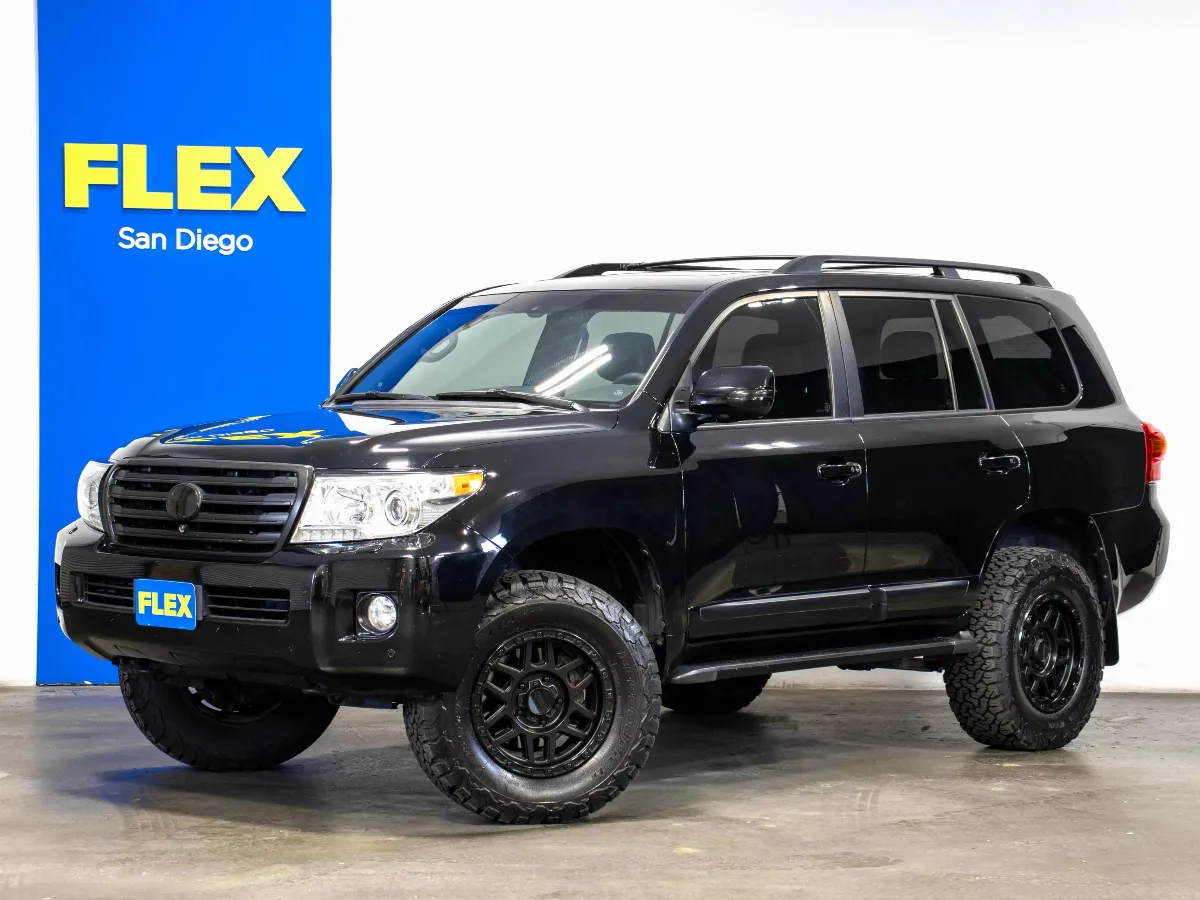
Many 200 Series have been lifted or fitted with larger tires. That’s not a problem on its own, but ask who did the work and which parts were used. Oversized tires can rub and add strain to the drivetrain, so confirm the tire size and any trimming or re-gearing before you buy a modified truck.
Used Land Cruiser 200 Buying Checklist
Whichever model year you choose, run through these steps before committing:
- 1. Run a VIN check: Confirm that all recalls have been completed using the NHTSA recall lookup, and pull a Carfax or AutoCheck report for title and accident history.
- 2. Ask for maintenance records: Look for regular oil changes, transmission and differential fluid services, and any cooling system work.
- 3. Verify the model year: Match the VIN, the door jamb label, and the dashboard design to rule out a facelift conversion.
- 4. Inspect the cooling system: Check the radiator top, water pump area, and valley area for coolant residue.
- 5. Do a cold start: Listen for unusual rattles at startup, and check the exhaust for smoke.
- 6. Test the transmission: Accelerate gently and firmly from a stop, and pay attention to any harsh, delayed, or “hunting” shifts.
- 7. Check underneath: Look at the frame, suspension, and KDSS components for rust, leaks, or off-road damage.
- 8. Ask about towing: The 200 Series is rated to tow 8,100–8,500 lb, depending on model year. Heavy towing isn’t a red flag, but it makes fluid service records even more important.
- 9. Get a pre-purchase inspection: Have an independent mechanic familiar with Toyota trucks inspect the vehicle. A $150–$250 inspection is cheap compared to a cooling system or cam tower repair.
How Much Does a Used Land Cruiser 200 Cost in 2026?
The 200 Series holds its value exceptionally well, and prices for late-model trucks have stayed strong since Toyota pulled the Land Cruiser from the US after 2021. Based on recent listings and auction results, here’s what to expect:
| Model Years | Typical Price Range (as of October 2026) |
|---|---|
| 2008–2012 | ~$15,000 – $35,000 |
| 2013–2015 | ~$30,000 – $57,000 |
| 2016–2018 | ~$45,000 – $75,000+ |
| 2019–2021 | ~$60,000 – $95,000+ |
| 2020–2021 Heritage Edition | Often at or above the top of the 2019–2021 range |
Prices are approximate as of October 2026, based on recent market data, and vary widely with mileage, condition, history, and modifications. Exceptionally low-mileage trucks can sell well above these ranges.
Land Cruiser 200 vs. Lexus LX 570: Which Is the Better Used Buy?
The Lexus LX 570 is built on the same platform as the 200 Series and was sold in the US over the same 2008–2021 period. It uses a nearly identical 5.7L V8 and shares the same core drivetrain, so the reliability story is very similar.
The main differences:
- Suspension: The LX 570 uses Active Height Control (AHC), a hydraulic height-adjustable suspension, instead of the Land Cruiser’s KDSS setup. AHC rides beautifully but can be expensive to repair as it ages.
- Luxury: The LX adds a more upscale interior, more sound insulation, and Lexus-specific styling.
- Price: Used LX 570s often sell for less than comparable Land Cruisers, because Land Cruiser demand (and the Land Cruiser name) keeps 200 Series prices high.
Which should you choose? If you plan to lift the truck, build it for overlanding, or keep the suspension simple, the Land Cruiser is the better base. If you want maximum comfort for the money and are prepared to maintain the AHC system, a well-documented LX 570 can be a great value. Learn more in our Lexus LX vs. Land Cruiser comparison and our guide to buying a Lexus LX 570.
How We Evaluated Land Cruiser 200 Model Years
Our model-year ratings draw on several sources to separate isolated complaints from real patterns:
- NHTSA recall and complaint data: official safety recalls and owner-reported issues
- Toyota press materials: model-year changes and standard equipment
- Owner communities: long-running discussions on forums such as IH8MUD, where 200 Series owners document high-mileage issues
- Market data: recent listings and auction results for used pricing
- FLEX’s hands-on experience: as one of the largest Land Cruiser dealers in Japan, we inspect and service Land Cruisers of every generation
For background on how the 200 Series fits into the Land Cruiser family, see our Land Cruiser generations guide and our Land Cruiser 100 vs. 200 comparison.
Final Thoughts
The Land Cruiser 200 Series doesn’t have a true “lemon” year. Its 14-year US run is remarkably consistent, which is exactly why these trucks hold their value so well. The real differences come down to features, age, and how each individual truck has been maintained.
Quick recap:
- Best overall: 2019–2021, including the 2020–2021 Heritage Edition
- Best balance of features and price: 2017–2018
- Best value: 2013–2015
- Approach with caution: 2008 (first-year issues), high-mileage 2009–2012 trucks without records, and 2016 (first year of the 8-speed)
Whichever year you choose, buy the truck with the best documentation, check the cooling system, and confirm all recall work by VIN. Do that, and a 200 Series can easily serve you for another 100,000 miles or more.
FAQs
What is the best year for the Land Cruiser 200 Series?
The 2019–2021 model years are the best overall. They combine the 8-speed automatic, standard Toyota Safety Sense P, and the most refined version of the facelifted truck. For a lower budget, 2013–2015 trucks offer the best value.
What Land Cruiser 200 years should I avoid?
No 200 Series year is a true “avoid,” but 2008 (first-year transmission complaints), high-mileage 2009–2012 trucks without maintenance records, and 2016 (first year of the 8-speed automatic) deserve the closest inspection.
How many miles is too many for a used Land Cruiser 200?
There’s no hard cutoff. Many 200 Series trucks run well beyond 200,000 miles. A higher-mileage truck with documented maintenance and a refreshed cooling system is often a better buy than a lower-mileage truck with no records.
What changed with the 2016 Land Cruiser facelift?
For 2016, the Land Cruiser got new exterior and interior styling, an 8-speed automatic in place of the 6-speed, standard Toyota Safety Sense P, Blind Spot Monitor with Rear Cross Traffic Alert, a 9-inch display, and Qi wireless charging.
Does the Land Cruiser 200 have a timing belt or chain?
The 3UR-FE V8 in the 200 Series uses timing chains, not a timing belt, so there’s no scheduled timing belt replacement as there is on the older 100 Series’ 2UZ-FE V8.
When did Toyota stop selling the Land Cruiser 200 in the US?
The 2021 model year was the last for the 200 Series in the US. Toyota later returned the Land Cruiser name to the US market with the smaller 250 Series for the 2024 model year.
Looking for a JDM of your dream?
As one of the top Land Cruiser vendors in Japan, our specialists will assist you to acquire your dream vehicles.