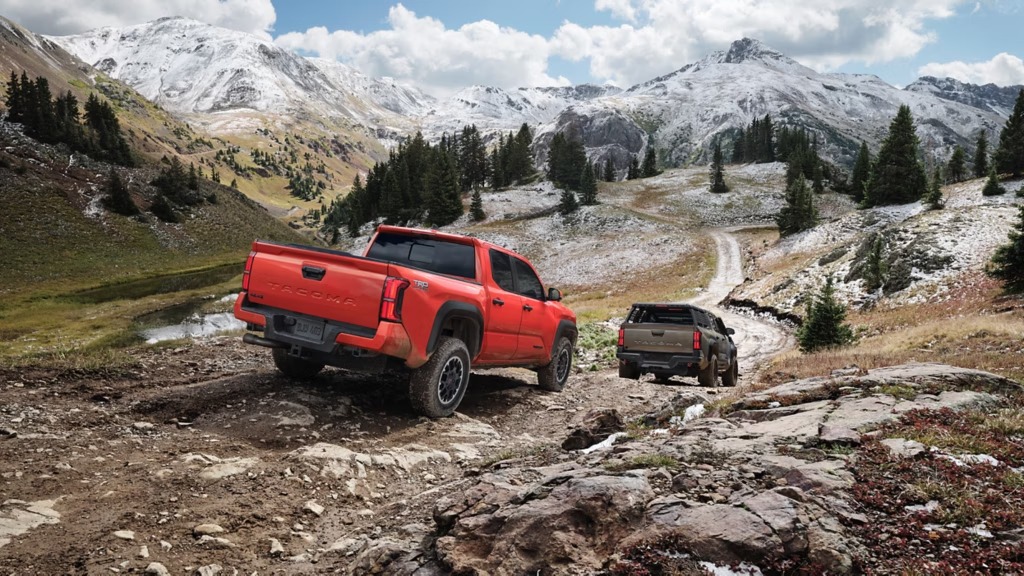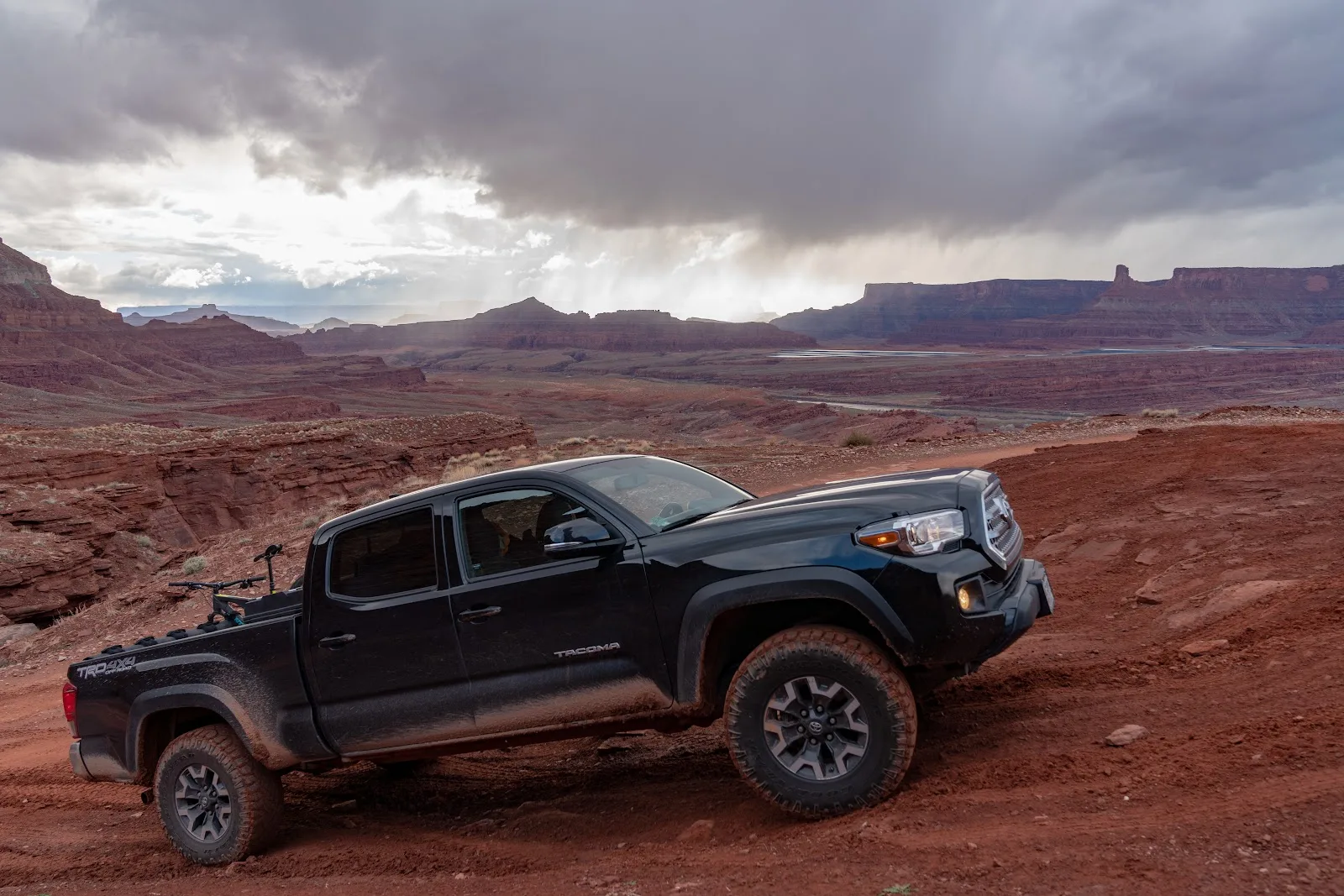


Toyota has built some of the most respected trucks on the road, and few match the reputation of the Tacoma and Tundra. Both have loyal owner communities, outstanding resale value, and a history of reliability that keeps buyers coming back year after year. But despite sharing the same badge, these trucks are designed for very different lifestyles.
The 2023 Toyota Tacoma is a midsize pickup known for its manageable size, off-road capability, and everyday practicality. It’s the truck I often recommend to buyers who want adventure-ready capability without driving a full-size pickup every day.
On the other hand, the 2023 Toyota Tundra is built for bigger jobs. It offers more power, greater towing capacity, a larger cabin, and the kind of capability that appeals to serious haulers and truck enthusiasts.
In this 2023 Toyota Tacoma vs 2023 Toyota Tundra comparison, I’ll break down the key differences in size, performance, fuel economy, towing, pricing, and real-world usability so you can decide which Toyota truck truly fits your lifestyle.
At a Glance: How Different Are They Really?
At first glance, it’s easy to assume the Tacoma and Tundra are simply different-sized versions of the same truck. After all, they are both Toyota pickups with excellent reputations for reliability and resale value.
But once you start looking at the true specs, you quickly realize they’re built for completely different buyers.
Before diving into detailed comparisons, here’s a quick overview of how these two trucks stack up.
| Feature | 2023 Toyota Tacoma | 2023 Toyota Tundra |
|---|---|---|
| Class | Mid-Size Pickup | Full-Size Pickup |
| Engine (Base) | 2.7L 4-Cyl (159 hp) | 3.4L Twin-Turbo V6 (348 hp in SR) |
| Engine (Popular/Optional) | 3.5L V6 (278 hp) | 3.4L Twin-Turbo V6 (389 hp) / Hybrid (437 hp) |
| Max Towing Capacity | 6,800 lbs (V6 model) | 12,000 lbs |
| Max Payload Capacity | Up to 1,685 lbs (Varies by config) | Up to 1,940 lbs (Drops on heavier trims) |
| Fuel Economy (City/Hwy) | Up to 18 / 24 MPG (2WD V6) | Up to 18 / 24 MPG (2WD Standard) |
| Bed Length Options | 5-ft or 6-ft Bed | 5.5-ft, 6.5-ft, or 8.1-ft Bed |
| Starting MSRP (When New) | ~$28,600 | ~$38,570 |
| Typical Used Market Price | $25,000–$40,000 | $38,000–$65,000+ |
Looking at the table, one thing becomes clear: the Tundra wins nearly every capability metric. It offers substantially more horsepower, almost double the towing capacity, higher payload ratings, and more bed configurations.
However, capability isn’t everything. The Tacoma counters with a smaller footprint, better maneuverability, and a reputation for being one of the easiest trucks to live with every day.
Size & Daily Driveability
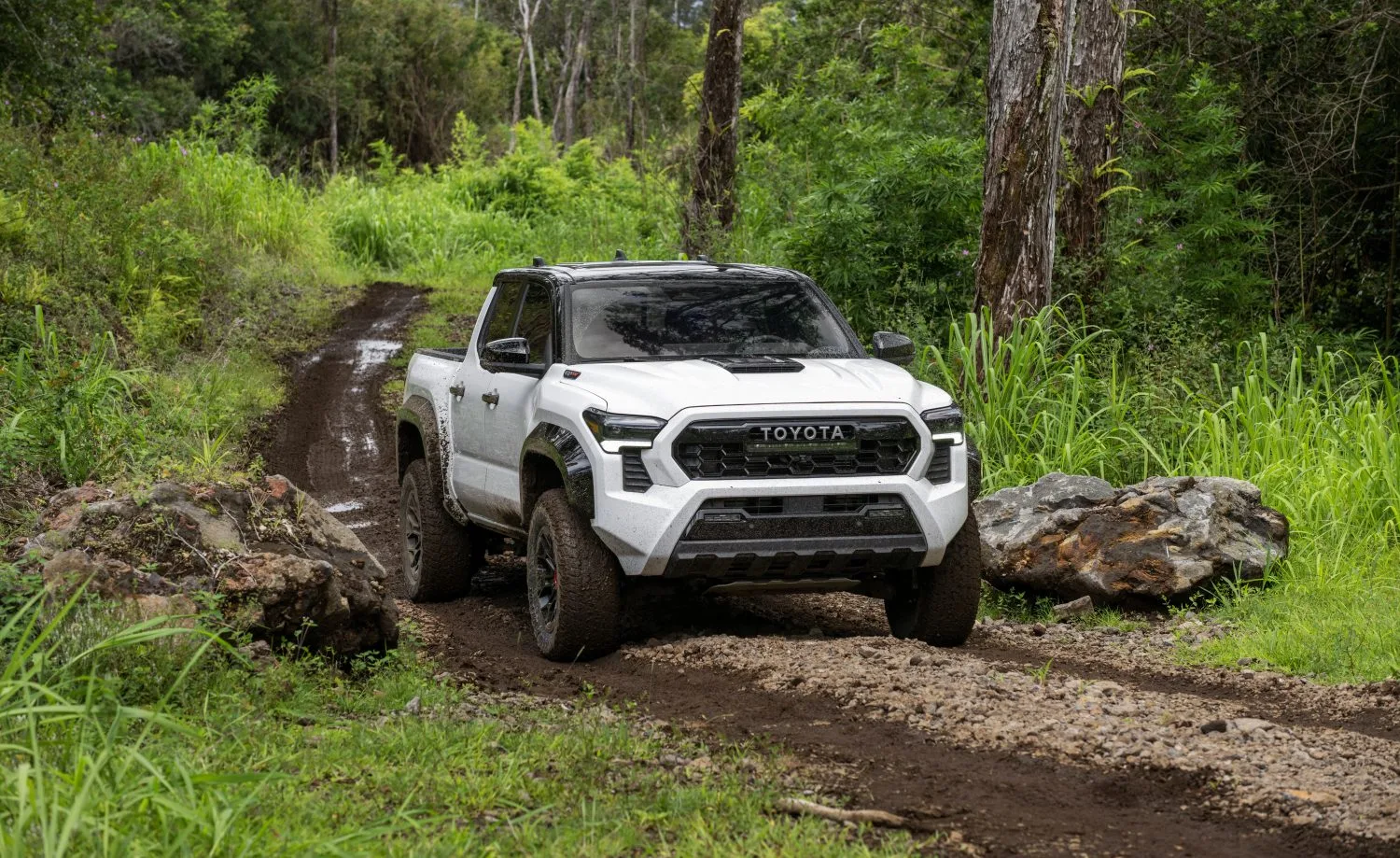
One of the biggest differences in the 2023 Toyota Tacoma vs 2023 Toyota Tundra comparison isn’t horsepower or towing capacity, it’s simply size. And trust me, size becomes something you think about every single day, whether you’re pulling into a parking garage, navigating a tight trail, or loading up the family for a road trip.
The Tacoma Advantage in Urban & Tight Spaces
I’ve driven enough full-size trucks to appreciate what the Tacoma brings to the table. While the Tundra offers more space and capability, the Tacoma feels much easier to live with on a daily basis.
Depending on the cab and bed configuration, the Tacoma measures roughly 212–225 inches in overall length. The Tundra, meanwhile, stretches between 228–245 inches, which is a substantial difference once you’re behind the wheel.
In practical terms, that means the Tacoma is easier to:
- Park in crowded shopping centers
- Fit inside standard residential garages
- Navigate narrow city streets
- Maneuver through tight trail systems
- Handle in congested traffic
From my perspective, this is one of Tacoma’s biggest strengths. It provides genuine truck capability without constantly reminding you that you’re driving a large vehicle.
The Tundra’s Size Pays Off When You Need It
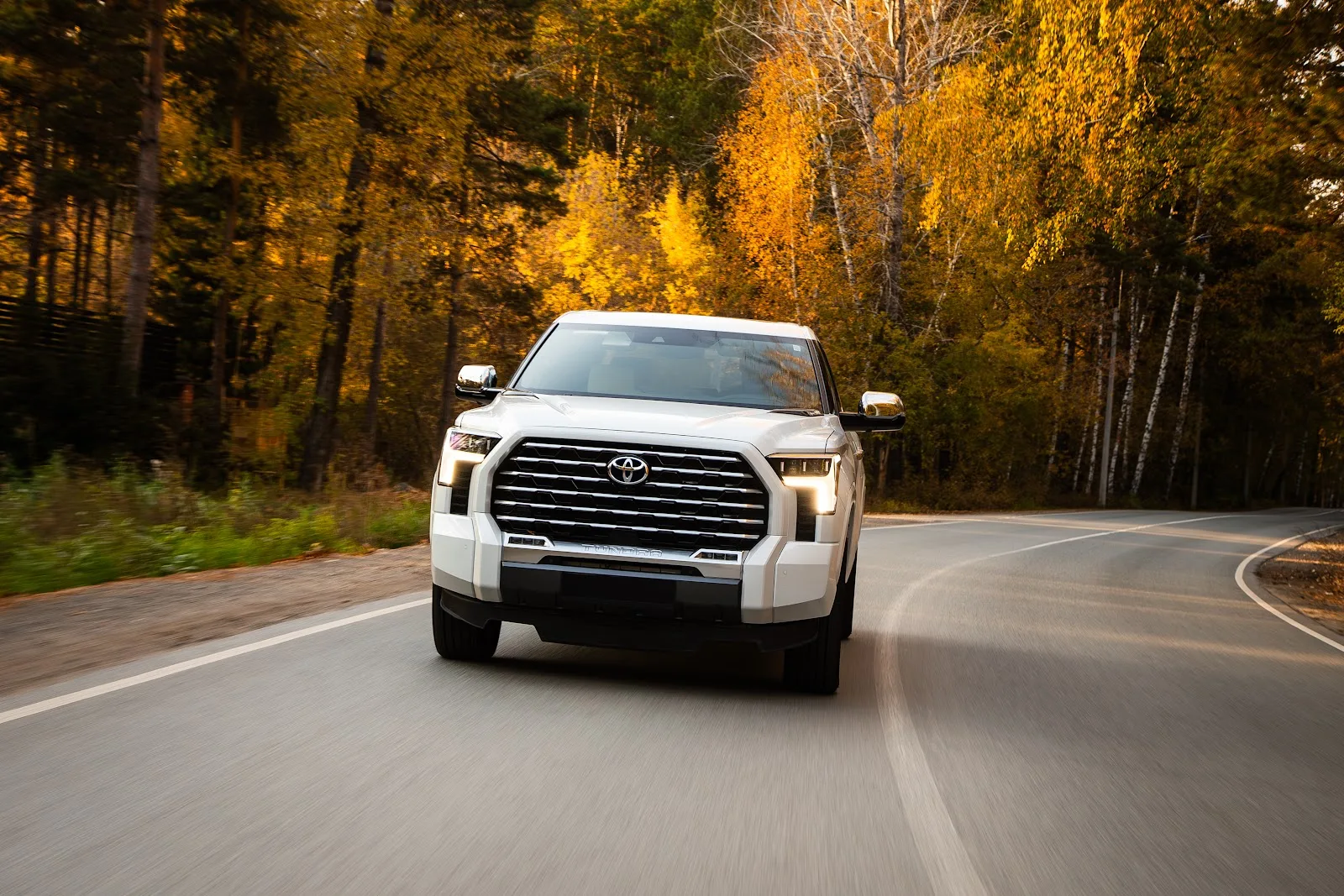
Of course, bigger dimensions aren’t necessarily a disadvantage. In fact, there are plenty of situations where the Tundra’s larger footprint becomes one of its strongest selling points.
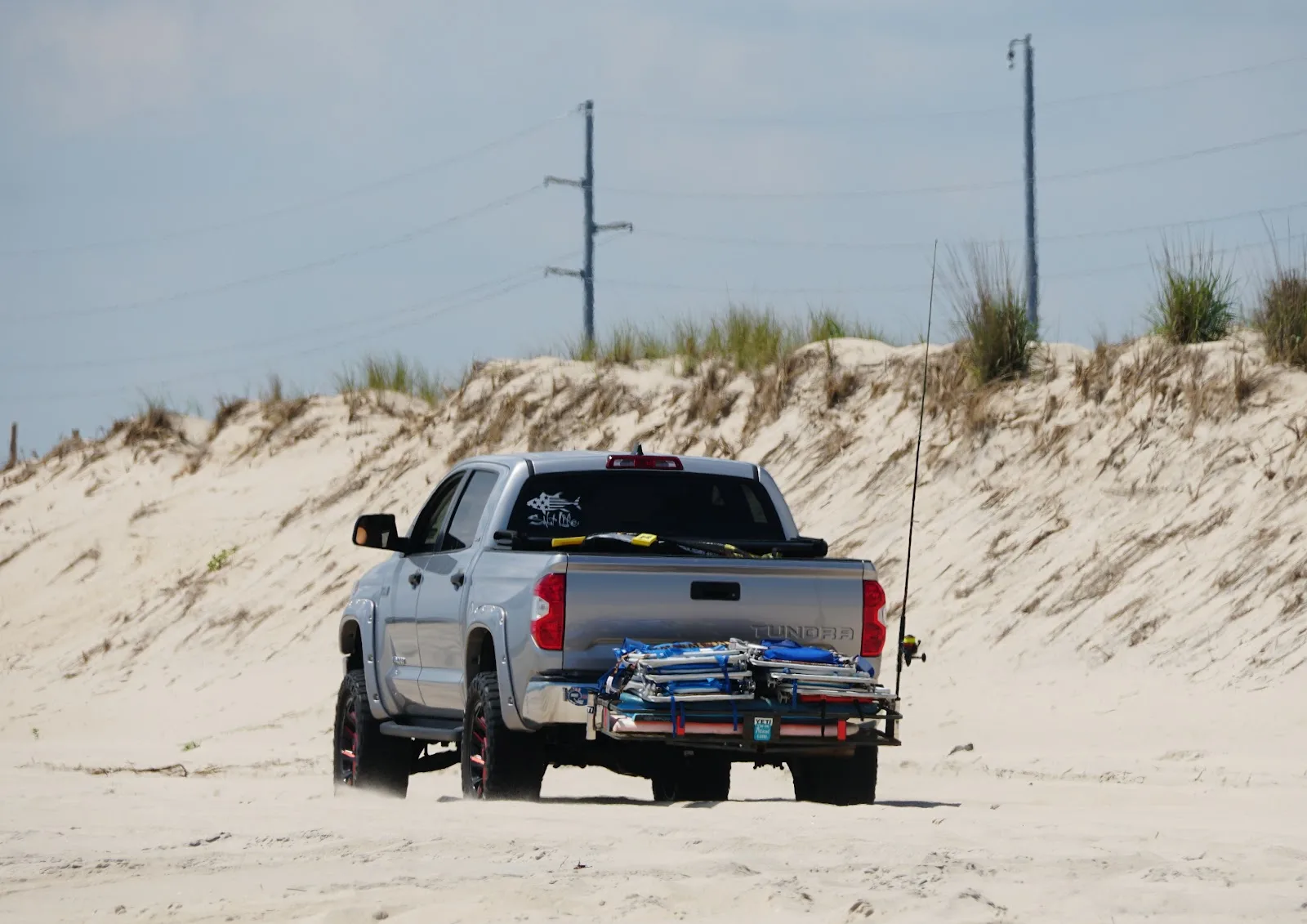
The larger bed options immediately stand out. Whether you’re hauling lumber, construction materials, camping gear, motorcycles, or work equipment, the Tundra simply gives you more usable space to work with.
Inside the cabin, the CrewMax configuration offers some of the most generous rear-seat accommodations you’ll find in a pickup truck. Adults can comfortably sit in the second row for long trips without feeling cramped, which is something families will appreciate.
Power & Performance
When buyers compare the 2023 Toyota Tacoma vs 2023 Toyota Tundra, power is often where the gap becomes most obvious. Both trucks are capable in their own way, but they’re designed for completely different workloads.
Tacoma — Capable But Not a Powerhouse
While the true base engine is a 2.7L 4-cylinder producing 159 horsepower, most buyers and dealership inventories focus on the available 3.5L V6 (3,456cc). The V6 produces 278 horsepower and 265 lb-ft of torque. Buyers can pair it with either a 6-speed automatic transmission or the increasingly rare 6-speed manual transmission, something truck enthusiasts still appreciate.
From my experience, the Tacoma’s V6 isn’t going to pin you back in your seat, but that’s not really its purpose. The engine provides enough power for:
- Daily commuting
- Weekend camping trips
- Trail exploration
- Light-to-moderate towing
- General truck duties
Where the Tacoma really shines is off-road. Toyota offers several capable TRD variants equipped with features such as a locking rear differential, Crawl Control, Multi-Terrain Select, and off-road-tuned suspension systems.
Tundra — Built for Heavy Work
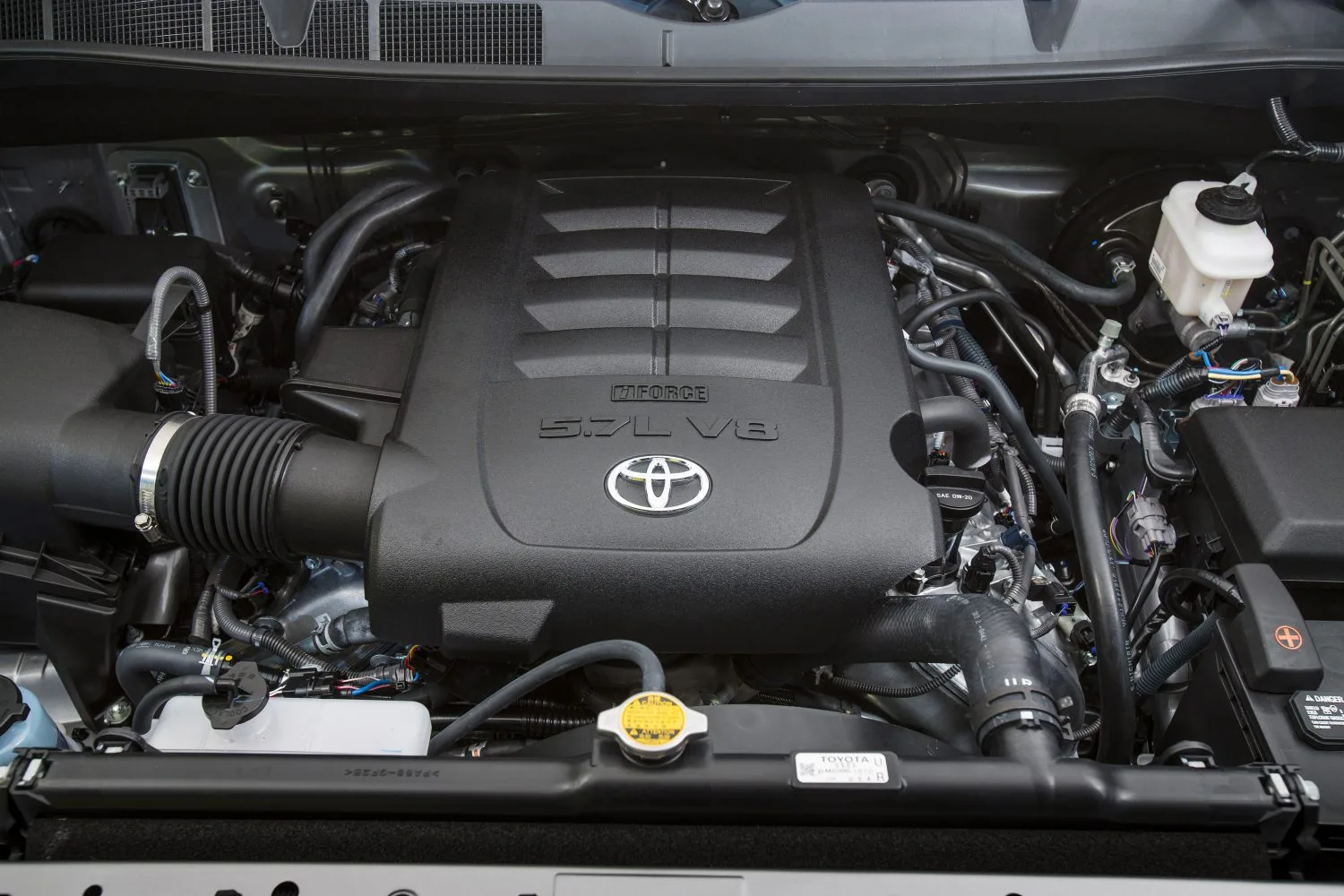
The Tundra takes a completely different approach. Toyota replaced the old V8 with a modern 3.4L twin-turbocharged V6 (3,445cc). Note that while many people round this up and call it a 3.5L, the Tundra’s engine actually has a slightly smaller displacement than the Tacoma’s V6, yet it produces massively more power thanks to the twin turbos.
The entry-level SR trim features a slightly detuned version producing 348 horsepower, but stepping up to the SR5 and beyond unlocks the standard 389 horsepower and 479 lb-ft of torque.
And if that’s not enough, Toyota offers the i-FORCE MAX hybrid powertrain, which generates an incredible 437 horsepower and 583 lb-ft of torque. Every Tundra is paired with a 10-speed automatic transmission, which helps keep the engine in its powerband while improving efficiency and towing performance.
Towing & Payload
For many truck buyers, this is the section that matters most. You can live with a smaller screen or fewer luxury features, but if your truck can’t handle the load you need to pull, it’s simply the wrong tool for the job.
2023 Tacoma Towing
The 2023 Tacoma is surprisingly capable for a midsize pickup. When properly equipped with the 3.5L V6, automatic transmission, and Tow Package, the truck can tow up to 6,800 pounds.
The Tacoma also offers a respectable maximum payload capacity. While the absolute maximum is 1,685 pounds (found on lighter 4-cylinder 2WD configurations), the highly popular 4WD Double Cab V6 models typically offer around 1,440 pounds of payload. This gives owners enough capacity for tools, camping gear, motorcycles, and everyday hauling duties without overloading the suspension.
2023 Tundra Towing
The Tundra plays in a completely different league. Thanks to its twin-turbocharged powertrain and larger chassis, the 2023 Tundra can tow up to 12,000 pounds when properly equipped.
Its maximum payload capacity is equally impressive, peaking at 1,940 pounds on the lighter SR 2WD trim. However, it’s worth noting that if you opt for the heavier, feature-packed trims (like the Limited, Platinum, or the battery-heavy TRD Pro Hybrid), that payload capacity drops into the 1,600–1,700 lb range due to the vehicle’s increased curb weight.
Fuel Economy
Fuel economy is one area where many buyers assume the midsize Tacoma will naturally dominate the full-size Tundra. But when you look closely at the EPA numbers—especially for the 4WD models most buyers actually purchase—the reality is much more nuanced.
The 4WD MPG Reality (A Closer Look)
If you look purely at 2WD models, both the V6 Tacoma and the standard Tundra boast identical numbers: up to 18 MPG city and 24 MPG highway. However, most off-road enthusiasts and truck buyers opt for 4WD. Here is how the 4WD models actually compare:
- 2023 Tacoma (V6 4WD 6-Speed AT): 18 City / 22 Hwy / 20 Combined
- 2023 Tundra (Standard V6 4WD 10-Speed AT): 17 City / 22 Hwy / 19 Combined
- 2023 Tundra (i-FORCE MAX Hybrid 4WD): 19 City / 22 Hwy / 20 Combined
Notice something interesting? The highway fuel economy is a dead tie at 22 MPG across the board. This is an engineering victory for the Tundra. Despite being much larger and significantly more powerful, the Tundra’s modern 10-speed automatic transmission allows it to cruise on the highway just as efficiently as the smaller Tacoma’s older 6-speed.
However, in city driving and combined figures, physics still apply. The standard 4WD Tundra drops slightly below the Tacoma (17 City vs. 18 City). You have to upgrade to the i-FORCE MAX Hybrid powertrain to beat the Tacoma’s city efficiency. The Tacoma remains the slightly more economical choice in town, but the Tundra closes the gap impressively on the open road.
Off-Road Capability
For many Toyota enthusiasts, this is where the Tacoma has built its reputation. While the Tundra is an incredibly capable truck, the Tacoma has spent years becoming one of the most respected off-road platforms on the market.
Tacoma — The Off-Road Legend
The Tacoma didn’t earn its off-road reputation by accident. Toyota has spent decades refining the truck’s trail-focused capabilities. Trims like the TRD Off-Road and TRD Pro come equipped with stellar hardware: an electronically locking rear differential, Crawl Control, Multi-Terrain Select, and an off-road-tuned suspension.
What I particularly like about the Tacoma is how its size works in its favor. Compared to the Tundra, it’s lighter, narrower, and easier to place on technical trails. The Tacoma’s lighter weight also helps maintain a favorable power-to-weight ratio off-road.
Tundra Off-Road — Capable But Different
The Tundra deserves more credit off-road than it often gets. Toyota has invested heavily in the TRD Pro Tundra, equipping it with FOX internal bypass shocks, front skid plate protection, and advanced traction management systems. On dirt roads, forest service routes, and wide-open backcountry roads, the Tundra performs extremely well.
However, the Tundra’s larger dimensions, wider track, and heavier curb weight inevitably work against it in technical terrain. Obstacles that a Tacoma can slip around often require much more attention in the larger Tundra. The Tacoma remains the clear winner for serious trail use and overlanding due to its agile footprint.
Price & Value
No matter how capable a truck is, most buyers eventually come back to the same question: am I getting good value for my money? Both trucks hold their value exceptionally well, but they appeal to different budgets and ownership goals.
New vs. Used Market Reality & The V6 Legacy
When new, the 2023 Tacoma entered the market with a significantly lower price tag than the Tundra:
- 2023 Tacoma: ~$28,600–$57,000 (SR through TRD Pro)
- 2023 Tundra: ~$38,570–$78,000+ (SR through Capstone)
Today, a well-maintained used 2023 Tacoma typically sells between $25,000 and $40,000, while a used 2023 Tundra generally ranges from $38,000 to $60,000 or more. But there is a very specific reason why the 2023 Tacoma holds its value so fiercely in the used market.
The 2023 model year represents the absolute end of an era for the Tacoma. It was the final year Toyota offered the legendary, naturally aspirated 3.5L V6 engine (and the 6-speed manual transmission option) before the 2024 full redesign shifted the lineup entirely to turbocharged 4-cylinder engines. Because many purists and overlanders specifically seek out the proven reliability of the naturally aspirated V6, the 2023 Tacoma has achieved a premium status, ensuring its resale value drops incredibly slowly.
Which Truck Fits Your Lifestyle?
After comparing size, performance, towing, fuel economy, off-road capability, and ownership costs, neither truck is objectively better than the other. The real question is how you plan to use it. Once you’re honest about your actual needs, the decision becomes much easier.
Choose the 2023 Tacoma If…
The Tacoma is the truck I’d recommend to most buyers who want a versatile pickup that can comfortably handle daily life while still being ready for weekend adventures. It is likely the right truck for you if:
- You live in a city or suburb and prioritize daily driveability
- Off-roading, camping, or overlanding is part of your lifestyle
- Your towing needs stay safely below 6,800 pounds
- You want the bulletproof legacy of the final naturally aspirated V6 models
- You prefer a truck that’s easy to park and maneuver in urban environments
Choose the 2023 Tundra If…
The Tundra is built for buyers who genuinely need more truck. The Tundra is likely the better fit if:
- You regularly tow more than 7,000 pounds (boats, heavy equipment)
- You need maximum passenger space and rear-seat comfort for adults
- Your daily work requires a higher overall payload capacity
- You want the massive torque of the 3.4L twin-turbo or i-FORCE MAX hybrid system
- Your budget comfortably supports a premium full-size truck package
Frequently Asked Questions
1: Is the Tacoma or Tundra more reliable?
Both trucks have built strong reputations for reliability over the years, but their current situations in the used market are quite different. The Tacoma’s third generation (2016–2023) has accumulated years of positive ownership data, with the 2023 model being highly sought after for its bulletproof, naturally aspirated V6. The Tundra also has an impressive reputation, particularly the legendary second-generation V8 models (2007–2021).
However, buyers looking at the newer 2022+ Tundra (equipped with the 3.4L twin-turbo V6) need to be aware of a major ongoing factory recall regarding machining debris left in the engine blocks during manufacturing, which can lead to engine failure. Toyota is addressing this by replacing entire engine assemblies for affected vehicles. Because of this, buyers of used 2022-2024 Tundras must carefully check if the specific vehicle is cleared or has already received the replacement engine. This exact contrast in recent reliability is a major reason why the 2023 Tacoma’s proven V6 is currently experiencing such a massive surge in demand and holding its value so fiercely.
2: Is the Tacoma or Tundra better for off-road?
The Tacoma wins this category quite comfortably. Its smaller size, lighter weight, tighter turning radius, and extensive aftermarket support make it one of the most capable factory off-road trucks available. While the Tundra TRD Pro is surprisingly capable, its larger dimensions and heavier curb weight make it less suited for narrow, technical trails.
3: Which holds its value better, Tacoma or Tundra?
Historically, the Tacoma has held its value slightly better as a percentage of its original purchase price due to immense enthusiast demand. This is especially true for the 2023 model, which is prized as the last V6 generation. That said, the Tundra is also one of the strongest performers in the full-size truck segment when it comes to resale value.
4: Can the Tacoma tow a fifth wheel or large RV?
In most cases, no. The Tacoma’s maximum towing capacity of 6,800 pounds limits it to smaller travel trailers and lightweight campers. Most fifth-wheel trailers start well beyond that range, often weighing 8,000–10,000 pounds or more. The Tundra’s 12,000-pound maximum towing capacity makes it the appropriate choice for serious RV towing.
Final Thoughts
After comparing every major category, the difference comes down to purpose. The Tacoma is the lifestyle truck. It’s easier to drive every day, excels off-road, holds its value like gold, and fits perfectly into active outdoor lifestyles. The Tundra is the workhorse. It delivers significantly more power, towing capacity, payload capability, and passenger space for buyers who truly need a full-size truck.
Neither is the wrong choice. It simply depends on how you plan to use it.
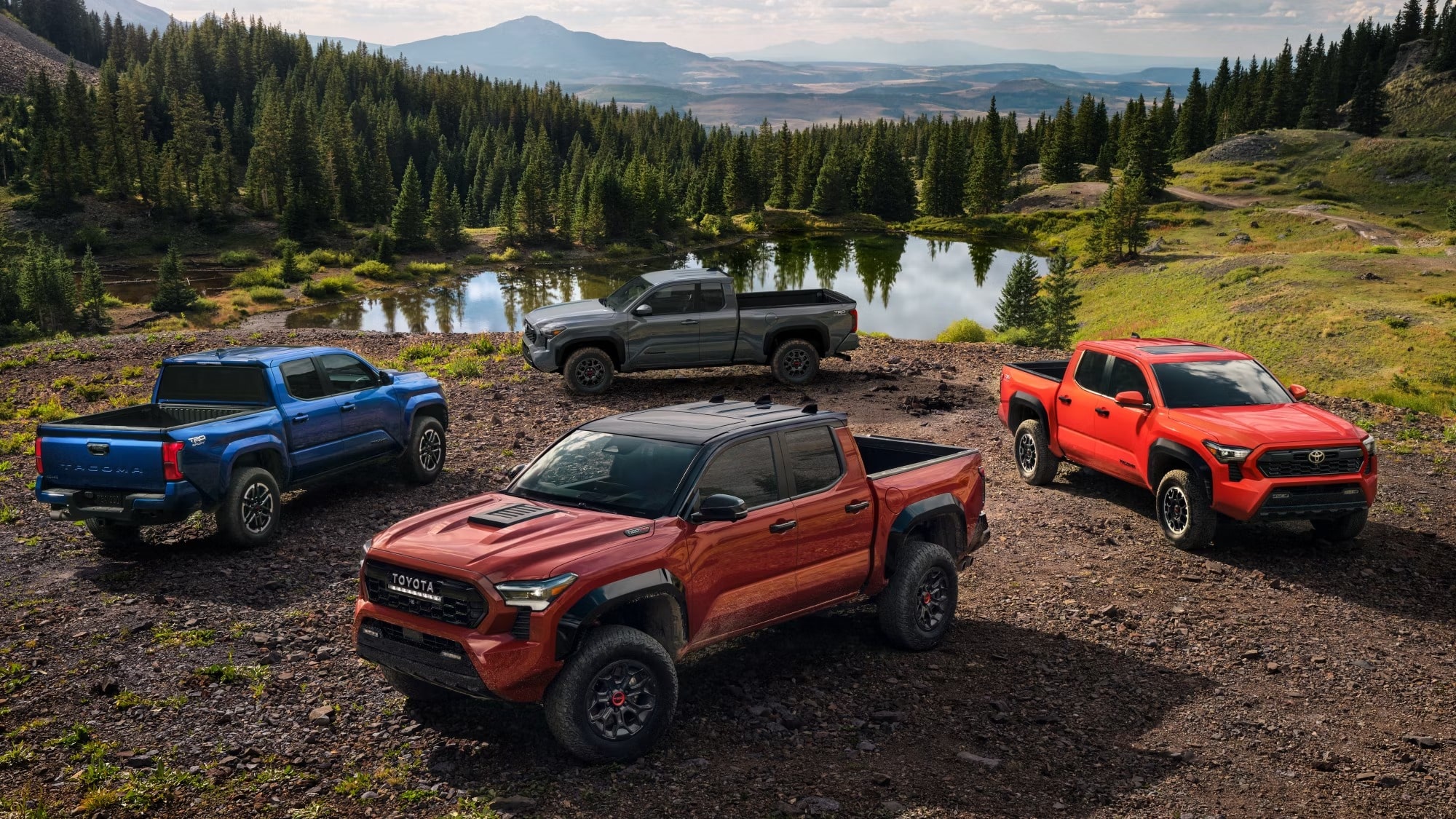
If you are shopping for your next Toyota truck, browse Flex San Diego’s inventory of quality used Tacomas and Tundras. Every truck is thoroughly inspected, competitively priced, and backed by a detailed vehicle history report to help you buy with confidence. Tacoma was also the star of the show for our recent Creator Series Event.
Tacoma for sale
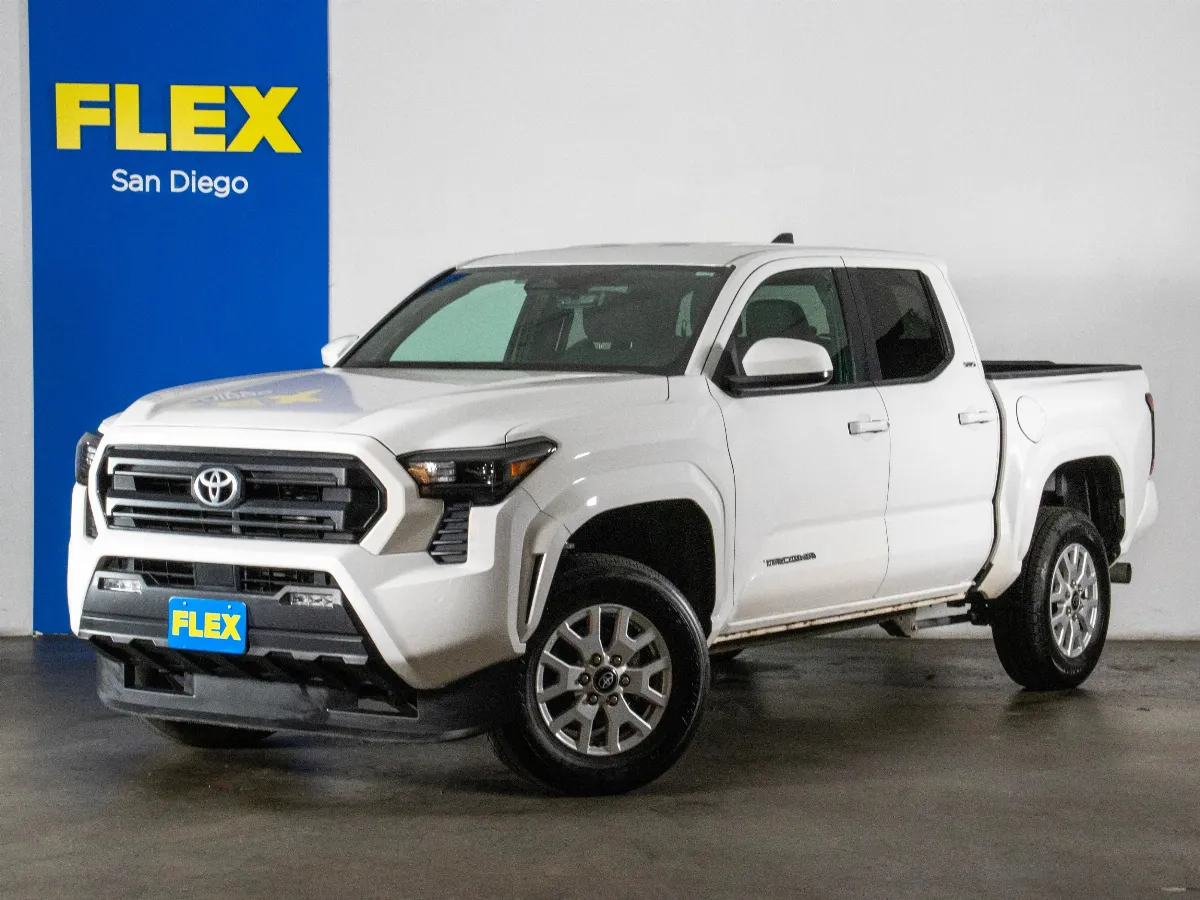 Featured Deal
2024 TOYOTA Tacoma Double Cab SR5 Pickup 4D 5 ft PRE OWNED
$30,998
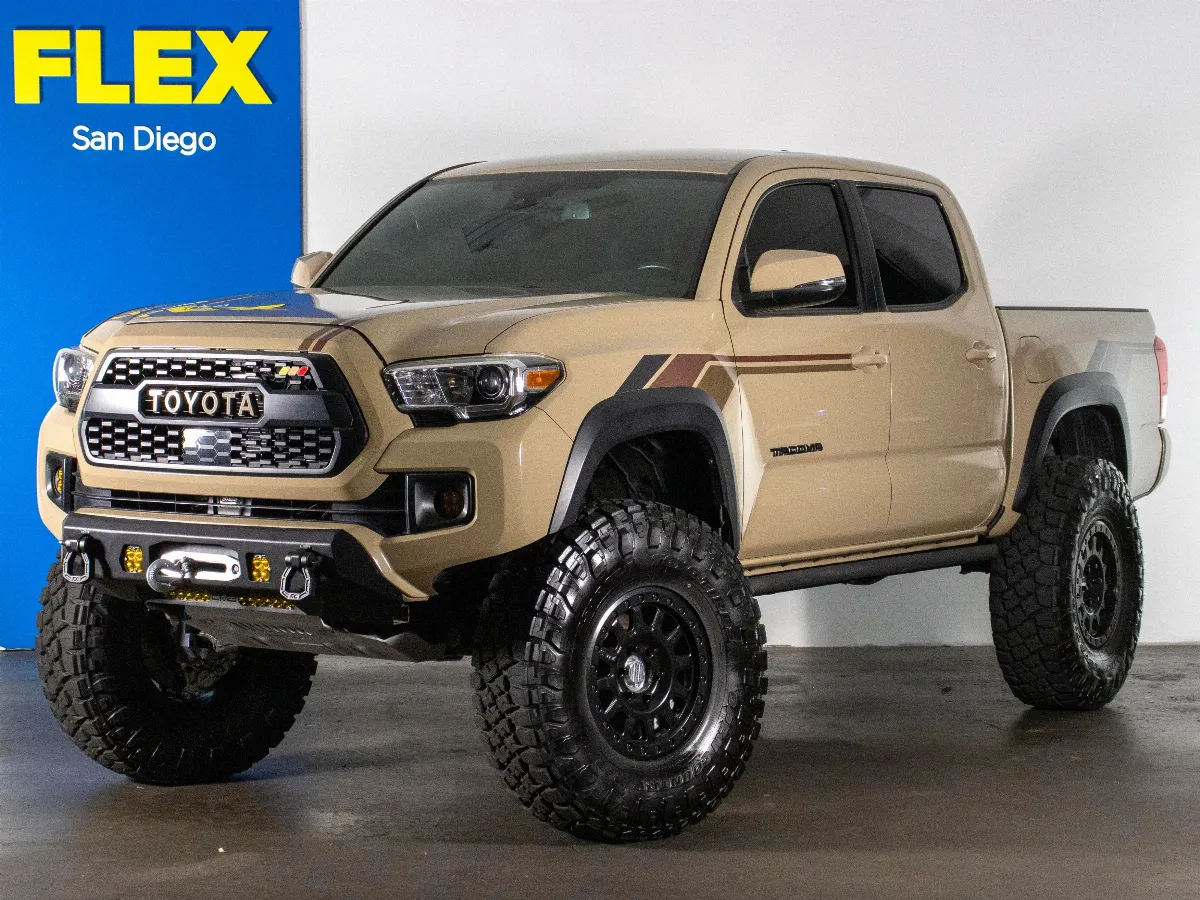
2019 TOYOTA Tacoma Double Cab TRD Off-Road Pickup 4D 5 ft PRE OWNED
$89,995
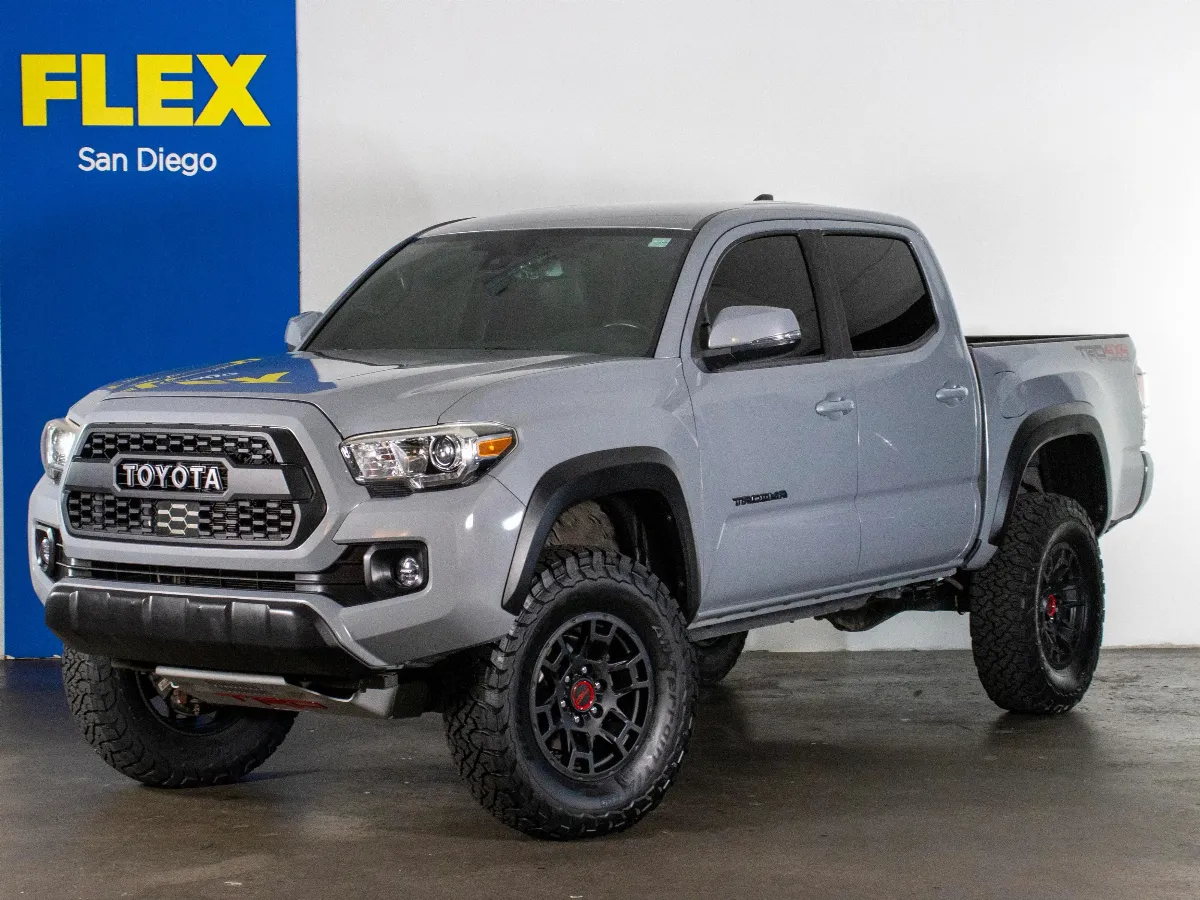
2021 TOYOTA Tacoma Double Cab TRD Off-Road Pickup 4D 5 ft PRE OWNED
$58,995
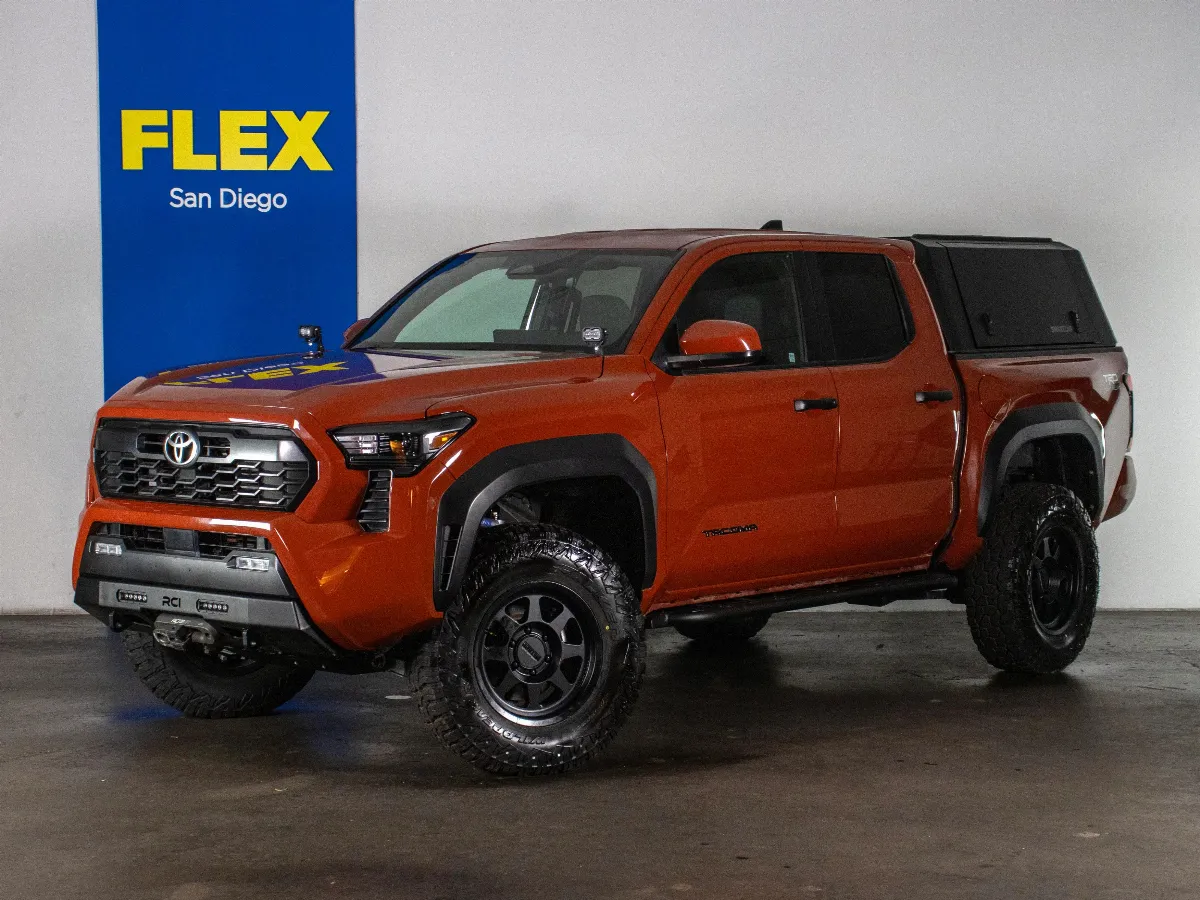
2025 TOYOTA Tacoma Double Cab TRD Off-Road Pickup 4D 5 ft PRE OWNED
$74,995
Don’t Just Look — Feel the Drive
Take your favorite model for a spin through the streets of San Diego. Feel the performance firsthand.