

The Ultimate Toyota Tacoma Buying Guide (2026): How to Choose the Perfect Used Truck
Buying a used Toyota Tacoma in 2026 isn’t like buying any other midsize truck. The rules are different. The market behaves differently. And if you walk onto a lot without knowing what you’re doing, you’ll either pay too much — or worse, pick the wrong year and regret it for years.
This guide covers everything: which generation fits your lifestyle, which cab and bed combinations actually matter, which drivetrain to choose, and exactly what to inspect before you hand over your money. By the time you’re done reading, you’ll know more about Tacomas than most salespeople do.
- Why the Toyota Tacoma Is the King of Midsize Trucks
- Step 1: Choose Your Generation & Model Year
- Step 2: Cab Sizes and Bed Lengths Explained
- Step 3: Powertrain and Drivetrain Options
- Step 4: Pick the Right Trim Level
- Step 5: The Pre-Purchase Inspection Checklist
- Tacoma vs. The Competition
- New vs. Used: Does the “Toyota Tax” Make Sense?
- How Much Does a Toyota Tacoma Cost? (Pricing Guide)
- FAQ — Frequently Asked Questions
- Is the Toyota Tacoma the Right Truck for You?
Why the Toyota Tacoma Is the King of Midsize Trucks
Before we get into the specifics, let’s establish why the Tacoma earns this reputation — because it’s not hype. It’s history.
Reliability the data backs up. J.D. Power rates the Tacoma at 80 out of 100 for quality and reliability. RepairPal puts its annual maintenance cost at just $478, well below the class average of $548. Those numbers matter when you’re doing the math on total ownership cost over five or ten years.
Resale value that defies the laws of depreciation. Most vehicles lose around 60% of their value over five years. The Tacoma loses roughly 22%, retaining up to 75% of its original value. That’s not a small difference — it’s the reason used Tacomas sometimes cost more than you’d expect. It’s not the “Toyota Tax.” It’s the market telling you something true about long-term value.
Durability measured in six figures. It’s genuinely common for Tacoma owners to cross the 200,000- to 300,000-mile mark on the original powertrain with nothing more than routine maintenance. That’s not marketing copy — it’s a pattern you’ll find repeated across owner forums, mechanic testimonials, and real-world data.
No midsize truck combines towing capacity, off-road capability, and these three qualities at the same level. That’s what makes the Tacoma the benchmark everything else gets measured against.
Step 1: Choose Your Generation & Model Year
The single most important decision you’ll make isn’t the trim level or the color — it’s the generation. Each era of Tacoma has a distinct personality, a set of strengths, and known weaknesses. Here’s how to think about each one.
| Model Year | Generation | Reliability Rating | Known Issues | Buy Recommendation |
|---|---|---|---|---|
| 2000–2004 | 1st Gen | ⭐⭐⭐⭐☆ | Early frame rust concerns | 👍 Good (inspect frame) |
| 2005 | 2nd Gen | ⭐⭐☆☆☆ | Severe frame rust, recalls | ❌ Avoid |
| 2006–2010 | 2nd Gen | ⭐⭐☆☆☆ | Severe frame rust, paint issues | ❌ Avoid |
| 2011–2012 | 2nd Gen | ⭐⭐⭐☆☆ | Minor rust, aging components | ⚠️ Average |
| 2013–2015 | 2nd Gen | ⭐⭐⭐⭐☆ | Few major issues (very refined) | 👍 Strong Buy |
| 2016–2017 | 3rd Gen | ⭐⭐⭐☆☆ | Transmission hesitation, gear hunting | ⚠️ Caution |
| 2018–2020 | 3rd Gen | ⭐⭐⭐⭐☆ | Improved reliability | 👍 Best Value |
| 2021–2023 | 3rd Gen | ⭐⭐⭐⭐⭐ | Very few issues | ⭐ Best Years |
| 2024+ | 4th Gen | ⭐⭐⭐⭐☆ | New platform (still evolving) | 👍 Promising |
1st Gen (1995–2004): The Classic Trail Legend
The first-generation Tacoma is lighter, more compact, and more raw than anything Toyota makes today. Off-road purists love it precisely because of its simplicity — less electronics, less weight, more feel. Parts availability is strong thanks to a devoted community, and a clean example with reasonable miles can still be found for under $15,000.
The caveat: frame rust. Early frames on these trucks, especially 2000–2004 models, can corrode badly in salt-belt states. If you’re buying a 1st Gen, an in-person frame inspection isn’t optional — it’s the entire inspection. A clean frame on a 1st Gen is a gem. A compromised one is a money pit.
Best for: Off-road enthusiasts, budget buyers, collectors. Not ideal if you want modern safety tech or daily-driver comfort.
2nd Gen (2005–2015): The Rugged Workhorse
The 2nd Gen was Toyota’s big leap into the modern midsize era. It grew wider, taller, and more capable as a daily driver without giving up the Tacoma’s core identity. The legendary 4.0L V6 engine that powered most of this generation is one of the most dependable truck engines ever made — smooth, strong, and seemingly indestructible.
The problem years are clearly defined: 2005–2010 models suffer from severe frame rust issues significant enough that Toyota issued a recall and replacement program. If you’re looking at a truck from this era, the frame must be inspected by someone who knows what they’re looking at. Post-recall replacement frames are fine; original frames from rust-belt states often aren’t.
The 2013–2015 models, however, are among the most universally respected Tacomas ever built. The platform had been refined for years, the frame issues were resolved, and the 4.0L V6 was at its best. These are strong buys.
Best for: Buyers who want proven long-term durability, towing utility, and the beloved 4.0L V6. The 2013–2015 range in particular offers exceptional value.
3rd Gen (2016–2023): The Modern Sweet Spot
If you want modern driver assistance technology, a better infotainment system, stronger off-road hardware from the factory, and a truck that still has plenty of useful life ahead of it — the 3rd Gen is your target. It dominates the current used market for good reason.
The catch is the early years. The 2016–2017 Tacomas introduced a new 3.5L V6 paired with a 6-speed automatic that many owners found frustrating — characterized by hesitant gear hunting between 30 and 50 mph. Toyota addressed this in subsequent model years, and by 2018 the transmission behavior had improved significantly.
The 2018–2023 range represents the most refined and feature-rich Tacomas you can buy used today. The 2021–2023 models in particular have very few reported problems and come loaded with Toyota Safety Sense as standard equipment.
Best for: Most buyers. Families, daily drivers, weekend off-roaders, and anyone who values modern technology alongside proven Tacoma durability.
4th Gen (2024–Present): The Turbocharged Era
The 4th Gen Tacoma is a genuinely new truck — new platform, new turbocharged 2.4L four-cylinder engine, and for the TRD Pro and Trailhunter, a hybrid i-FORCE MAX powertrain producing 326 horsepower. It’s the most advanced Tacoma ever built.
That said, early production runs of any new platform carry a degree of uncertainty. Some buyers are watching and waiting to see how the new drivetrain ages. For the used market, 4th Gen trucks are still relatively new and priced accordingly. If you want the latest technology and the warranty that comes with a nearly-new truck, this is it — just go in knowing you’re on the leading edge of a brand-new platform.
Best for: Buyers who want the newest technology, maximum performance, and are comfortable being early adopters of a fresh generation.
⚠️ Crucial Warning: Tacoma Years to Avoid
The Tacoma’s reputation for reliability is real, but it’s not uniform across every year. Frame rust, transmission issues, and early-generation growing pains have created a landscape where the year you pick matters enormously.
Before you commit to any specific year, read our dedicated year-by-year guide: Toyota Tacoma Years to Avoid (and the Best Years) — it covers the specific red flags, frame inspection tips, and exactly which model years earn our buy recommendation.
Step 2: Cab Sizes and Bed Lengths Explained
Most buyers focus on the generation first and sort out the cab and bed later. That’s backwards. The cab configuration determines how usable your Tacoma is for the people and gear you actually carry. Get this wrong and you’ll be living with it every day.
Access Cab (Extended Cab): Best for Utility and Couples
The Access Cab has a pair of small rear-hinged back doors that open to a cramped back seat — usable for short trips or children, but not comfortable for adults on anything longer than a quick errand. What you gain in exchange is a shorter wheelbase and, typically, a longer bed.
If you primarily haul tools, equipment, or gear rather than passengers, the Access Cab is worth considering. It’s also more maneuverable in tight off-road situations and fits more easily in parking structures. You’ll generally pay less for it than a comparable Double Cab, which makes it an appealing value play.
Best for: Solo drivers, couples, contractors, and buyers who prioritize bed space and maneuverability over rear passenger comfort.
Double Cab (Crew Cab): Best for Families and Gear
The Double Cab offers four full-size doors and a genuinely usable back seat — adults can sit back there comfortably for road trips. This is the configuration that dominates the used market by a wide margin, and for most buyers, it’s the obvious choice.
The trade-off is a shorter 5-foot bed when paired with the standard configuration. That’s enough for most everyday hauling, but if you’re planning to sleep in the bed, carry longer materials, or load a dirt bike, you’ll want to pay attention to bed length.
Best for: Families, buyers who regularly carry passengers, and anyone who values resale value (Double Cabs sell faster and for more money).
Short Bed (5 ft) vs. Long Bed (6 ft): The “DCLB” Unicorn
Most Tacomas you’ll encounter are Double Cab Short Beds — four doors, 5-foot bed. They’re easy to park, practical for most uses, and widely available.
The Double Cab Long Bed (known in the community as the “DCLB”) gives you four full doors and a 6-foot bed — the best of both worlds for buyers who need hauling capacity without giving up rear passengers. The problem is availability. Toyota built far fewer DCLBs than short beds, and the enthusiast community knows it. When a clean DCLB hits the market at a fair price, it moves quickly.
Pro tip: If you find a well-maintained DCLB in a desirable year and trim, don’t overthink it. That combination rarely sits on a lot for long. The long bed is genuinely better for overlanding, truck camping, and carrying bikes, kayaks, or longer building materials — and finding one in good condition is the hard part.
Step 3: Powertrain and Drivetrain Options
The engine and drivetrain you choose affect everything from fuel bills to resale value to how capable the truck actually is when you need it. Here’s what you need to know.
2.7L 4-Cylinder vs. 3.5L / 4.0L V6
The 2.7L four-cylinder exists, and it gets modestly better fuel economy than the V6. For very light duty use — urban commuting with minimal towing or hauling — it technically gets the job done.
In practice, the Tacoma is a heavy truck for its class. Under load, the four-cylinder works hard, and it becomes more noticeable if you add a lift kit or larger tires. More critically, the used market tells you something: V6 Tacomas sell faster and hold their value better. The premium you pay for a V6 at purchase is money you largely recoup when you sell. For most buyers, the V6 is the right call, and it’s worth holding out for one.
2WD (PreRunner) vs. 4WD: Do You Really Need 4×4?
Here’s a piece of insider knowledge worth having: the Tacoma PreRunner uses the same independent front suspension and body-on-frame architecture as the 4WD model. From the outside, they look nearly identical. The difference is that the PreRunner is rear-wheel drive only — no front axle, no transfer case.
For buyers in Southern California, Arizona, Texas, or other areas that see little snow and where most driving is on-road, the PreRunner is a legitimate choice. It’s lighter, cheaper to buy, cheaper to maintain (no front differential, no transfer case fluid), and rides slightly better on pavement because of the weight reduction.
The honest advice: If you live where it snows regularly, or if you plan to take the truck off-road on anything but hardpacked trails, spend the money on 4WD. If you’re in a dry climate and never go off-road, a clean PreRunner is a financially smart alternative that still gives you the Tacoma’s looks and reliability.
Automatic vs. Manual Transmission
This matters to a specific type of buyer: the enthusiast who wants driver involvement and finds automatics boring. The Tacoma is one of the very few midsize trucks that offered a manual transmission option, making it something of a unicorn in its segment.
Because Toyota limited the 6-speed manual to specific trims—mostly the Double Cab configurations of the TRD Sport and TRD Off-Road—finding a well-maintained manual Tacoma is incredibly difficult today. This extreme scarcity means manual models often command a premium price on the used market and sell almost instantly. If a stick shift matters to you, be prepared to act fast when one surfaces.
Step 4: Pick the Right Trim Level
Toyota has built Tacomas for everyone from work-truck buyers on a budget to serious off-road enthusiasts willing to spend near-luxury money. Understanding where each trim sits helps you avoid overpaying for equipment you’ll never use — or underspending and missing features you actually need.
| Trim Level | Key Features | Price Range (Approx.) | Best For |
|---|---|---|---|
| SR | 2.4L turbo (228 hp), basic interior, leaf-spring suspension | $32K–$36K | Work truck / budget buyers |
| SR5 | 278 hp version, better tech, alloy wheels, comfort upgrades | $36K–$42K | Daily driving + light utility |
| TRD Sport | Sport-tuned suspension, hood scoop, street-focused style | $40K–$46K | City/highway driving |
| TRD Off-Road | Locking diff, crawl control, Bilstein off-road shocks | $42K–$50K | Trail and off-road use |
| Limited | Premium interior, 14-inch screen, Adaptive Variable Suspension (AVS) | $53K–$57K | Comfort + luxury daily driving |
| TRD Pro / Trailhunter | i-FORCE MAX Hybrid (326 hp), Fox/OME shocks, maximum off-road gear | $63K–$68K+ | Serious off-road & overland enthusiasts |
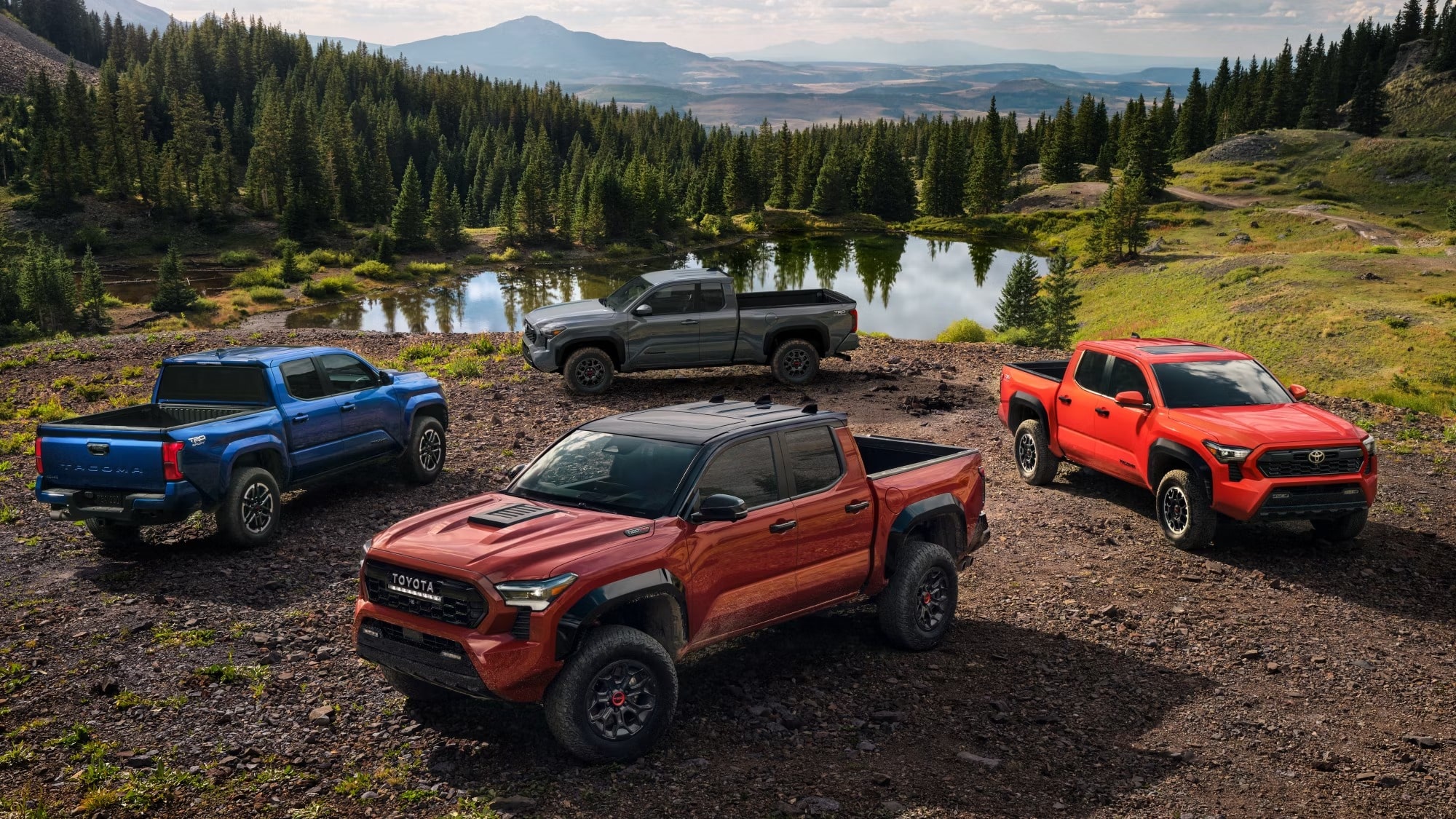
The Core Lineup: SR, SR5, and Limited
SR is the base model — functional, simple, and priced accordingly. It’s the trim you’d find fleet buyers or cost-conscious work truck buyers gravitating toward. You get the essentials without any frills.
SR5 is the most popular trim and the sweet spot for most daily drivers. It adds meaningful comfort upgrades — alloy wheels, better interior materials, upgraded audio — without crossing into off-road-specific territory. If you want a capable, pleasant daily driver, the SR5 is the starting point worth considering.
Limited is Toyota’s luxury take on the Tacoma. Expect premium interior materials, a large infotainment screen, and on newer models, the Adaptive Variable Suspension. It’s aimed at buyers who want a truck’s utility but prefer a car-like interior experience.
The Off-Road Lineup: TRD Sport, TRD Off-Road, and TRD Pro
TRD Sport sounds more capable than it is. It has sport-tuned suspension, a distinctive hood scoop, and sporty visual upgrades — but it’s optimized for pavement, not trails. It looks aggressive without being particularly more capable off-road than an SR5.
TRD Off-Road is the sweet spot for actual trail use. It comes with a locking rear differential, crawl control, and Bilstein shocks calibrated for off-road use. If you plan to use the truck for anything beyond light gravel roads, this is the minimum trim worth considering.
TRD Pro (and on the 4th Gen, Trailhunter) is the factory flagship. It carries maximum off-road hardware, including upgraded Fox shocks, heavy-duty skid plates, and a specialized desert air intake on certain 3rd Gen model years. It carries a significant price premium and is aimed at buyers who use the truck hard on serious terrain.
Deep Dive: Which Trim Is Right for You?
Trim-level decisions get complicated when you factor in the used market, regional availability, and which specific features are actually worth the premium. The price differences between trims don’t always match the capability differences.
For a complete breakdown of 3rd Gen trim comparisons and what each costs on the used market, see: Toyota Tacoma 3rd Gen Trim Levels (2016–2023): SR vs TRD Compared
Step 5: The Pre-Purchase Inspection Checklist (The 15-Point Guide)
Never buy a used Tacoma without walking through this list. A dealer’s assurance that the truck is “in great shape” is not a substitute for your own eyes and a test drive. This is the same checklist a good independent mechanic will use — and you should do it yourself before you even schedule the professional inspection.
Exterior and Frame Inspection
- 1. Frame rust (this one is non-negotiable): Focus your inspection on the area near the leaf spring mounts, the crossmembers, and the rear frame rails. Surface rust that wipes off is cosmetic. Flaking, scaling, or visible perforations in the metal are a dealbreaker — walk away immediately. This is especially critical on 2nd Gen trucks from 2005–2010.
- 2. Bed condition: Check the mounting bolts for severe corrosion and inspect the bed floor for rust-through. Aftermarket bed liners sometimes hide damage underneath — pull up any removable liner to check.
- 3. Paint and body: Look for mismatched panel gaps or paint that doesn’t match adjacent panels — signs of prior collision repair not disclosed in the vehicle history.
Powertrain and Drivetrain Test
- 4. Timing cover leaks: On the 3.5L V6 (3rd Gen), look for oil seepage around the timing cover. Minor seepage is common; heavy leakage is not.
- 5. Coolant valley leak: On the 4.0L V6 (2nd Gen), inspect under the intake manifold for pink or white crusty residue — a sign of a coolant leak that can be expensive to address.
- 6. Rear differential: Check the rear differential housing for heavy oil leaks. A damp housing may be a minor seal issue; an actively dripping differential needs immediate attention.
- 7. 4WD engagement: On a loose surface or gravel area, shift into 4LO. It should engage smoothly and cleanly. A grinding engagement or refusal to shift is a red flag.
- 8. U-joints and driveshaft: Drive at highway speed and feel for vibration, particularly in the 55–70 mph range. Vibration at speed that isn’t tire-related often points to a worn U-joint or driveshaft imbalance.
Suspension, Steering, and Interior
- 9. Leaf springs: Look for visibly flattened or cracked leaf springs, particularly on older 2nd Gen trucks with high miles. Sagging springs change the truck’s geometry and handling characteristics.
- 10. Lower ball joints: Drive slowly over speed bumps and listen for a clunking sound from the front suspension. A clunk under that kind of load is a classic ball joint symptom.
- 11. Steering rack: With the truck parked and running, turn the wheel slowly from lock to lock. Looseness, grinding, or stickiness in the steering feel indicates wear. Also inspect the steering rack boots for tears.
- 12. Air conditioning: This sounds basic, but verify it blows cold immediately on startup. AC repairs on a truck that’s otherwise clean can run $500–$1,500 — don’t assume it works.
- 13. Suspension bushings: Look at the control arm bushings for cracked or dried-out rubber. This is a maintenance item, but deteriorated bushings affect handling and indicate overall maintenance level.
- 14. Aftermarket mods/lifts: If the truck has been lifted, ask who did the work and when. A professionally installed quality lift is fine. A budget lift installed by someone who didn’t know what they were doing accelerates wear on wheel bearings, CV axles, and alignment components.
- 15. Service history: A thick folder of documented oil changes, fluid services, and maintenance records is worth more than low mileage alone. It tells you how the previous owner treated the truck. Tacomas with documented maintenance histories are worth paying a premium for.
⚠️ Specific 3rd Gen Troubles to Watch For
The 2016–2017 early 3rd Gen models have documented issues with transmission gear hunting, particularly between 30–50 mph. There are also known concerns with the 3.5L V6’s timing cover and PCV system on higher-mileage examples.
If you’re considering a 2016–2023 Tacoma, read this first: 3rd Gen (2016–2023) Toyota Tacoma Problems: What Owners Are Reporting — it covers the specific complaints from actual owners and what to look for before you buy.
Tacoma vs. The Competition
| Truck | Starting Price | Reliability | Towing Capacity | Resale Value |
|---|---|---|---|---|
| Toyota Tacoma | ~$32,000 | ⭐⭐⭐⭐⭐ | Up to 6,500 lbs | ⭐⭐⭐⭐⭐ |
| Toyota Tundra | ~$40,000+ | ⭐⭐⭐⭐⭐ | Up to 12,000 lbs | ⭐⭐⭐⭐☆ |
| Nissan Frontier | ~$30,000 | ⭐⭐⭐⭐☆ | Up to 7,150 lbs | ⭐⭐⭐☆☆ |
| Ford Ranger | ~$33,000 | ⭐⭐⭐☆☆ | Up to 7,500 lbs | ⭐⭐⭐☆☆ |
| Chevy Colorado | ~$31,000 | ⭐⭐⭐☆☆ | Up to 7,700 lbs | ⭐⭐☆☆☆ |
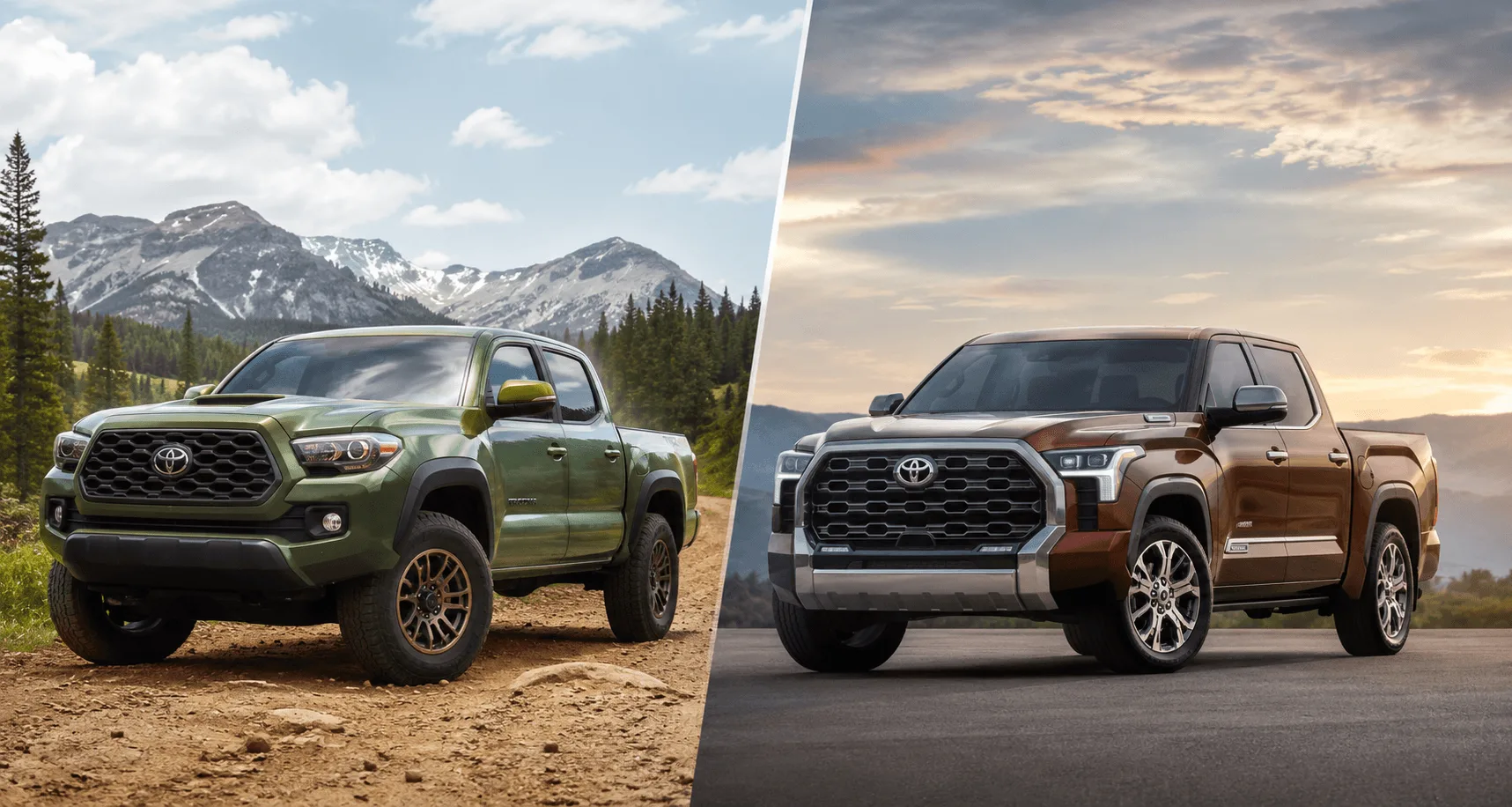
Tacoma vs. Tundra: If your towing needs regularly exceed 7,000 lbs, or if you need maximum interior room for a large family, the full-size Tundra deserves serious consideration. For everything else — garage-friendly dimensions, tight off-road trails, and superior maneuverability — the Tacoma is the smarter choice.
Tacoma vs. Ford Ranger: The Ranger offers higher towing capacity (7,500 lbs) and competitive features at a similar price. Where the Tacoma wins decisively is long-term reliability and the depth of community support. Ranger resale value has been improving but still trails the Tacoma meaningfully.
Tacoma vs. Nissan Frontier: The Frontier is a genuinely solid truck that often sells for less than a comparable Tacoma. For buyers on a strict budget who prioritize upfront cost, it’s worth considering. But when you factor in long-term depreciation, the Tacoma’s “Toyota Tax” often evens out or reverses over a 5-year ownership period.
Tacoma vs. Chevy Colorado: The Colorado offers a tech-forward interior and competitive performance specs. But historical depreciation data shows it loses value noticeably faster than the Tacoma, which matters significantly when it’s time to sell or trade.
New vs. Used: Does the “Toyota Tax” Make Sense?
Understanding the Tacoma Depreciation Curve
The phrase “Toyota Tax” refers to the frustration buyers feel when they find used Tacomas priced close to — or sometimes above — comparable new competitors. It’s a real phenomenon. But the reason it exists is also a financial advantage hiding in plain sight.
Most vehicles depreciate roughly 60% over their first five years. The Tacoma depreciates approximately 22% over that same period, retaining around 75% of its original value over time. That’s not a coincidence of popularity — it’s the market recognizing that these trucks are genuinely durable, and demand for reliable used trucks consistently outpaces supply.
Why Paying More Upfront Saves You Money Later
Here’s the math that most buyers don’t fully work through: if you buy a $25,000 competitor truck instead of a $33,000 used Tacoma, you save $8,000 at the start. But if that competitor loses 50% of its value over five years while the Tacoma loses 22%, you’ve actually come out behind on total cost of ownership — before even factoring in reliability differences and the maintenance savings that come with a Toyota powertrain.
The “Toyota Tax” isn’t a penalty. It’s a signal that you’re buying something that holds its value. Buyers who understand this dynamic tend to pay the premium confidently, knowing that a well-maintained Tacoma is one of the few vehicles in its class that genuinely protects your investment.
How Much Does a Toyota Tacoma Cost? (Pricing Guide)
| Year Range | Mileage Range | Typical Price |
|---|---|---|
| 2000–2004 | 150K–250K miles | $8K – $14K |
| 2005–2010 | 120K–200K miles | $12K – $20K |
| 2011–2015 | 80K–150K miles | $18K – $28K |
| 2016–2019 | 50K–120K miles | $25K – $35K |
| 2020–2023 | 20K–80K miles | $33K – $45K |
| 2024–2026 | 0–10K miles | $34K – $65K+ |
FAQ — Frequently Asked Questions
Is a Toyota Tacoma a good first truck?
Yes — with one important caveat. The Tacoma’s midsize dimensions make it significantly easier to drive and park than a full-size truck, which matters when you’re building confidence with a larger vehicle. Its reliability means first-time owners are unlikely to face surprise repair bills in the first few years. The caveat is price: Tacomas cost more upfront than comparable competitors, which can stretch a first-time buyer’s budget. If the budget allows, though, the Tacoma is an excellent entry point.
What is the most reliable year for a Toyota Tacoma?
The years with the strongest real-world reliability records are the 2013–2015 (late 2nd Gen), 2018–2020 (refined 3rd Gen), and 2021–2023 (late 3rd Gen) models. The 2021–2023 range has the fewest reported issues of any modern Tacoma generation.
See the full year-by-year breakdown: Toyota Tacoma Years to Avoid (and the Best Years)
Are Toyota Tacomas expensive to maintain?
No. RepairPal data puts average annual maintenance costs at $478, which is roughly 13% below the midsize truck class average of $548. Combined with the truck’s below-average frequency of serious repairs, the Tacoma is among the least costly midsize trucks to own over time.
How many miles can a Toyota Tacoma last?
With consistent maintenance — oil changes, fluid services, and addressing minor issues before they become major ones — reaching 200,000 to 300,000 miles on the original powertrain is genuinely common. This isn’t marketing language. It’s a pattern repeated by thousands of real owners, and it’s one of the primary reasons the resale market stays strong even on higher-mileage examples.
Should I buy a Tacoma with over 100,000 miles?
Yes, under the right conditions. The conditions that matter: a rust-free frame (inspect in person), documented service history, and ideally a V6 engine. A well-maintained 2nd or 3rd Gen Tacoma at 100,000 miles is often just entering its second act. Many owners describe that milestone as the point where the truck is “finally broken in.”
Conclusion: Is the Toyota Tacoma the Right Truck for You?
The Tacoma is not the cheapest midsize truck you can buy. It’s not the most fuel-efficient. It doesn’t win every spec comparison on paper.
What it is — and what 30 years of ownership data has consistently confirmed — is the most durable, most financially resilient midsize truck you can put your name on. History has proven, repeatedly, that the buyers who pay the Tacoma premium and maintain their trucks properly come out ahead. Not just in reliability. Not just in satisfaction. In actual dollars, when the time comes to sell.
If you’re looking for a truck that you can buy once, drive hard, and either keep for 300,000 miles or sell for a strong return whenever you’re ready to move on — there is no better option in the midsize segment.
That’s not brand loyalty talking. That’s the used market, the depreciation curves, and the repair data all pointing in the same direction. The Tacoma earns its reputation every year. The question isn’t really whether it’s a good truck. The question is which one is right for you — and you now have everything you need to answer it.
Ready to buy? Explore our Toyota Tacoma inventory at flexmotor.com
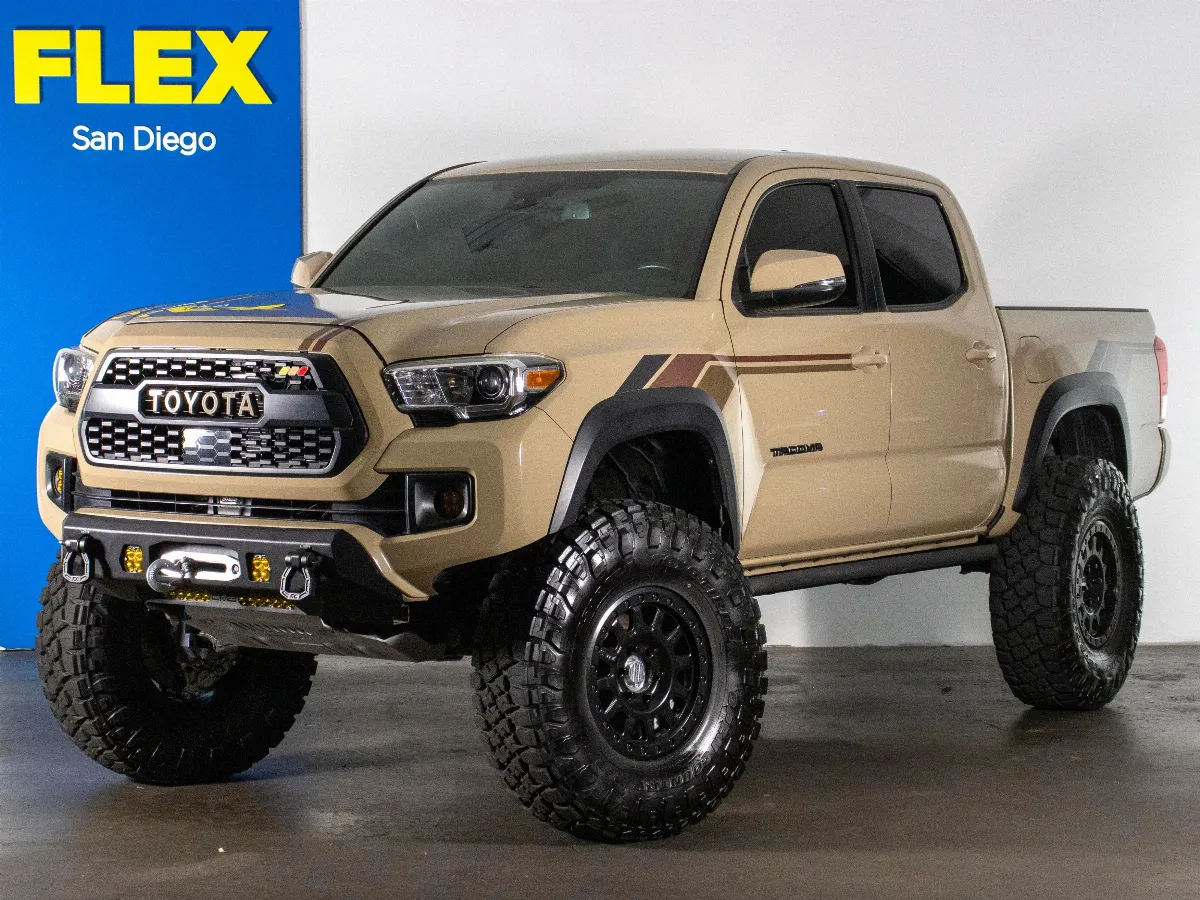 Featured Deal
2019 TOYOTA Tacoma Double Cab TRD Off-Road Pickup 4D 5 ft PRE OWNED
$90,080
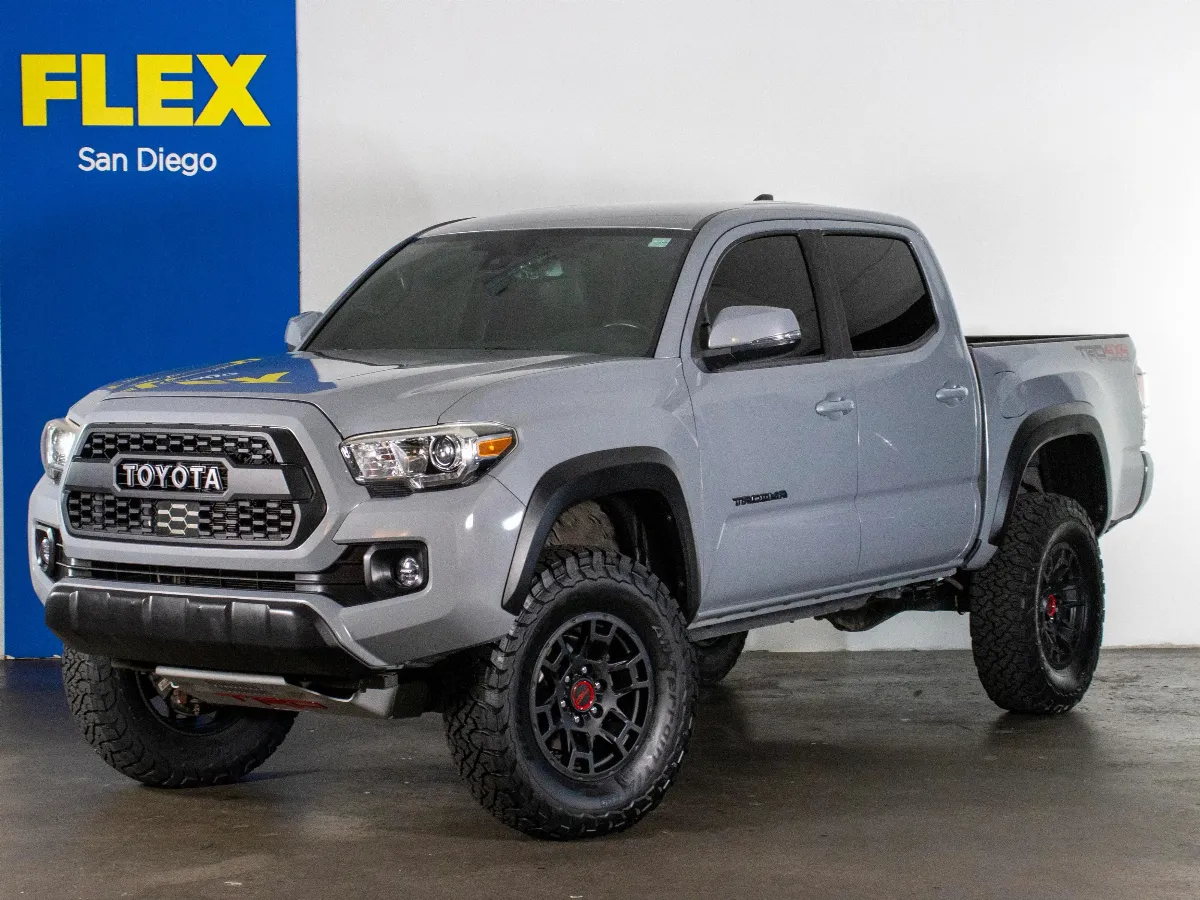 Featured Deal
2021 TOYOTA Tacoma Double Cab TRD Off-Road Pickup 4D 5 ft PRE OWNED
$59,080
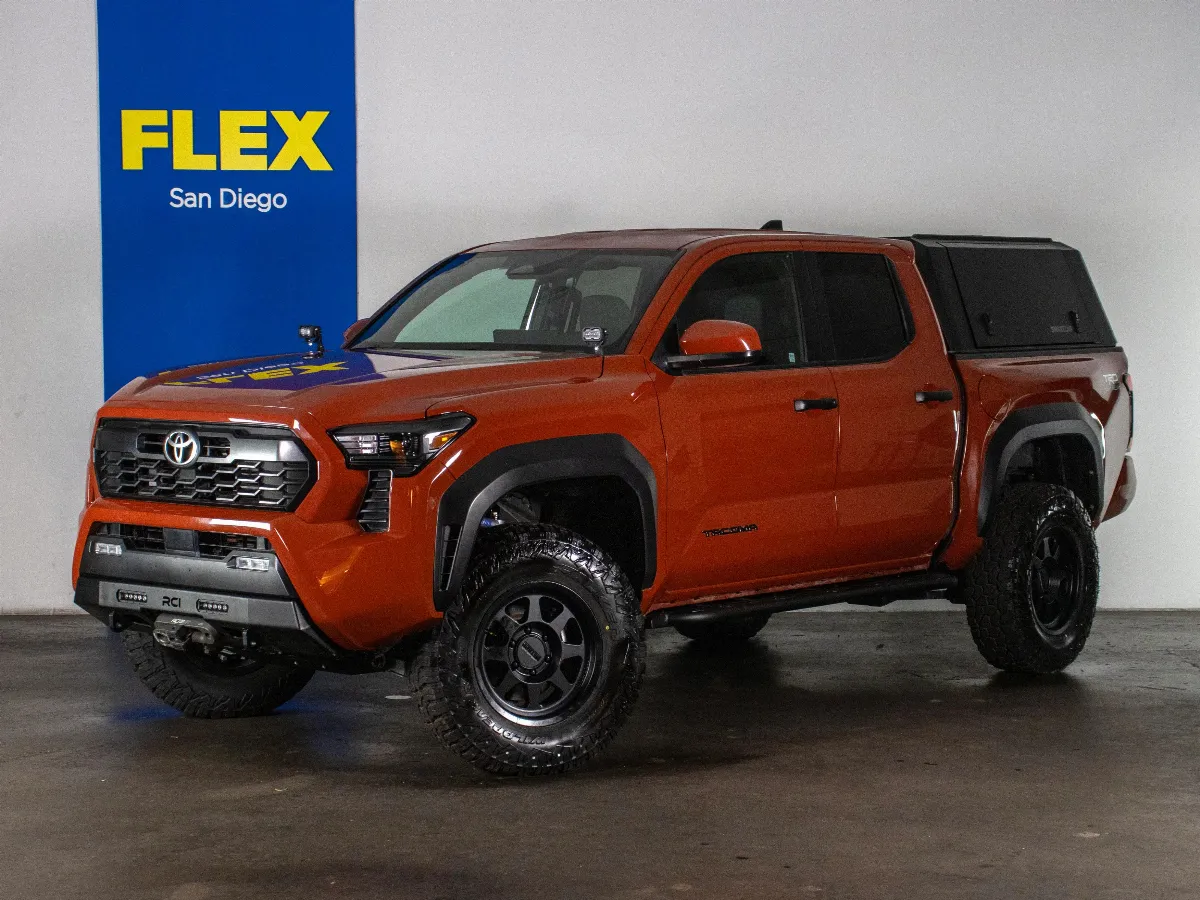 Featured Deal
2025 TOYOTA Tacoma Double Cab TRD Off-Road Pickup 4D 5 ft PRE OWNED
$75,080
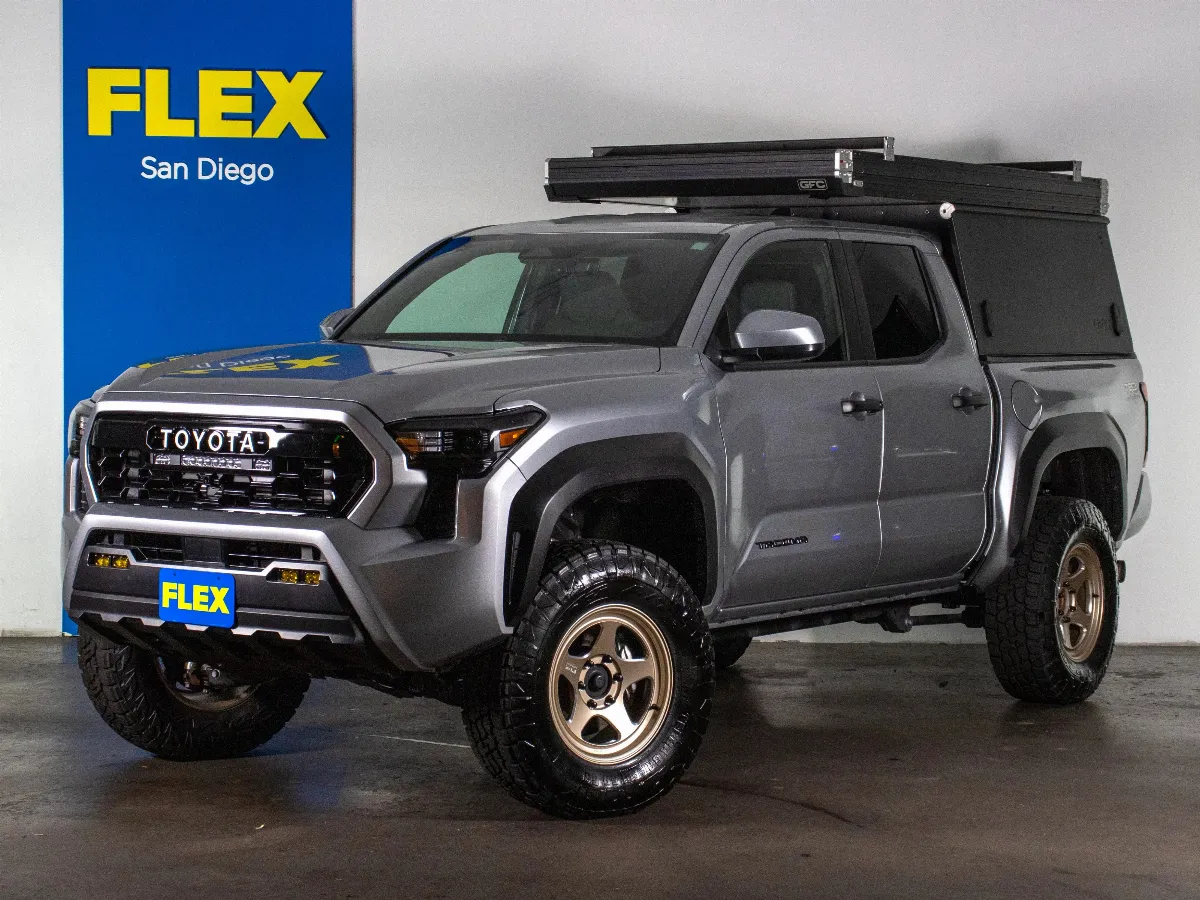 Featured Deal
2025 TOYOTA Tacoma Double Cab TRD Off-Road Pickup 4D 5 ft PRE OWNED
$68,080
Don’t Just Look — Feel the Drive
Take your favorite model for a spin through the streets of San Diego. Feel the performance firsthand.