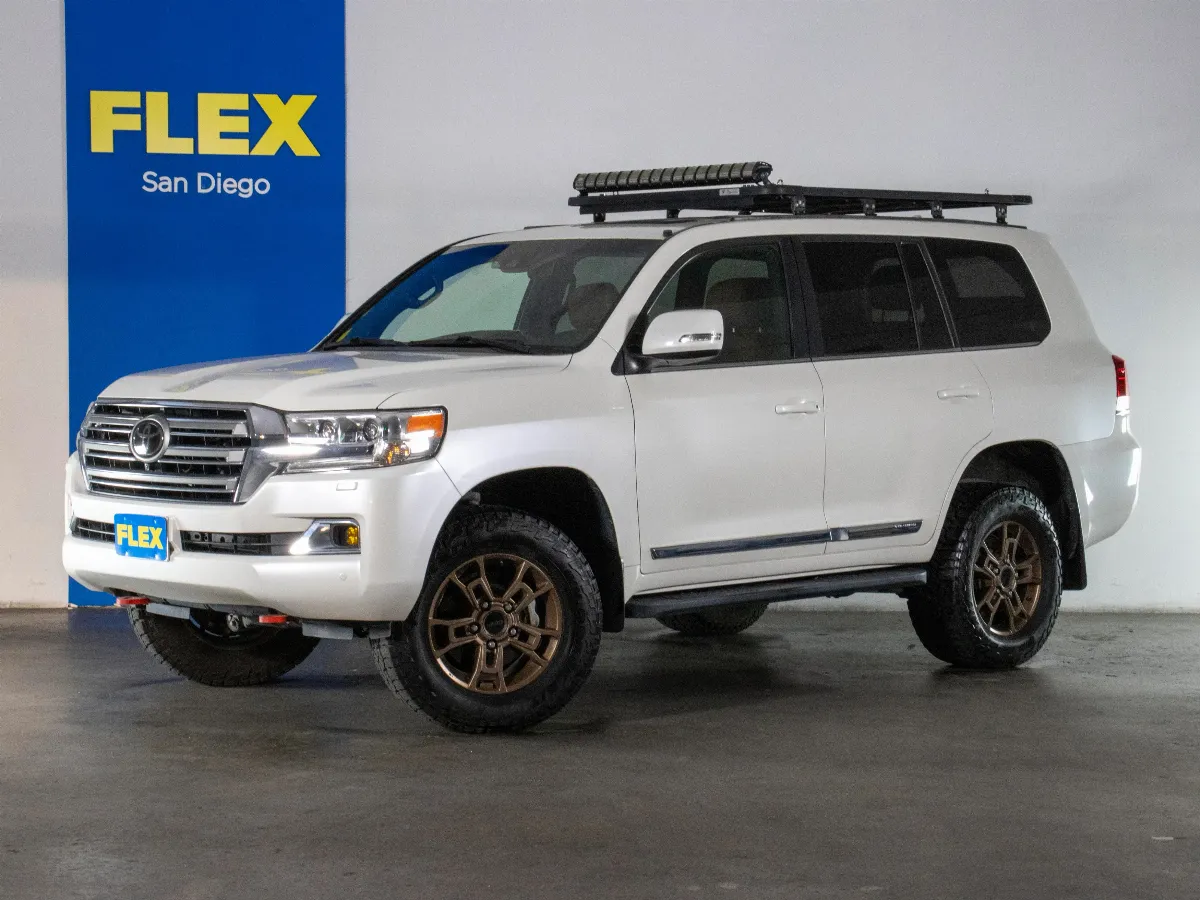
New tires are one of the first upgrades most Land Cruiser owners make, and one of the most confusing. All-terrain, rugged-terrain, and mud-terrain tires can look similar on a website, but they feel very different on the highway, on a forest road, and in the mud.
This guide explains each type in plain terms and helps you choose based on how you actually use your Land Cruiser, whether that’s: commuting, highway road trips, camping, forest roads, or mud and rocks.
By the FLEX Journal Team · Tire specs and warranties checked October 2026
- Quick Answer: Which Tire Type Should Land Cruiser Owners Choose?
- Quick Comparison Chart: A/T vs R/T vs M/T
- What A/T, R/T, and M/T Tires Mean
- All-Terrain Tires: Best for Daily Driving and Light Trails
- Rugged-Terrain Tires: The Middle Ground Between A/T and M/T
- Mud-Terrain Tires: Best for Serious Off-Road Use
- On-Road Comfort, Road Noise, and Fuel Economy
- Off-Road Performance: Gravel, Mud, Rocks, Sand, and Snow
- Load Rating, Sidewall Strength, and Durability
- Tire Size and Fitment for Land Cruiser
- Best Tire Type by Land Cruiser Use Case
- Why Tire Category Names Can Be Misleading
- Common Mistakes When Choosing Land Cruiser Tires
- FLEX Recommendation: A/T, R/T, or M/T for Land Cruiser?
- FAQ: A/T vs R/T vs M/T Tires for Land Cruiser
- Conclusion: Choose the Tire That Matches How You Use Your Land Cruiser
- Find the Right Land Cruiser at FLEX
Quick Answer: Which Tire Type Should Land Cruiser Owners Choose?
Here’s the short version:
- Mostly pavement: All-terrain (A/T)
- Want a tougher look and better trail ability without going extreme: Rugged-terrain (R/T)
- Regular mud, rocks, and serious off-road driving: Mud-terrain (M/T)
Choose A/T Tires If You Drive Mostly on Pavement
If your Land Cruiser spends most of its time commuting, running errands, and covering highway miles, an A/T is usually the easiest tire to live with. Compared with R/T and M/T tires, A/Ts generally offer:
- Lower road noise
- A smoother ride
- Better fuel economy
- More confidence on wet pavement
- Longer tread life
They still handle gravel roads, forest roads, and campground access with ease.

Choose R/T Tires If You Want More Aggressive Looks and Trail Ability
An R/T is for owners who want something tougher-looking and more capable than an A/T, but don’t want the noise and compromises of an M/T. It’s a good fit if your weekends include:
- Camping trips on unpaved roads
- Rough forest roads
- Light mud and ruts
Choose M/T Tires If You Prioritize Serious Off-Road Performance
If you regularly drive in mud, over rocks, through deep ruts, or on badly washed-out trails, an M/T gives you the most traction and toughness. The trade-offs are real, though. Expect:
- More road noise, especially on the highway
- Lower fuel economy
- Faster wear on pavement
- Less grip on wet roads and in snow than many A/Ts
Quick Comparison Chart: A/T vs R/T vs M/T
This chart shows typical differences between the categories. Individual tires can vary a lot within each category, which is covered later in this guide.
| Factor | A/T (All-Terrain) | R/T (Rugged-Terrain) | M/T (Mud-Terrain) |
|---|---|---|---|
| Daily driving | Best | Good | Fair |
| Highway | Best | Good | Fair |
| Road noise | Lowest | Moderate | Highest |
| Fuel economy | Best | Moderate | Lowest |
| Wet pavement | Best | Good | Fair |
| Snow | Good; some carry 3PMSF | Varies; check each tire | Fair in deep snow; rarely 3PMSF |
| Mud | Fair | Good | Best |
| Rocks | Good | Very good | Best |
| Looks | Mild | Aggressive | Most aggressive |
| Tread life | Longest | Moderate | Shortest |
| Best for | Commuters, families, road trippers | Weekend campers and trail drivers | Dedicated off-road builds |
What A/T, R/T, and M/T Tires Mean
The letters describe each tire’s intended balance between pavement and dirt. The main differences come down to four things:
- Tread voids: The gaps between tread blocks. Wider voids clear mud and stones better but are noisier on pavement.
- Block size: Larger, chunkier blocks bite harder off-road but can feel less stable on the road.
- Sidewalls: More aggressive tires usually have tougher sidewalls, often with lugs that grip rocks and rut walls.
- Pavement manners: Generally, the more off-road focus a tire has, the more it gives up in noise, comfort, wet grip, and wear on pavement.
What Are All-Terrain Tires?
A/T stands for all-terrain. These are the all-rounders. They’re comfortable on pavement but have enough tread to handle gravel roads, forest roads, and trips to the campground. For most Land Cruiser owners, they’re the default upgrade from factory tires.
What Are Rugged-Terrain Tires?
R/T stands for rugged-terrain. These tires sit between A/T and M/T. They have bigger voids and a chunkier look than an A/T, but they’re easier to live with than an M/T. Toyo, for example, describes its Open Country R/T as an “on-/off-road rugged terrain hybrid M/T,” with off-road ability inspired by the Open Country M/T and a quieter ride that nods to the Open Country A/T.
What Are Mud-Terrain Tires?
M/T stands for mud-terrain. These have large tread blocks and wide voids to clear mud and stones, plus tough sidewalls. They’re designed to maximize traction on rough terrain. Toyo’s Open Country M/T, for example, features open, scalloped shoulder blocks to eject mud and over-the-shoulder tread for deep mud.
What About H/T Tires?
H/T stands for highway-terrain. These tires are designed mainly for pavement and are similar to what many Land Cruisers came with from the factory. They’re quiet, comfortable, and efficient, but they offer less grip and toughness on dirt and rocks. If you plan to visit campgrounds on dirt roads or drive forest roads regularly, an A/T or more aggressive tire is worth considering.

All-Terrain Tires: Best for Daily Driving and Light Trails
For a Land Cruiser that’s driven every day and heads out to camp or explore dirt roads on weekends, an A/T is usually the easiest choice to recommend.
Main Strengths of A/T Tires
- Quiet and comfortable: Smaller voids and tighter tread patterns generally mean less noise and a smoother ride.
- Confident in the rain and on the highway: More siping and contact patch help on wet pavement and at speed.
- Winter capability: Some A/Ts carry the Three-Peak Mountain Snowflake (3PMSF) rating. The Toyo Open Country A/T III is one example.
- Long tread life: A/Ts often have longer treadwear warranties. The Toyo A/T III, for example, carries a 65,000-mile treadwear warranty on P-metric sizes and 50,000 miles on LT sizes.
- Plenty of capability: Gravel, forest roads, and campground access are well within an A/T’s abilities.
Potential Drawbacks of A/T Tires
- Smaller voids can pack with mud in deep, sticky conditions, so an A/T won’t clear mud as well as an M/T
- Less sidewall and lug protection than more aggressive tires on sharp rocks
- A milder look than an R/T or M/T, if appearance matters to you
Who Should Choose A/T Tires?
A/Ts are a good fit if your driving is roughly 70% pavement and 30% camping and dirt roads, and if you value: family use, long highway trips, fuel economy, and a quiet cabin.
Rugged-Terrain Tires: The Middle Ground Between A/T and M/T
R/Ts are for owners who find an A/T a little too tame but don’t want to go all the way to an M/T. They balance looks, off-road ability, and daily driving.
Main Strengths of R/T Tires
- Bigger voids and more aggressive shoulders give you more confidence in mud, gravel, and rough forest roads
- Tougher sidewall styling and lugs help on rocks and in ruts
- A more aggressive look that suits a built Land Cruiser
- Daily driving that’s still very livable compared with an M/T
Potential Drawbacks of R/T Tires
- More noise than most A/Ts: Larger voids usually mean more road noise.
- Weight and fuel economy: R/Ts are often heavier than comparable A/Ts. In LT285/70R17, Toyo lists its R/T at about 60 lb and its A/T III at about 55 lb.
- Not a true mud tire: They won’t match an M/T in deep mud or serious rock crawling.
Who Should Choose R/T Tires?
R/Ts suit owners who drive on pavement during the week and spend weekends camping, exploring forest roads, or overlanding, and who want their Land Cruiser to look the part.
Mud-Terrain Tires: Best for Serious Off-Road Use
M/Ts are for owners who put off-road performance first. They give up some pavement comfort in exchange for the most traction and toughness in mud, rocks, and ruts.
Main Strengths of M/T Tires
- Wide voids clear mud and small stones, so the tread keeps biting
- Large blocks and shoulder lugs grip rocks and ledges, especially when aired down
- Tough sidewalls give more protection against cuts on rough trails
- Deep tread: the Toyo Open Country M/T starts at 18.9/32 inch in LT285/70R17, compared with 16.5/32 inch for the Toyo A/T III, according to Toyo’s spec data
Potential Drawbacks of M/T Tires
- Noise: M/Ts tend to be noticeably louder at highway speeds
- Fuel economy: They’re often heavier than A/Ts and R/Ts, and aggressive tread adds rolling resistance
- Ride and handling: Steering can feel less settled, and cornering on pavement can be less precise
- Braking: Less rubber touches the road, and blocks can squirm, so braking on pavement, especially wet pavement, can be worse than with an A/T
- Wear: Large blocks can wear faster and unevenly on pavement
Who Should Choose M/T Tires?
M/Ts suit owners who regularly drive mud, rocks, deep ruts, or poorly maintained trails. If your Land Cruiser is mostly a daily driver, an M/T is likely more tire than you need, and you’ll feel the trade-offs every day.
On-Road Comfort, Road Noise, and Fuel Economy
Most tire regret comes from noise, ride comfort, and fuel economy, not off-road performance. Consider these carefully, since they affect every mile you drive.
Which Tire Type Is Quietest?
In general, A/Ts are the quietest, R/Ts are a bit louder, and M/Ts are the loudest, especially on the highway. That said, noise also depends on:
- The specific tire model
- The size
- How worn the tires are, since aggressive tires often get louder as they wear
- How well your Land Cruiser’s cabin is insulated
Which Tire Type Rides Best on Pavement?
On pavement:
- A/Ts usually feel the most stable and composed
- R/Ts can feel slightly firmer and a bit noisier
- M/Ts may compromise steering feel and cornering stability
Load range plays a big part too. A Load Range E tire rides firmer than a C or D, whatever the tread type.
How Tire Weight Affects Fuel Economy
Larger and heavier tires take more energy to get rolling and to stop. That can hurt: fuel economy, acceleration, braking, and driving range on a tank.
Even on a heavy vehicle like a Land Cruiser, extra rotating weight is noticeable. Here’s how Toyo’s three Open Country types compare in the same popular size:
| Toyo Open Country (LT285/70R17, Load Range E, black sidewall) | Weight | Starting tread depth | Diameter |
|---|---|---|---|
| A/T III | 55 lb | 16.5/32 in | 32.8 in |
| R/T | 60 lb | 16.4/32 in | 33.0 in |
| M/T | 64 lb | 18.9/32 in | 33.0 in |
Specs are from Toyo’s U.S. size listings for the A/T III, R/T, and M/T, checked October 2026. Confirm them with your tire shop.
In this example, the M/T is about 9 lb heavier per tire than the A/T III, or about 36 lb across four tires. Going up in size adds even more. Larger tires also change your effective gearing and can throw off your speedometer, which affects both fuel economy and how the truck feels.
Off-Road Performance: Gravel, Mud, Rocks, Sand, and Snow
“M/T is best” isn’t always true. Different surfaces favor different tires.
Gravel Roads and Forest Roads
On maintained gravel and forest roads, an A/T is enough most of the time. An R/T makes more sense if you often drive: rocky roads with sharp stones, rough, washed-out forest roads, or long unpaved routes with a fully loaded truck.
In those conditions, an R/T’s tougher tread and sidewalls add peace of mind.
Mud, Rocks, and Ruts
In deep mud and on rocks, the wider voids of R/T and M/T tires clear mud and stones more effectively. An M/T has the edge here. It clears mud the best and grips rocks and ledges well, especially when aired down.
Sand and Snow
Sand: Tire pressure matters more than tread type. Airing down lengthens the footprint so the tire floats instead of digging in. Aggressive M/T lugs can sometimes dig into soft sand, especially with too much wheelspin. Use a gentle throttle, and reinflate before you drive on pavement again.
Snow: Check for the 3PMSF symbol and plenty of siping. The 3PMSF symbol indicates a tire has met an industry snow-traction standard, which is a higher bar than the basic M+S (mud and snow) marking. Many A/Ts carry it, some R/Ts do, and M/Ts rarely do. An M/T’s large voids can help in deep, unpacked snow, but it usually has less grip on packed snow and ice.
Load Rating, Sidewall Strength, and Durability
Land Cruisers are heavy vehicles, and many carry drawers, fridges, recovery gear, and roof racks. That makes tire strength and load capacity especially important.
Load Range C, D, and E Explained
| Load range | Ply rating equivalent | Typical max inflation | General character |
|---|---|---|---|
| C | 6 | 50 psi (C1) | Lighter and more comfortable |
| D | 8 | 65 psi (D1) | Middle ground |
| E | 10 | 80 psi (E1) | Strongest; for heavy loads and rough trails |
Ply ratings and inflation figures are from Toyo’s light truck size listings. Some sizes use a different subcategory with lower maximum pressure, so always check the sidewall.
Stronger isn’t automatically better. Match the load range to your Land Cruiser’s actual weight and how you use it:
- A lightly loaded daily driver may ride better on C or D
- A heavy overland build that sees rocky trails benefits from E
Whatever you choose, the tire’s load index must meet or exceed what’s on your door placard.
Sidewall Protection and Puncture Resistance
Sharp rocks, gravel, fallen branches, and rut walls can all cut a sidewall, and sidewall damage usually can’t be repaired. The risk goes up when you air down for traction, because the sidewall flexes more and sits closer to obstacles. If you often drive rough trails or run low pressures, prioritize: higher load ranges, tougher sidewall construction, and protective sidewall lugs.
Tread Life, Rotation, and Maintenance
Generally, A/Ts last the longest, R/Ts fall in the middle, and M/Ts wear the fastest. Warranties reflect that: the Toyo A/T III is rated at 50,000 miles on LT sizes, the Toyo R/T at 45,000 miles, and Toyo’s Open Country M/T product page doesn’t list a treadwear mileage warranty.
Maintenance makes a big difference:
- Rotation: Toyo recommends rotating standard passenger and light truck tires every 7,500 miles or less. Aggressive tread patterns benefit most from regular rotation, and you may need to rotate more often if you see uneven wear.
- Pressure: Check it regularly and adjust for your load.
- Alignment: Check it after a lift, after hard off-road use, or if you see uneven wear.
Tire Size and Fitment for Land Cruiser
Even within the same category and size, tires can fit differently. Actual width, diameter, and shoulder shape vary by brand and model, and those differences can cause rubbing. Don’t rely on the size printed on the sidewall alone.
Common Land Cruiser Tire Sizes
Factory sizes vary by generation, model year, trim, and market. Some examples:
- 80 Series: 275/70R16 on U.S. trucks such as the 1996 model
- 100 Series: 275/70R16 on many earlier trucks, with 17-inch wheels on later U.S. models
- 200 Series: 18-inch wheels, commonly 285/60R18
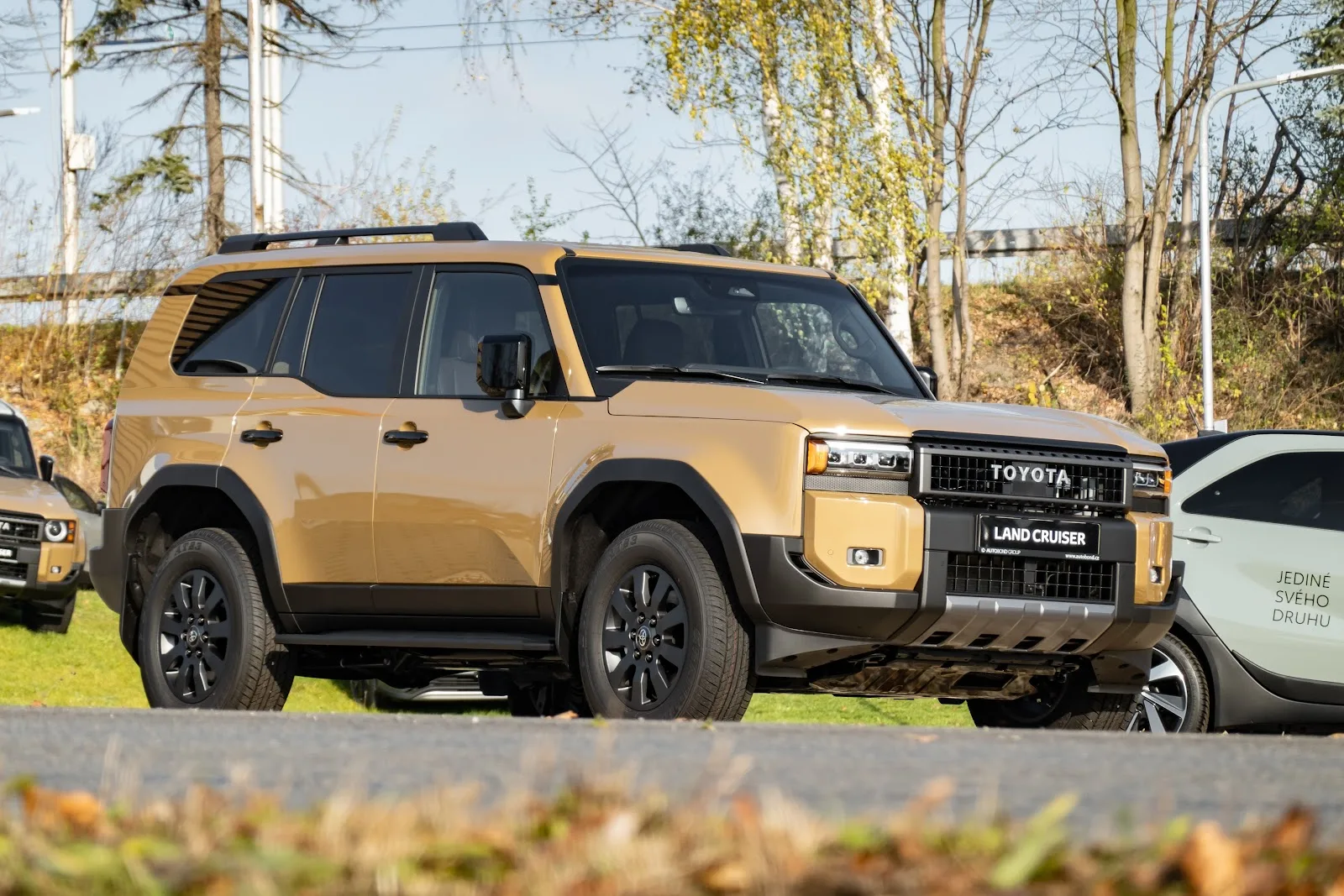
- 250 Series: 245/70R18 to 265/60R20, depending on trim
- Lexus GX 470: 265/65R17 on the 2005 model
Popular upgrades are often around 33 inches, such as LT285/75R16, LT285/70R17, and LT275/70R18. The right size depends on your truck’s condition, suspension, and wheels, so always check your door placard and test-fit before you commit.
Should You Choose 33-Inch or Larger Tires?
A tire of about 33 inches is a popular upgrade because it balances looks and practicality. On many Land Cruisers it fits with little or no modification, although that depends on your generation and setup.
Going to 35 inches or larger usually means:
- A suspension lift
- Trimming or modifications to prevent rubbing
- Re-gearing to restore acceleration and keep the transmission happy
- Recalibrating the speedometer
- Checking your state’s equipment rules and letting your insurer know about the modification
It’s a much bigger project than a simple tire swap.
Wheel Size, Offset, and Spare Tire Fitment
For off-road use, smaller wheels in the 15- to 17-inch range leave more sidewall for the same overall tire diameter. That gives more cushion when you air down and more protection for the wheel. Before you buy, also check:
- Offset: Changing offset moves the tire in or out, which affects fender and suspension clearance
- Fender clearance: Check at full steering lock and full suspension compression
- Spare tire: Make sure a full-size spare in the new size fits where you plan to carry it
Best Tire Type by Land Cruiser Use Case
Best for Daily Driving and Highway Use
If you commute, carry your family, and take long highway trips, choose an A/T. You’ll get the best wet-road grip, the quietest ride, the best fuel economy, and the longest tread life.
Best for Camping, Overlanding, and Weekend Trails
If you drive long distances on pavement but also tackle forest roads and campsites, choose an A/T or R/T. Lean toward an R/T if the roads in your area tend to be rough or rocky, or if looks matter to you.
Best for Mud, Rocks, and Remote Off-Road Travel
If you regularly face mud, rocks, deep ruts, and unmaintained roads, choose an M/T. Just weigh how much of your driving is on pavement, because highway comfort and daily usability drop noticeably.
Why Tire Category Names Can Be Misleading
A/T, R/T, and M/T are general labels, not exact specifications. Real performance depends on the specific model, size, load range, and tread design.
Not All A/T Tires Are the Same
Some A/Ts are built mostly for pavement, while others are quite aggressive and off-road oriented. When you compare A/Ts, look at: how open the tread pattern is, how much siping there is, whether the tire carries 3PMSF, and the load range.
R/T Tires May Also Be Called Hybrid Tires
“R/T” is a relatively new term, and brands use different names for similar tires:
- Nitto calls its Ridge Grappler a “hybrid terrain” tire that offers “the best of both worlds” from its mud-terrain and all-terrain lines
- Yokohama positions its GEOLANDAR X-AT between its A/T and M/T tires without using the R/T name
- Tire Rack lists tires like the Toyo R/T and Yokohama X-AT as “Rugged All-Terrain”
Other terms you may see include “hybrid terrain” and “aggressive all-terrain.” They generally mean the same middle ground.
Look Beyond the Label
Don’t assume an A/T is always quiet or that an M/T is always bad on the road. Check: the tread design and void size, weight in your size, load range and load index, snow rating (3PMSF), and owner reviews from people with similar vehicles and driving.
Common Mistakes When Choosing Land Cruiser Tires
Choosing Tires Only by Appearance
Aggressive tires look great, but if you choose on looks alone, you may be disappointed by the noise, fuel economy, ride, braking, or wear. Weigh appearance against how you actually drive.
Buying M/T Tires for a Mostly Daily-Driven Land Cruiser
M/Ts excel off-road, but on a truck that’s mostly on pavement, you’ll notice the noise, wear, and fuel economy every day. If you’re mostly in town, consider an A/T or R/T instead.
Ignoring Load Rating, Tire Pressure, and Alignment
A load range that’s stiffer than you need, pressures that are too low, and an alignment that’s off all lead to uneven wear and a worse ride. Plan for maintenance after installation, not just the purchase.
FLEX Recommendation: A/T, R/T, or M/T for Land Cruiser?
The question isn’t which tire type is best. It’s which one fits how you use your Land Cruiser.
Recommendation for Most Land Cruiser Owners
If your Land Cruiser handles commuting, highway trips, camping, and light trails, an A/T offers the best balance. It’s also the easiest recommendation if this is your first tire upgrade.
Recommendation for Weekend Off-Road Builds
If you want to keep your Land Cruiser practical for daily driving while giving it a tougher look and more off-road ability, choose an R/T. It’s a great fit for a Land Cruiser with a custom look.
Recommendation for Off-Road-Focused Builds
If you frequently tackle mud, rocks, ruts, and unknown trails, choose an M/T. It’s for owners who value off-road confidence over pavement comfort.
FAQ: A/T vs R/T vs M/T Tires for Land Cruiser
Are A/T Tires Enough for a Land Cruiser?
For most owners, yes. A/Ts handle daily driving, camping, gravel, and light trails well. If you regularly drive deep mud or rocky trails, consider an R/T or M/T.
Are R/T Tires Good for Daily Driving?
Yes. You may notice more noise and weight than with an A/T, but they’re much easier to live with than an M/T. They’re a good choice if you want a tougher look and better weekend off-road ability.
Are M/T Tires Too Loud for Highway Driving?
M/Ts are generally the loudest of the three on the highway. How loud depends on the model, size, wear, and how well your cabin is insulated. If you drive a lot of highway miles, test-drive a similar truck on M/Ts if you can before you buy.
Which Tire Type Lasts the Longest?
A/Ts usually last the longest, followed by R/Ts and then M/Ts. Treadwear warranties tend to follow the same order. Regular rotation, correct pressure, and good alignment have a big effect on how long any tire lasts.
Do Larger Off-Road Tires Reduce Fuel Economy?
Usually, yes. Larger diameter and extra weight tend to lower fuel economy and can also affect acceleration, braking, driving range, and handling. Choose the smallest size that gives you the look and clearance you need.

Conclusion: Choose the Tire That Matches How You Use Your Land Cruiser
To sum it up:
- A/T: Daily driving, highway trips, camping, and light trails
- R/T: A tougher look and better weekend off-road ability, with good daily manners
- M/T: Serious mud, rocks, and remote off-road travel
Choose based on how you actually drive, not just how the tire looks, and pick a size and load range that fit your truck.
Find the Right Land Cruiser at FLEX
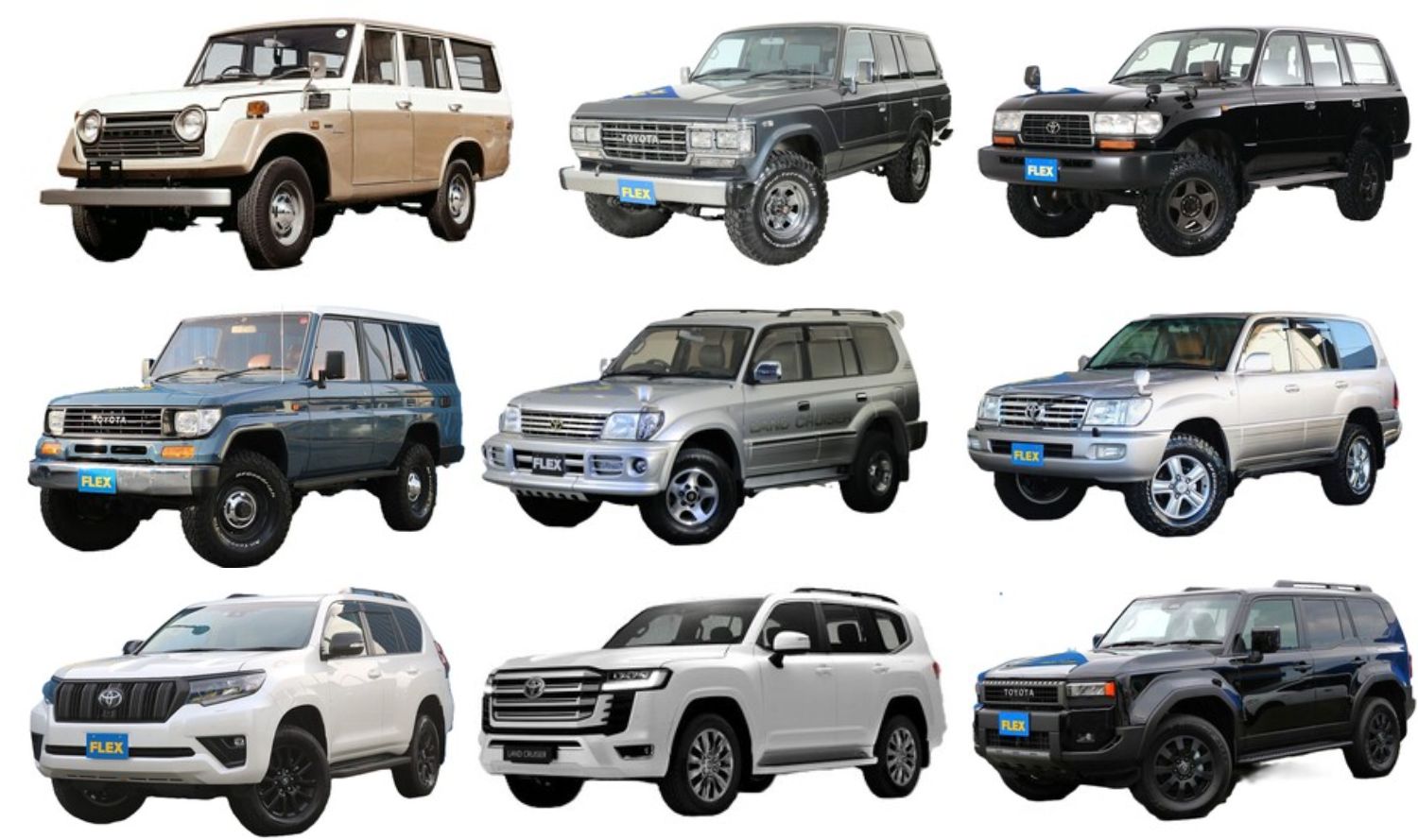
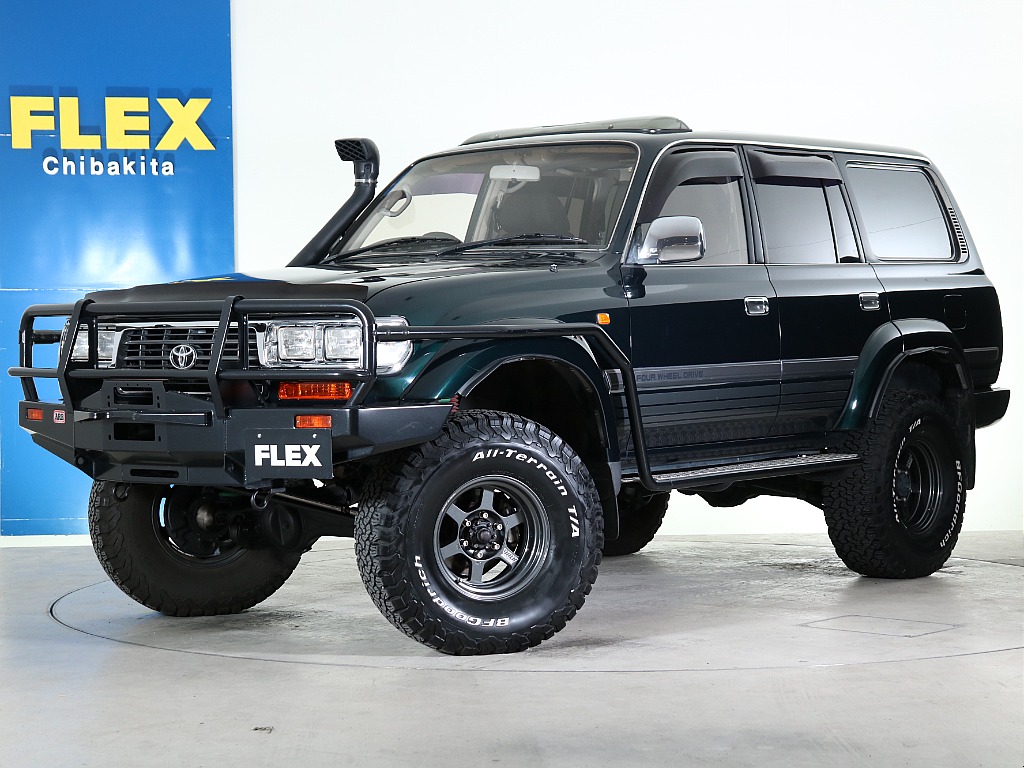
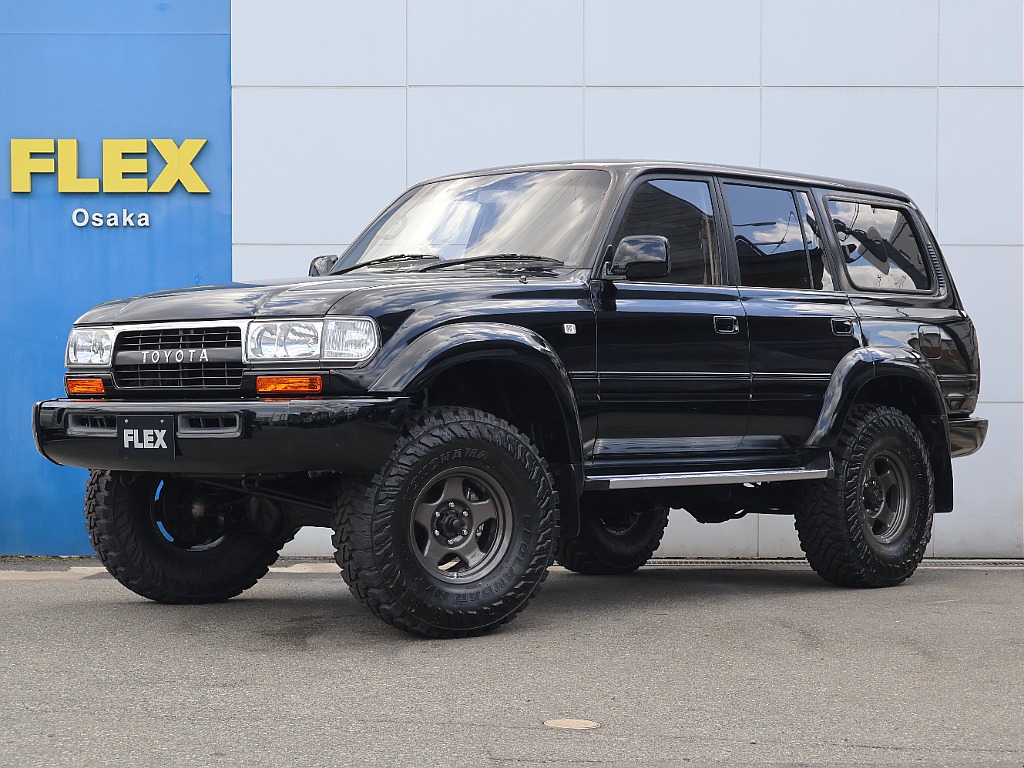
The right tire starts with the right truck. FLEX imports and sells JDM Land Cruisers, including:
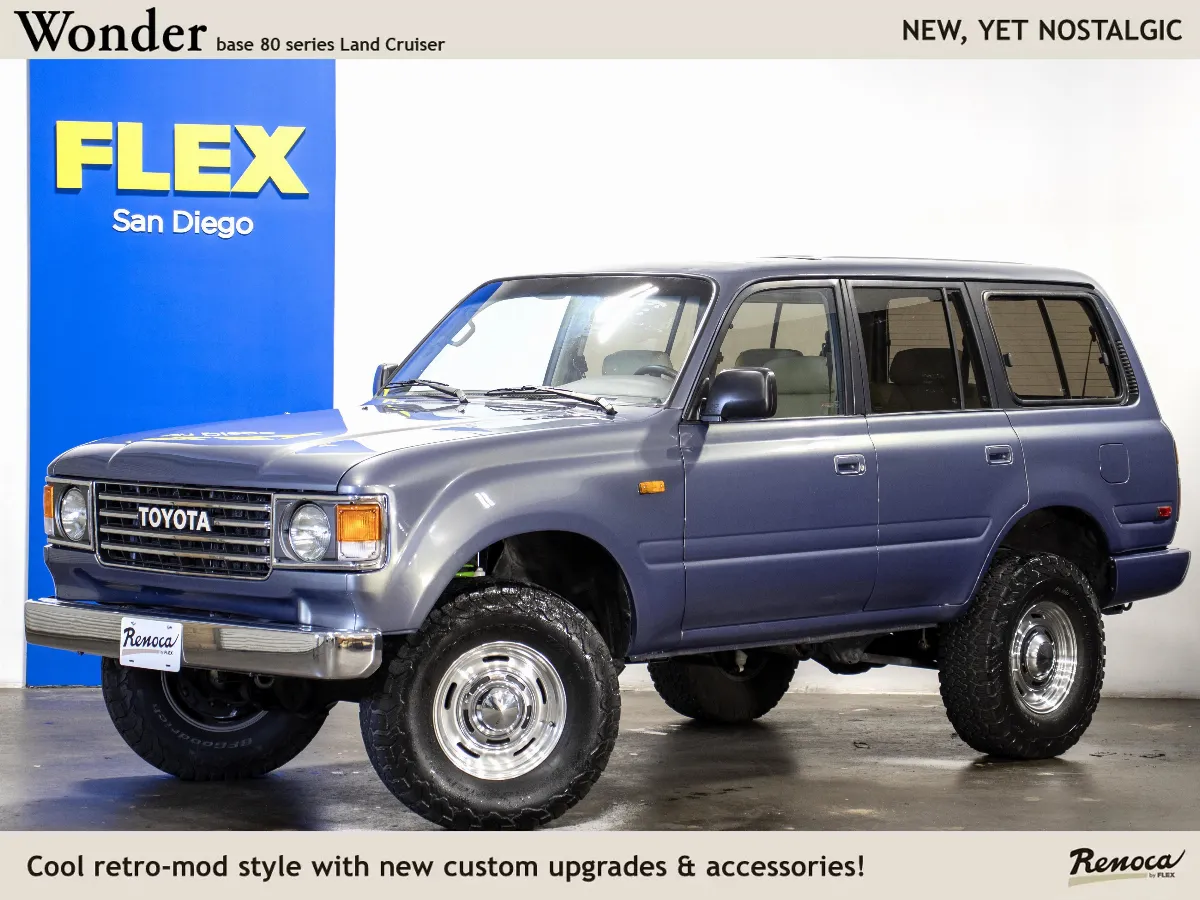
If you want a Land Cruiser that’s been refreshed inside and out, take a look at FLEX’s Renoca builds: 106 on the 100 Series, and Wonder and Phoenix on the 80 Series.
Have questions about tires, fitment, or which Land Cruiser is right for you? Contact our experienced and knowledgeable staff to start your next adventure today.