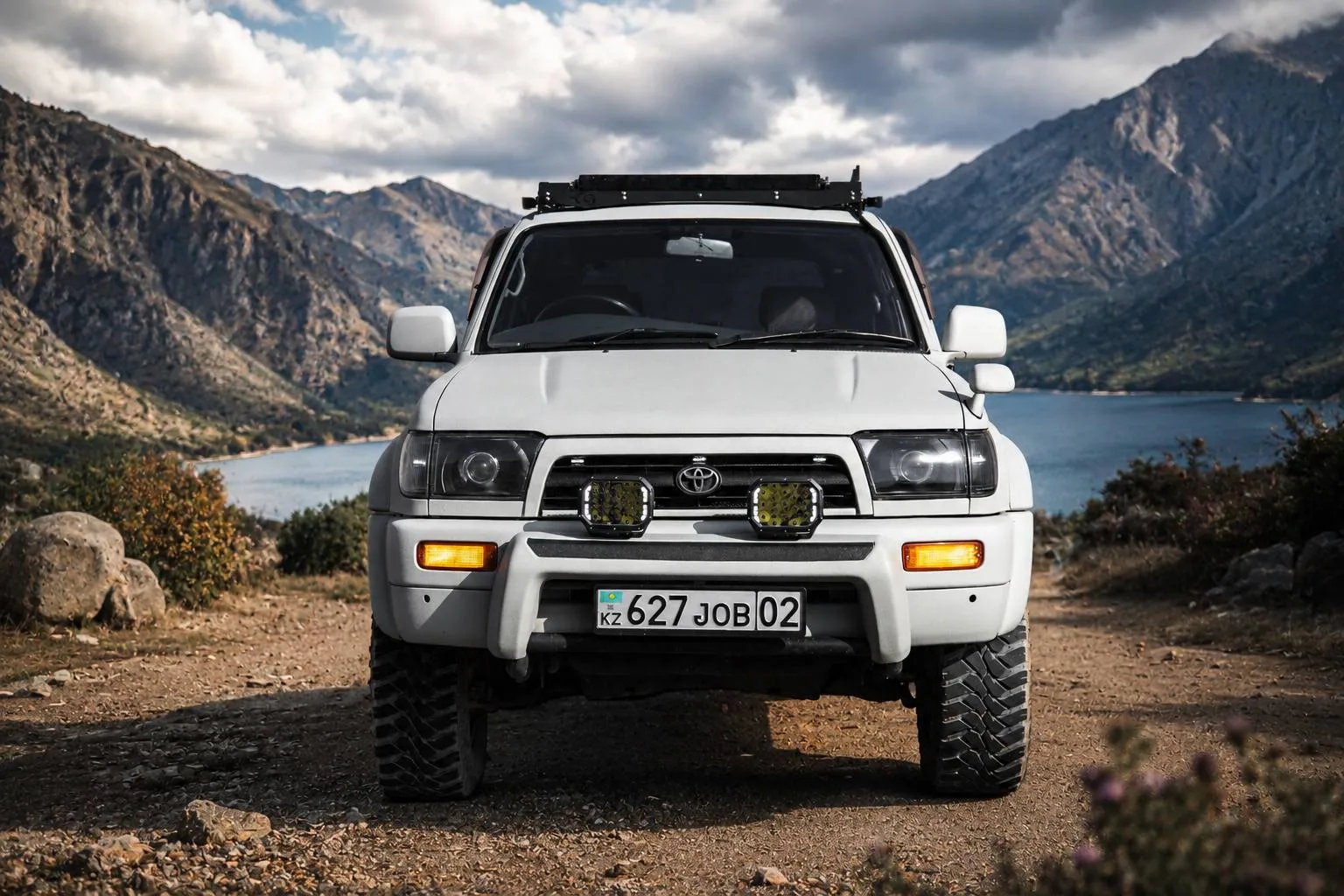
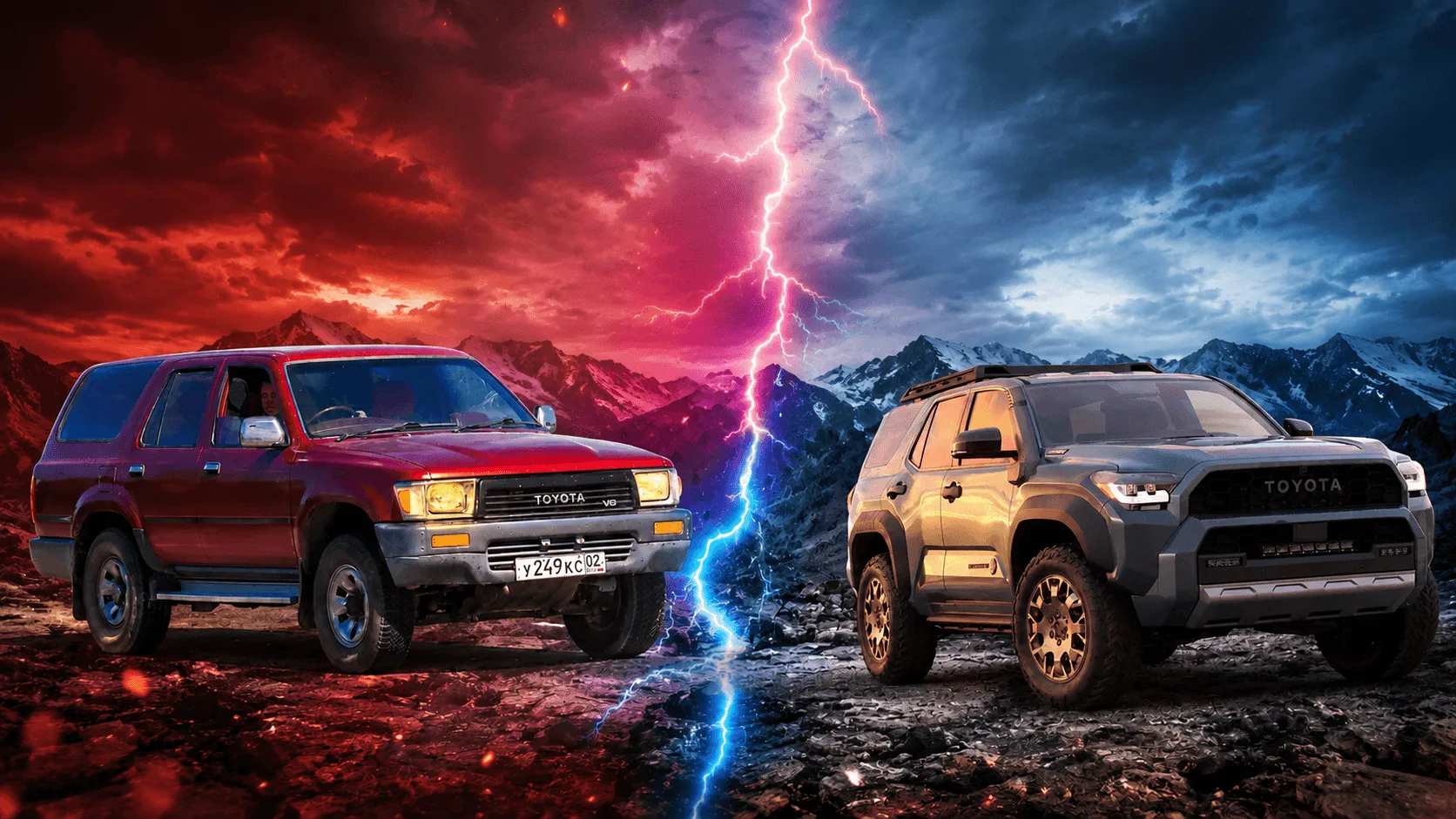
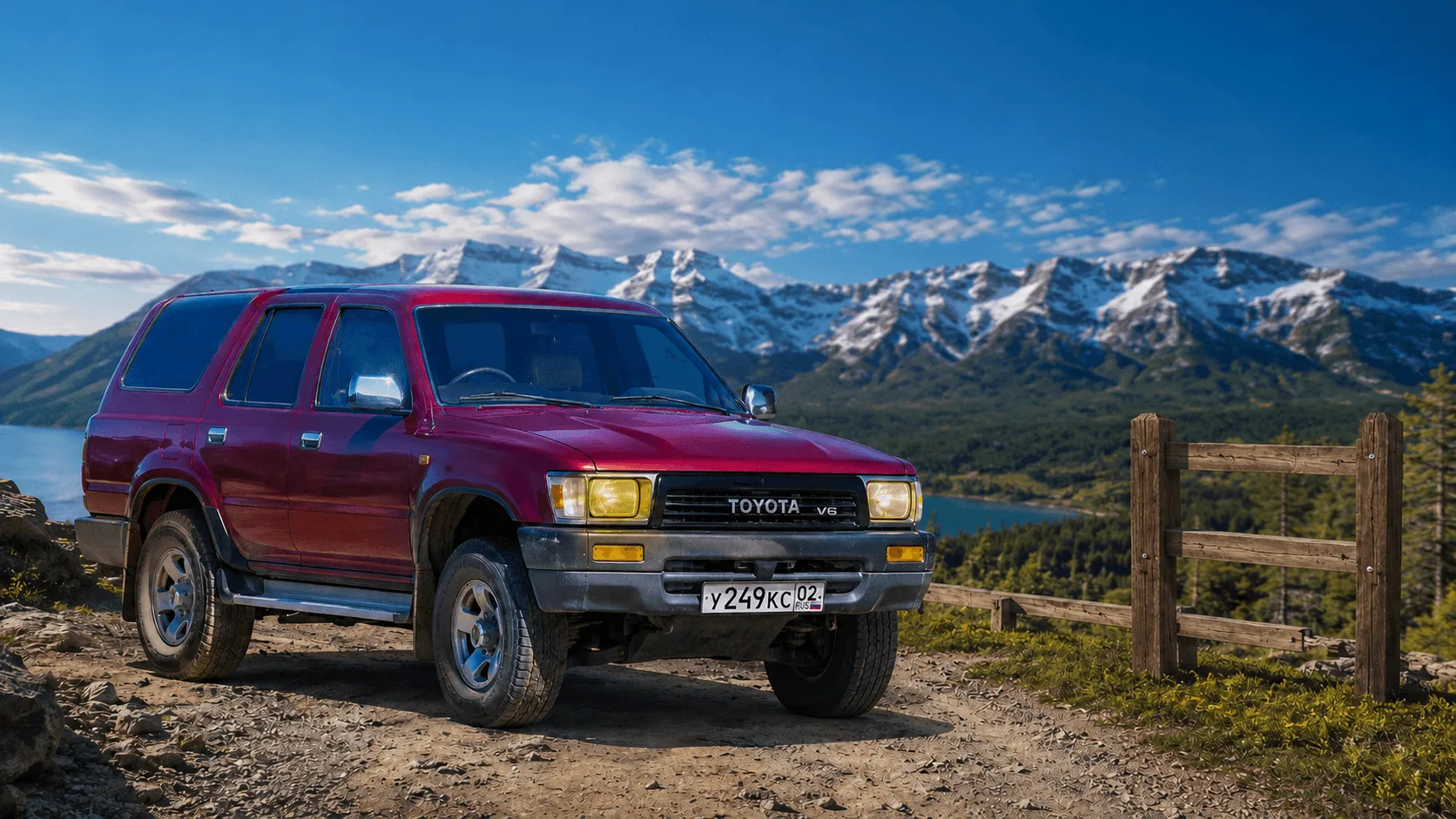
If you are shopping for a 25-year-old Japanese Toyota SUV, you will keep running into the same two trucks: the Toyota Hilux Surf and the Land Cruiser Prado 90. They were built in the same years, they share a chassis and most of their engines, and they land in the United States at similar prices. That is exactly why the “Hilux Surf vs Prado” question comes up so often with our customers.
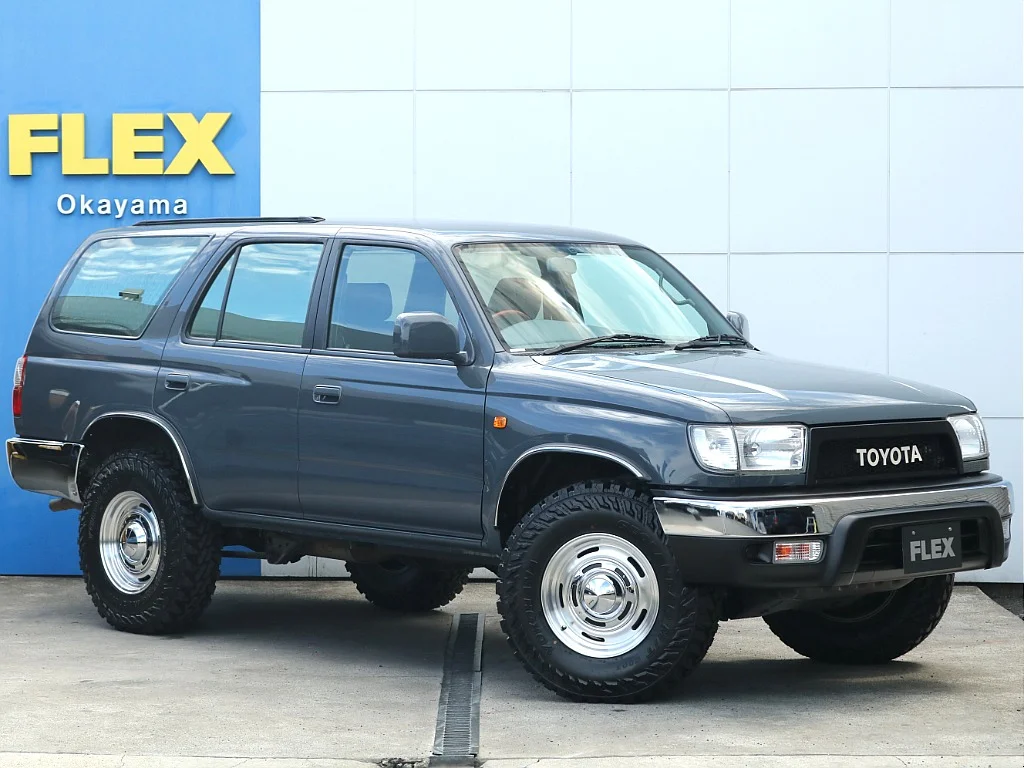
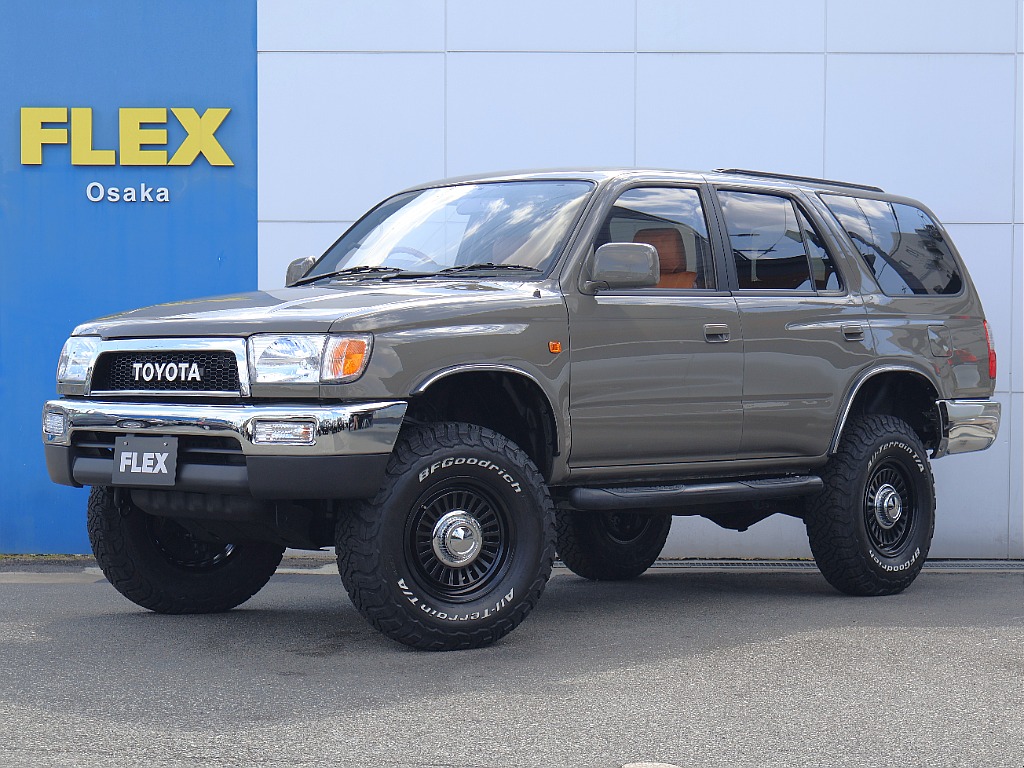
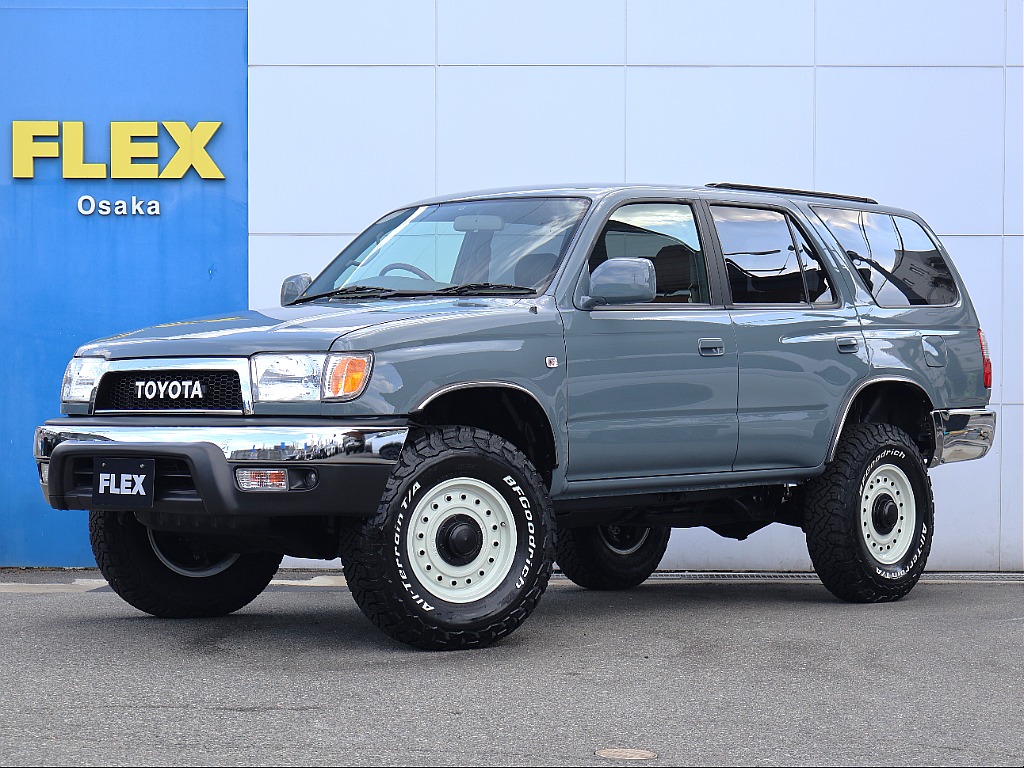
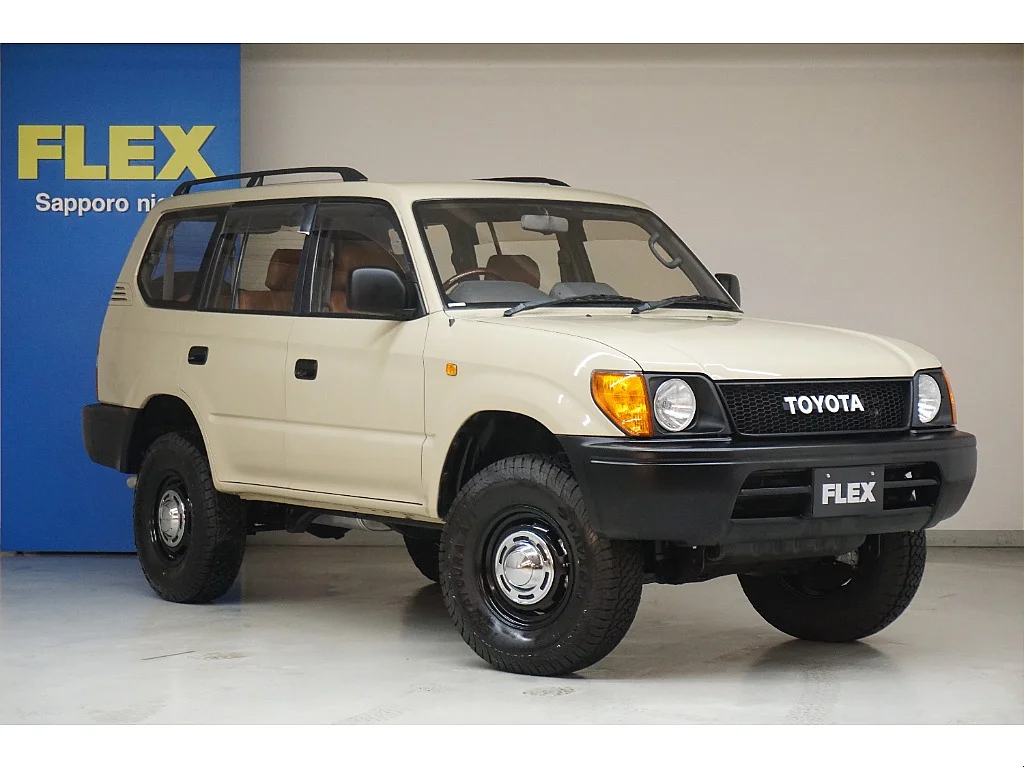
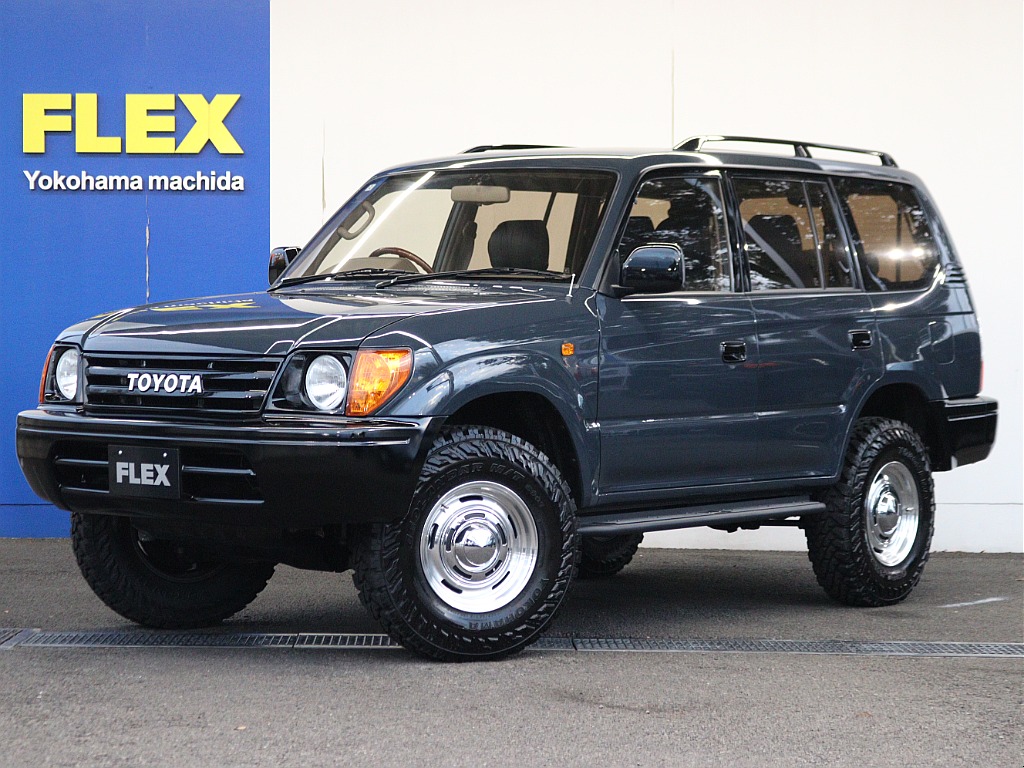
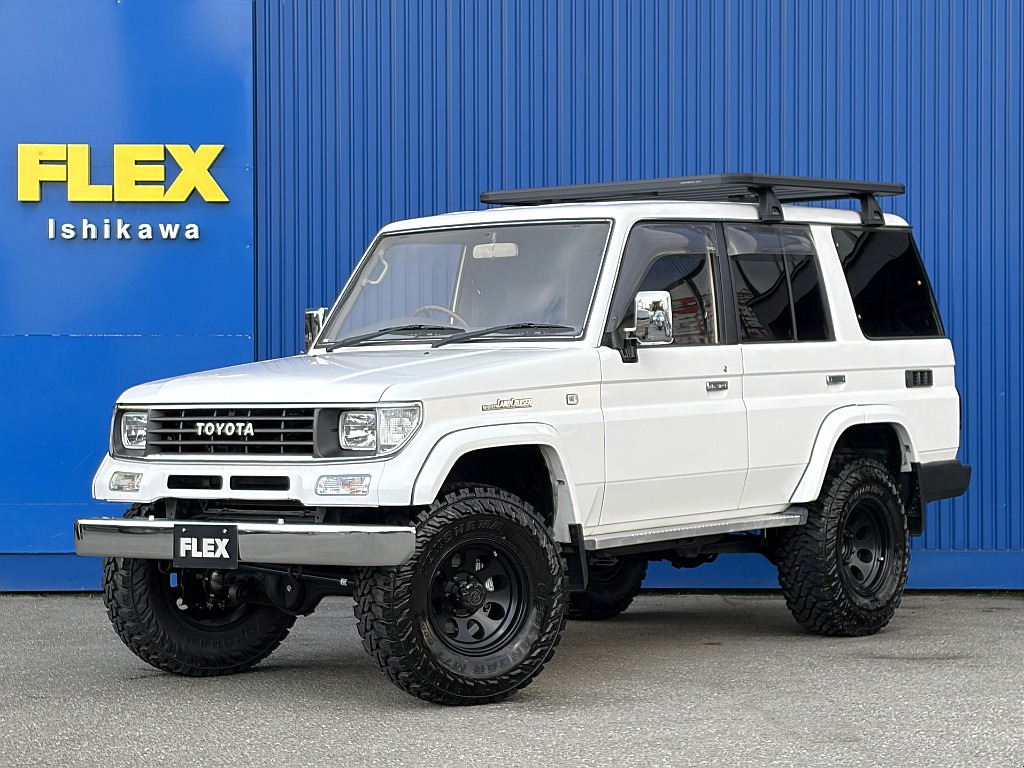
The short version: they are mechanical cousins with very different bodies and very different jobs. The Surf is the lower, lighter, sportier truck, the Japanese twin of the third-generation 4Runner. The Prado 90 is the taller, roomier, more rugged one, with full-time 4WD, a side-hinged rear door, a bigger fuel tank, and an optional third row.
In this guide we compare the two on the things that matter to a US buyer: body and seating, 4WD systems, engines, reliability, parts, 2026 prices, and what you can legally import this year. We draw on Toyota’s own published specifications, owner reports, US auction data, and the import inventory we handle at FLEX.
- Quick Answer: Hilux Surf or Prado 90?
- Same Platform, Different Missions: How the Surf and Prado 90 Are Related
- Hilux Surf vs Prado 90 at a Glance
- Key Differences That Matter to US Buyers
- Engines: 1KZ-TE, 5VZ-FE & 3RZ-FE
- Reliability & Common Problems
- Parts Availability in the US
- 2026 Prices: What a Used Hilux Surf or Prado 90 Costs in the US
- Which Model Years Can You Import in 2026?
- Used Hilux Surf & Prado 90 Buying Checklist
- Which One Should You Buy?
- FAQ
- Conclusion
Quick Answer: Hilux Surf or Prado 90?
Here is the one-table version. Prices are typical US figures for sound, unmodified examples; see the price section for sources. FLEX inventory counts are as of November 4, 2026.
| Toyota Hilux Surf (N185) | Land Cruiser Prado 90 (J90 / J95) | |
|---|---|---|
| Years built | December 1995 – 2002 | May 1996 – 2002 |
| Body | 4-door wagon, top-hinged tailgate | 3-door (90) or 5-door (95), side-hinged rear door |
| Seats | 5 | 5 (3-door) or 5 / 8 (5-door) |
| 4WD | Part-time 4WD (multi-mode with center differential on upper grades) | Full-time 4WD with center differential |
| Engines | 2.7L 3RZ-FE I4, 3.4L 5VZ-FE V6, 3.0L 1KZ-TE turbodiesel, 3.0L 1KD-FTV turbodiesel (from mid-2000) | Same four engines (2.7L from April 1997) |
| Typical 2026 US price | Roughly $11,000–$17,000 at auction; $15,000–$23,000 at dealers | Roughly $12,000–$16,000 at auction; $12,000–$28,000 at dealers |
| Choose it if… | You want a 4Runner-sized daily driver with a JDM twist and the easiest parts situation | You want more room, a third row, full-time 4WD and a diesel, and you plan to go farther from pavement |
| FLEX inventory | 19 available for import (1996–2002, 2.7L and 3.4L gas) | 46 available for import (1997–2002, including 11 turbodiesels) |
💡 The short version
- Want a JDM 4Runner for daily driving with the easiest parts supply? The Hilux Surf.
- Want a third row, full-time 4WD, a 90-liter tank, or a turbodiesel? The Prado 90, specifically the 5-door Prado 95.
Browse our current stock on the Hilux Surf and Land Cruiser Prado inventory pages.
Same Platform, Different Missions: How the Surf and Prado 90 Are Related
The Hilux Surf started life in 1984 as the wagon version of the Hilux pickup, and Toyota sold the North American version as the 4Runner from October 1983. The third-generation Surf (chassis code N185) went on sale in Japan on December 1, 1995, and it is the Japanese-market twin of the 1996–2002 third-generation 4Runner. The two trucks share their body shells, chassis, and gasoline engines; the big differences are right-hand drive, Japanese trim names, and the diesel engines that never came to the US. We cover that comparison in detail in Hilux Surf vs 4Runner: The Differences You Need to Know.
The Land Cruiser Prado 90 arrived five months later, on May 8, 1996, as the second-generation “light-duty” Land Cruiser. Toyota’s own history pages are explicit about the connection: the Prado “had been sharing the chassis with the Hilux Surf since May 1996,” and “the same suspension was used for both the Prado and the Hilux Surf.” The 5-door Prado 95 and the Surf even share a 2,675 mm (105.3 in) wheelbase.
One thing worth clearing up early, because we get asked constantly: the Hilux Surf is not a Land Cruiser. It belongs to the Hilux family. The Prado 90 is a Land Cruiser in name, but it is the light-duty branch of the family, not the heavy-duty 70 Series or the 80 Series station wagon. If you are weighing those bigger trucks instead, start with our Used Toyota Land Cruiser Buying Guide.
So the honest framing is this: Toyota took one chassis and built two trucks on it. The Surf got the lower, sportier body aimed at Japanese buyers who wanted an SUV that drove like a car. The Prado got a taller, boxier body, full-time 4WD, and a bigger tank, aimed at buyers who wanted Land Cruiser capability in a smaller package.
Hilux Surf vs Prado 90 at a Glance
The figures below are Toyota’s published Japanese-market specifications for the most common import configurations: the wide-body SSR-X diesel Surf (KZN185W) and the 5-door TX diesel Prado (KZJ95W). Other grades and engines vary slightly; the Surf’s standard narrow body, for instance, is 1,690 mm wide instead of 1,800 mm.
| Specification | Hilux Surf SSR-X wide (KZN185W, 1998–2000) | Prado 95 TX (KZJ95W, 1996–1999) |
|---|---|---|
| Chassis codes (all engines) | RZN185 (2.7), VZN185 (3.4), KZN185 (3.0 TD), KDN185 (3.0 D-4D) | RZJ90/95 (2.7), VZJ90/95 (3.4), KZJ90/95 (3.0 TD), KDJ90/95 (3.0 D-4D) |
| Length | 4,655 mm (183.3 in); 4,540 mm on 1995–97 trucks | 4,675 mm (184.1 in) |
| Width | 1,800 mm (70.9 in); 1,690 mm standard body | 1,820 mm (71.7 in) |
| Height | 1,765 mm (69.5 in) | 1,880 mm (74.0 in) |
| Wheelbase | 2,675 mm (105.3 in) | 2,675 mm (105.3 in); 3-door 2,370 mm (93.3 in) |
| Curb weight | About 1,840 kg (4,056 lb); 1,770–1,800 kg on earlier trucks | About 1,910 kg (4,211 lb); up to 1,960 kg for the TZ |
| Seating | 5 | 8, or 5 with the two-row option |
| Ground clearance | 240 mm (9.4 in) | 230 mm (9.1 in) |
| Fuel tank | 70 L (18.5 gal) | 90 L (23.8 gal) |
| 4WD system | Part-time; multi-mode with center differential on upper grades | Full-time with center differential |
| Front suspension | Independent double wishbone, coil springs | Independent double wishbone, coil springs |
| Rear suspension | Live axle, 4-link, coil springs, lateral rod | Live axle, 4-link, coil springs, lateral rod |
| Rear door | Top-hinged tailgate with power-drop glass | Side-hinged door with the spare mounted on it |
Two takeaways jump out. First, the trucks are almost the same size on paper; the Prado is only 20 mm longer and 20 mm wider. Second, the Prado is 115 mm (4.5 in) taller and roughly 70 kg heavier, and that height is where the extra interior space and the taller, boxier look come from.
Key Differences That Matter to US Buyers
Body Styles & Seating
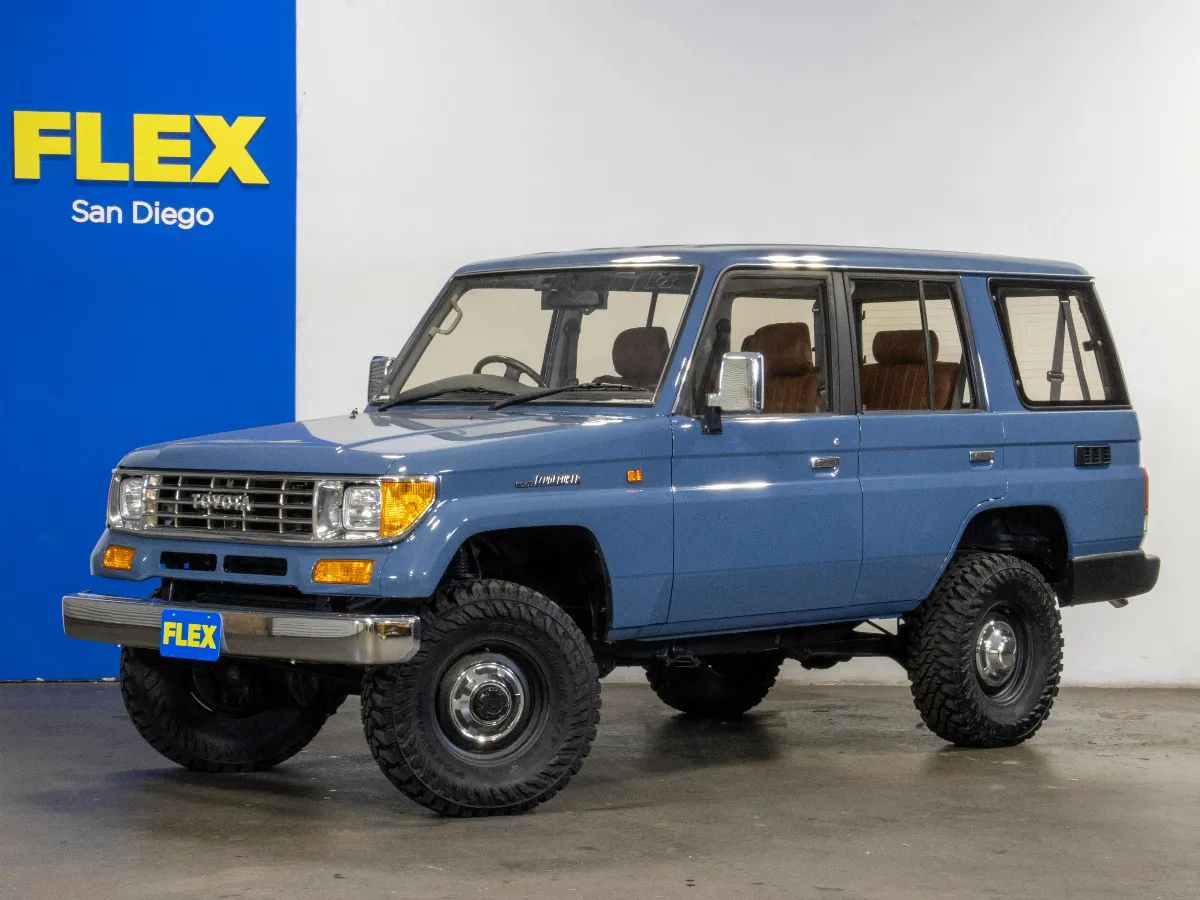
The Surf came one way: a four-door wagon with a top-hinged tailgate. Toyota’s history notes that “the 4-door body with a top-hinged tailgate was the only body style offered.” Every Surf seats five. You could choose a standard body that fit Japan’s narrower “5-number” tax class or a wide body with flared fenders; most of the trucks that reach the US are wide-body SSR-X variants.
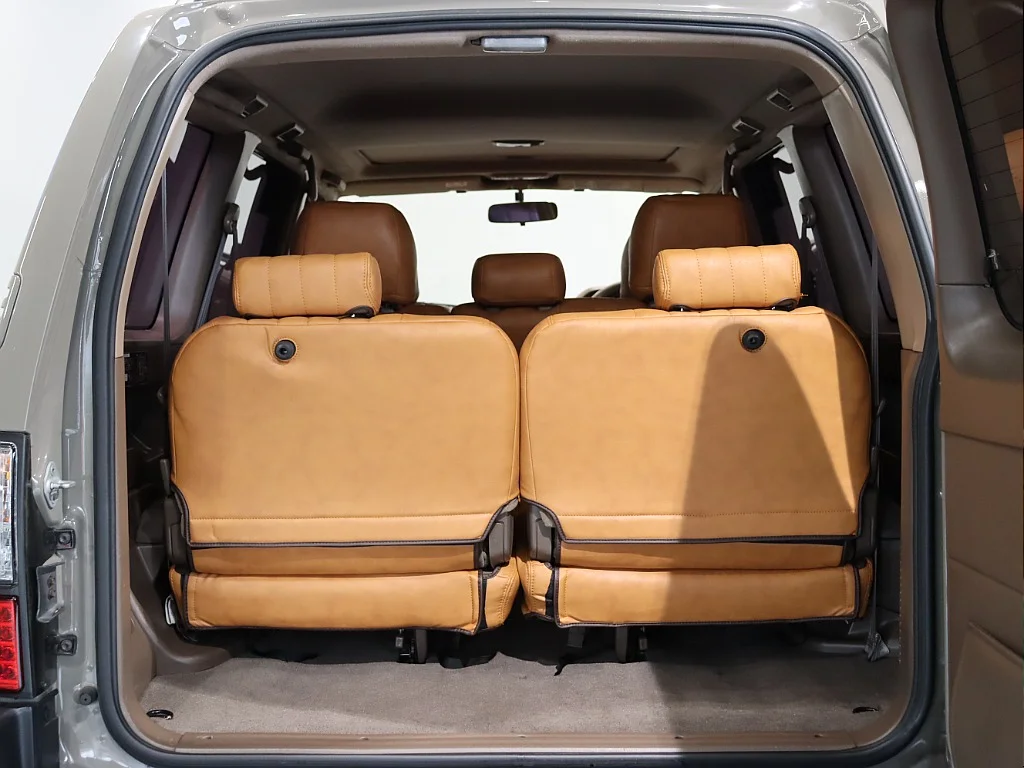
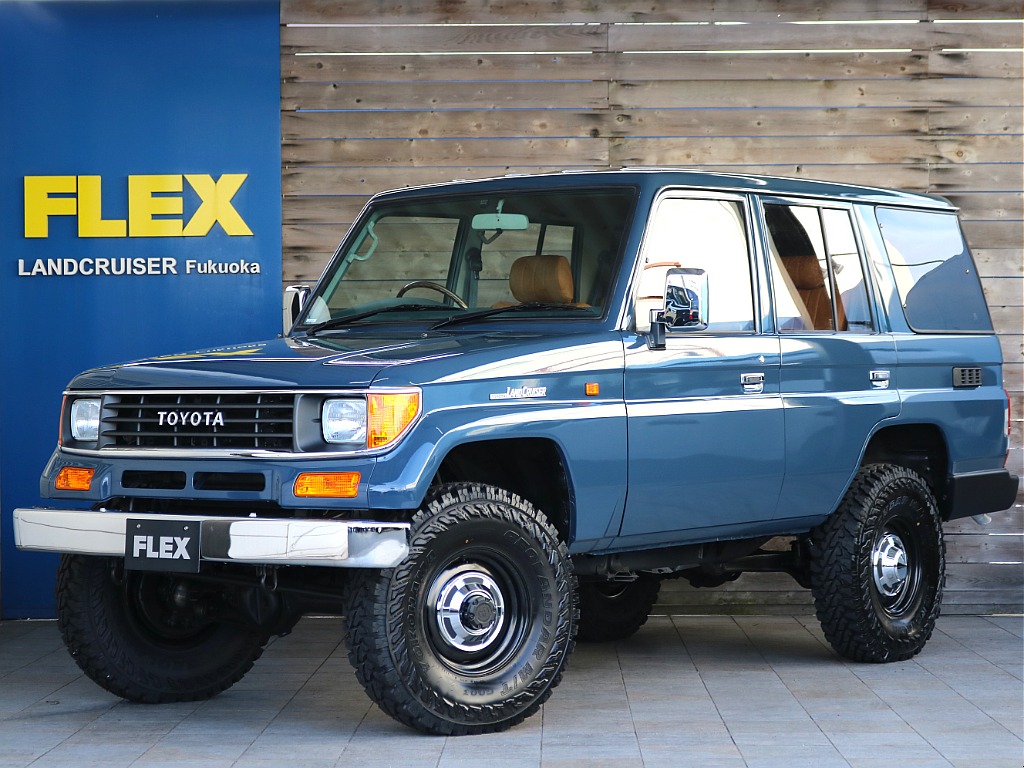
The Prado 90 came two ways. The 3-door Prado 90 rides on a short 2,370 mm wheelbase, seats five, and was offered in standard and wide bodies. The 5-door Prado 95 rides on the longer 2,675 mm wheelbase and seats eight, with a third row that Toyota listed as available on the five-door; a two-row, five-seat version of the TX was also sold. If you need to carry more than five people, the Prado 95 is the only choice between these two.
In practice the third row is a jump seat for kids or short trips, not an adult-sized bench, and it eats into cargo space when it is in use. Many buyers fold it or remove it.
4WD System
This is the biggest mechanical difference, and it is easy to get wrong because the two trucks look so similar underneath.
The Surf used part-time 4WD as standard: rear-wheel drive on pavement, with 4WD High and Low selected when you need them. Toyota’s launch release adds that the SSR-G and the wide-body SSR-X diesel got “a newly developed, multi-mode system, part-time 4WD with central differential,” which Toyota’s history describes as a “4-mode part-time 4WD system that included a full-time 4WD mode.” In other words, upper grades can run 4WD on dry pavement; base grades cannot. Which later grades and engines carried the multi-mode transfer case is not spelled out in the Toyota material we found, so check the transfer-case lever or switch on the specific truck you are buying.
The Prado 90 switched to full-time 4WD across the board. Toyota’s 1996 release calls it an “all-new full-time 4WD system,” and its history page says the drivetrain “was switched from part-time 4WD to full-time 4WD.” All four wheels are driven all the time through a center differential, with low range for off-road use. For a US buyer that means the Prado drives like a modern AWD SUV in rain and snow without touching a lever, while a base Surf behaves like a classic part-time 4×4.
Rear Door & Cargo Space
The Surf’s tailgate is the 4Runner setup: a top-hinged gate with a rear window that powers down into the gate. It is handy for loading long items and for ventilation, and it is also the Surf’s best-known weak spot, which we cover in the reliability section.
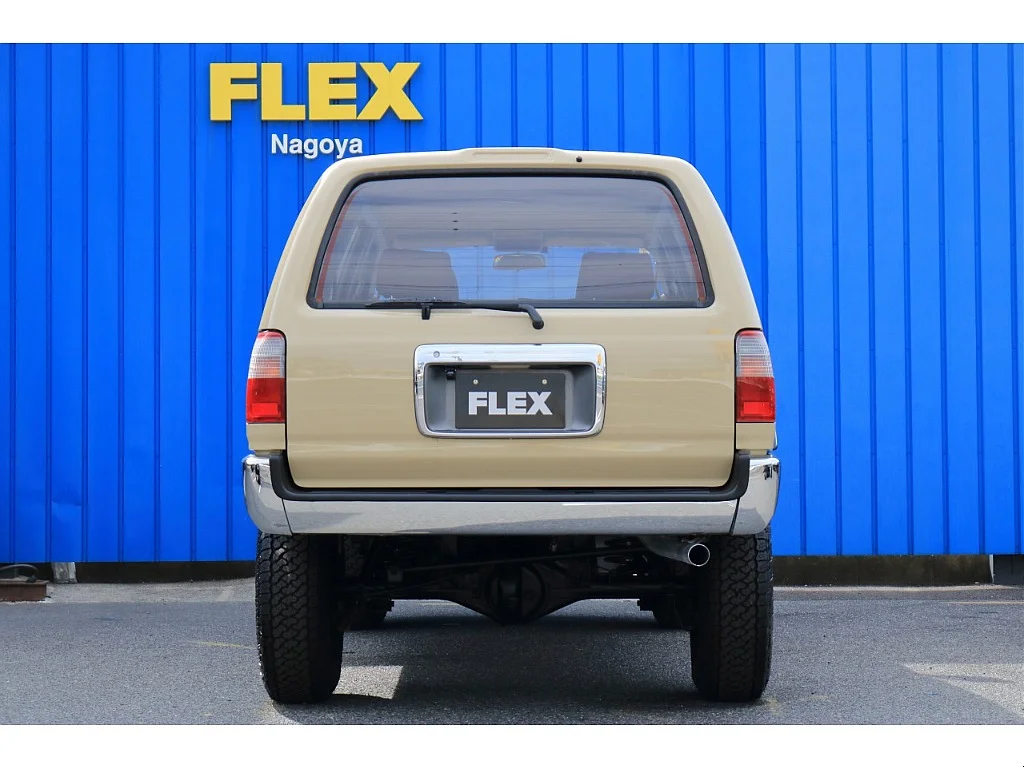
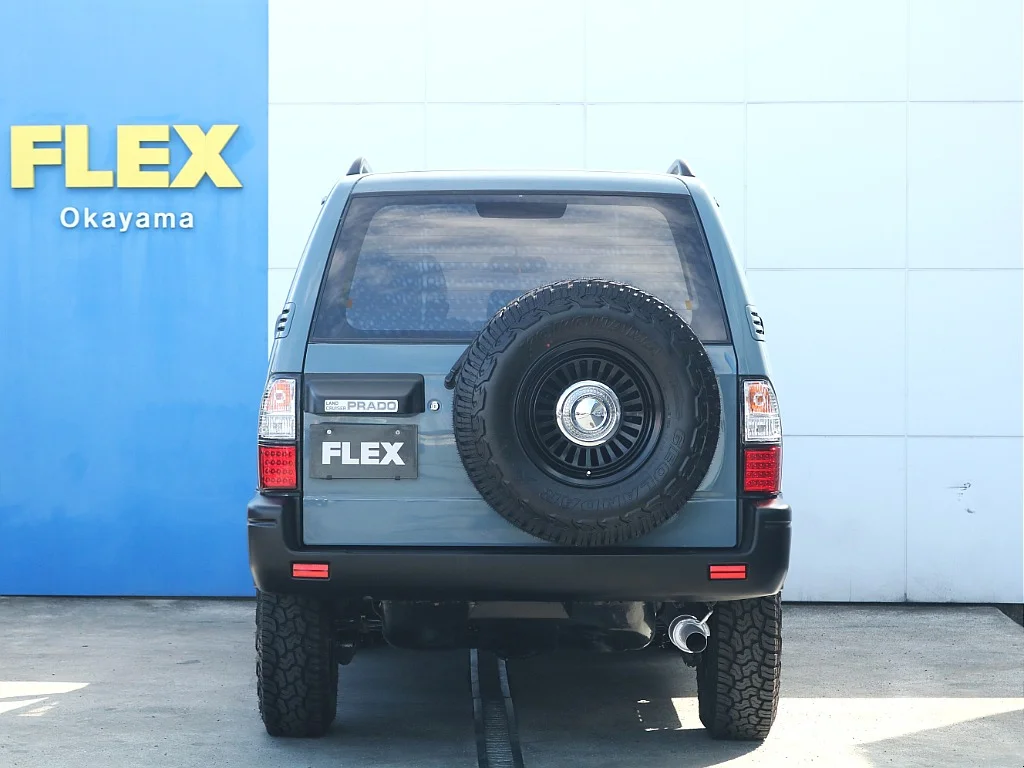
The Prado has a side-hinged rear door with the full-size spare mounted on the outside. Toyota called it an “easy-to-use, sideways opening rear door,” and a side-hinged door stayed on the Prado through the 120 and 150 Series; only the current 250 Series (2024–) switched to a top-hinged tailgate with the spare under the floor. The upside is a low, flat load floor with no spare under it and a 90-liter fuel tank in place of the Surf’s 70 liters, which matters on long trips. The downside is that the door swings out, so you need room behind the truck, and the heavy spare puts extra load on the hinges over 25 years.
Ride, Suspension & Off-Road Ability
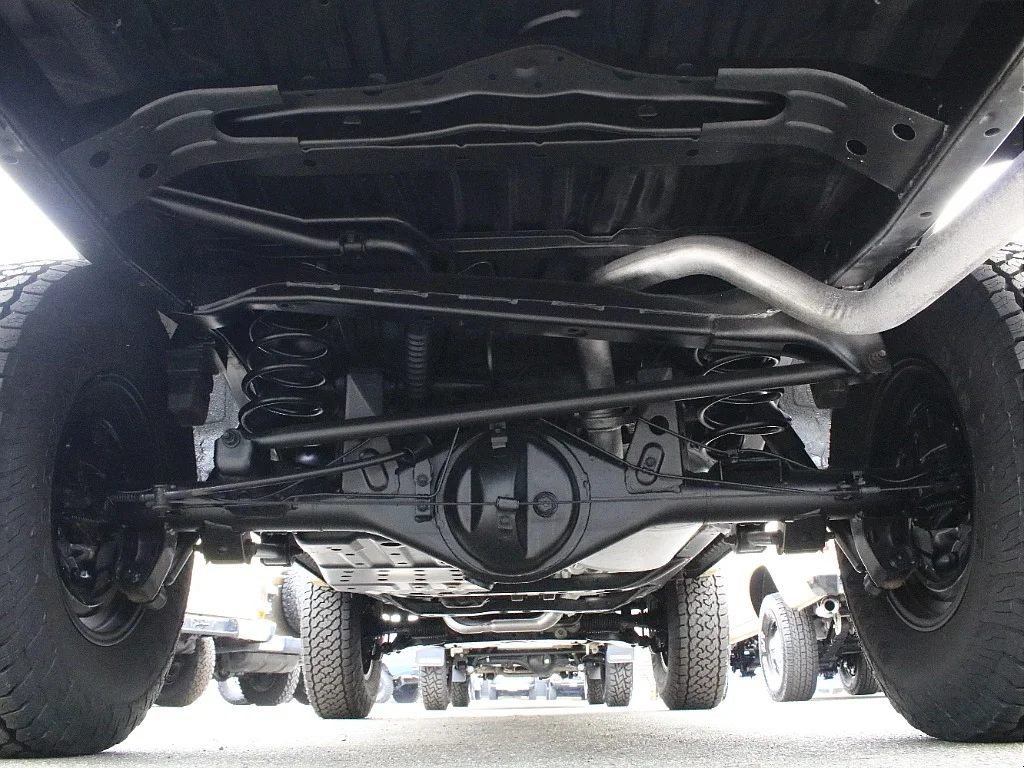
Both trucks use the same basic layout: independent double-wishbone front suspension with coil springs (this generation replaced the earlier torsion bars) and a coil-sprung live rear axle on four links. Both moved to rack-and-pinion steering. Because the hardware is shared, the on-road feel is closer than the styling suggests.
Where they differ is height and weight. The Surf sits lower, with a 1,765 mm roofline, and that gives it a more car-like feel on the highway. The Prado’s extra height raises the seating position and the center of gravity, which some drivers like for visibility and some find more truck-like in corners. Off road, the Prado’s full-time 4WD, bigger tank, and slightly longer body give it the edge as a touring vehicle; the Surf’s 240 mm ground clearance is actually a little higher than the Prado’s 230 mm, and its shorter rear overhang is helpful on tight trails.
We have not driven the two back to back on a test course, so we will not pretend to rank them. What we can say from handling hundreds of both is that buyers who want a trail-and-camping truck gravitate to the Prado, and buyers who want a JDM 4Runner for daily use gravitate to the Surf.
Interior, Trims & Equipment
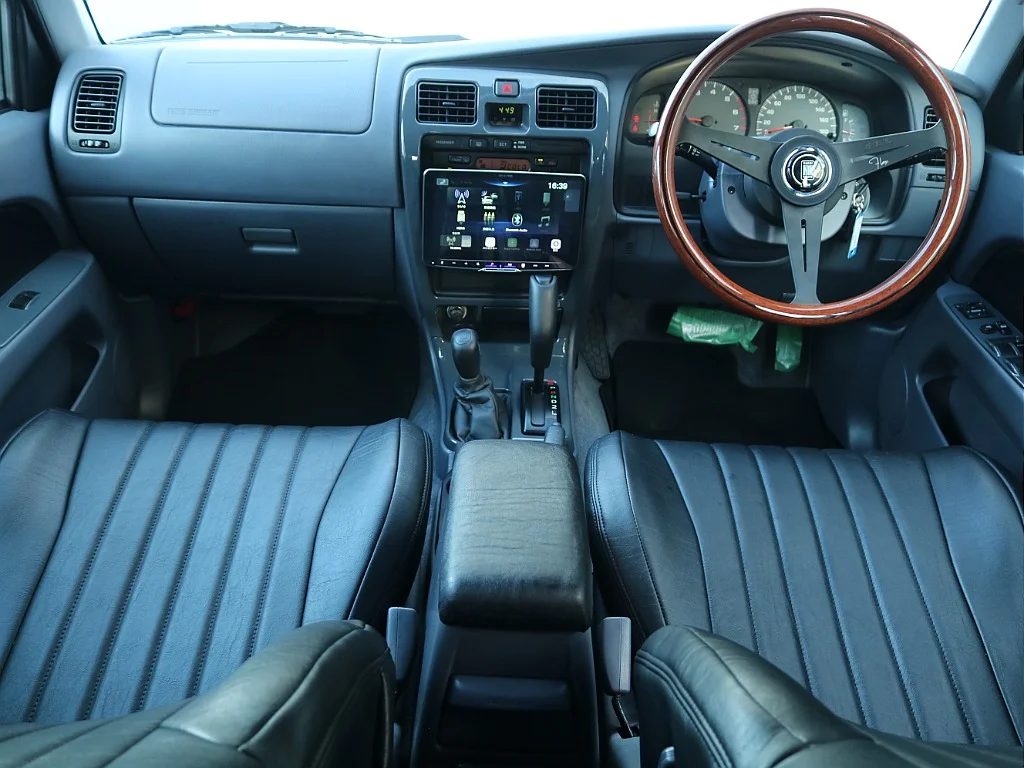
Surf grades run SSR-V (base), SSR-X (the volume grade), and SSR-G (the top grade, with the dash-mounted Field Monitor and a retractable rear-under mirror in the spoiler). A rear-wheel-drive Sports Runner was added in August 1998. Toyota also sold a string of limited editions: SSR-X Limited (1997), SSR-V Limited (1998), the SSR-X V Selection, and the White Premium and Black Navigator editions of December 2001. SSR-X was the volume grade in Japan, so most trucks that reach the US are SSR-X variants, including the Limited and V Selection editions.
Prado grades follow a letter code: 3-door models are RJ, RS, RX, and RZ, and 5-door models are TJ, TS, TX, and TZ. The J and S grades are the basic ones with steel wheels; TX is the core grade; TZ is the top grade with alloy wheels and the most equipment. The TX Limited special edition, first offered in August 1997 and repeated in 1998, at the June 1999 facelift, and in 2001, is the most common Prado we import, followed by the standard TX.
Both trucks got a mid-life refresh with multi-reflector headlights: the Surf in August 1998 (with Toyota’s GOA body structure) and the Prado in June 1999 (with a three-bar grille, Optitron gauges, and optional Active Traction Control and Vehicle Stability Control on automatics from August 1999). Later trucks are generally the ones to look for if you want the more modern look and the extra equipment.
Engines: 1KZ-TE, 5VZ-FE & 3RZ-FE
The engine lineups are nearly identical, which is good news for a buyer: the choice is about engine type, not about which truck.
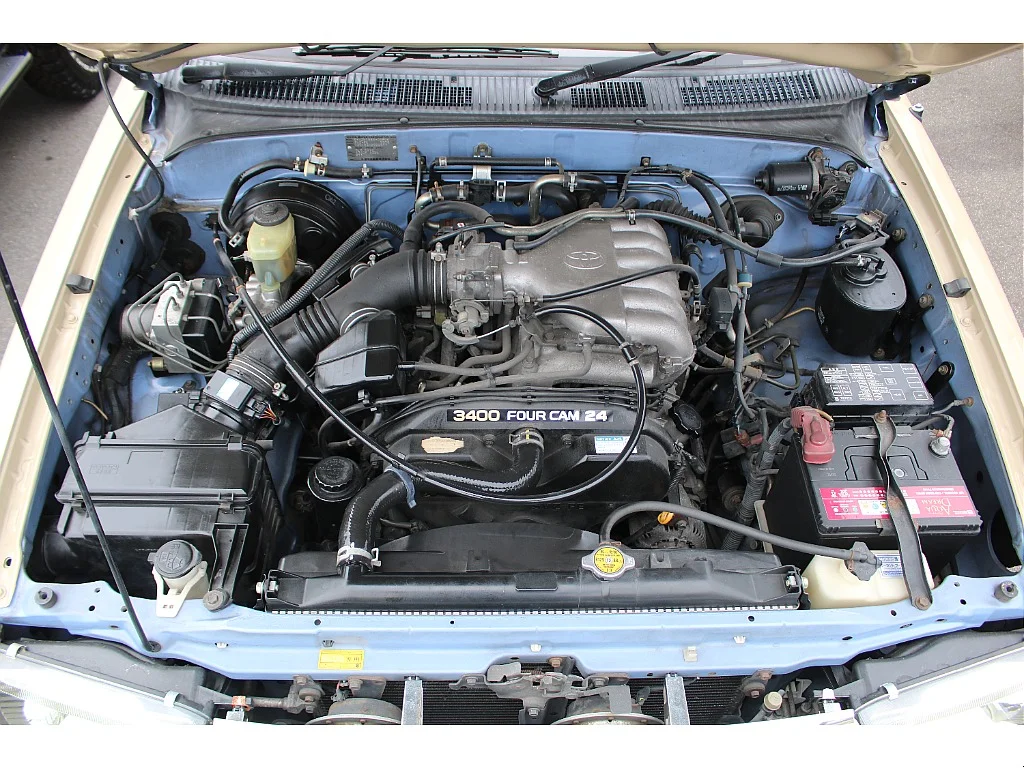
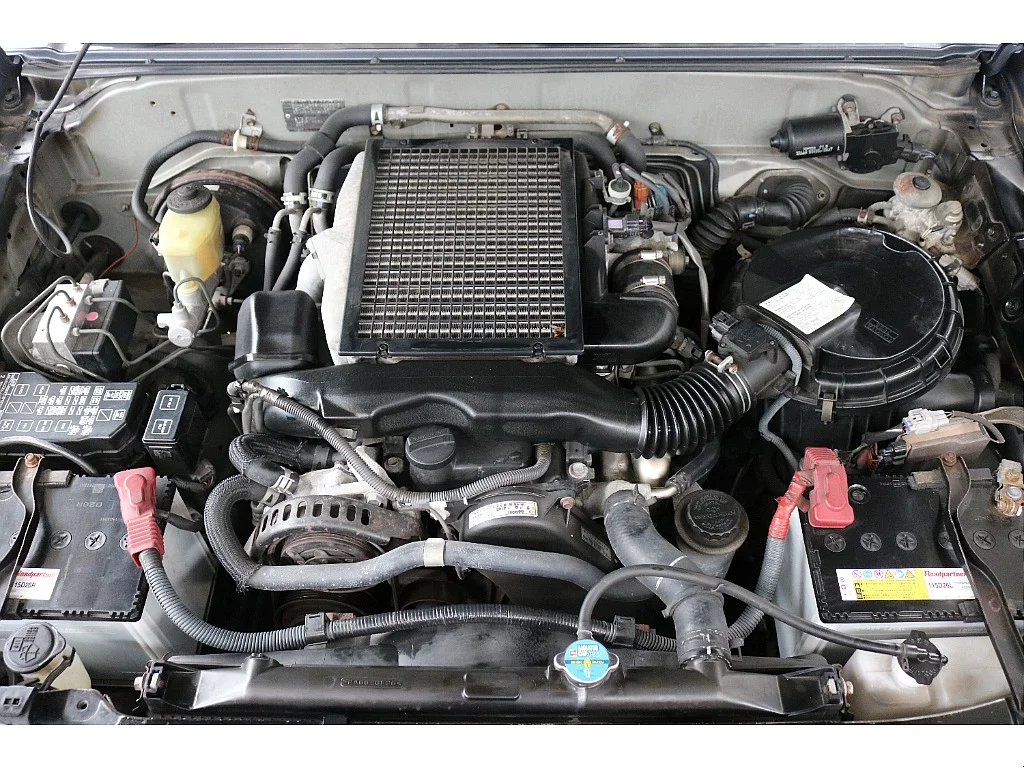
- 3.0L 1KZ-TE turbodiesel (KZN185 / KZJ90, KZJ95). The engine most JDM buyers come for. In the Prado it made 140 PS (about 138 hp) and 333 Nm (246 lb-ft) from launch, rising to 145 PS and 343 Nm (253 lb-ft) at the 1999 facelift. The Surf started at 130 PS without an intercooler, moved to 140 PS when the intercooler arrived in 1996–97, and matched the Prado’s 145 PS from August 1998. Low-rpm torque is the appeal, not outright speed.
- 3.4L 5VZ-FE V6 (VZN185 / VZJ90, VZJ95). The same 3.4 V6 that powered the US 4Runner and Tacoma: 185 PS (about 182 hp) and 294 Nm (217 lb-ft) in both trucks. The easiest engine to own in the US because every part is a 4Runner part.
- 2.7L 3RZ-FE four-cylinder (RZN185 / RZJ90, RZJ95). 150 PS (about 148 hp) and 235 Nm (173 lb-ft). Offered in the Surf from launch and added to the Prado in April 1997. It is the most common engine in our Surf inventory because it was the volume engine in Japan; it is adequate rather than quick in a 1,800 kg truck.
- 3.0L 1KD-FTV common-rail turbodiesel (KDN185 / KDJ90, KDJ95). Replaced the 1KZ-TE in both trucks on July 31, 2000: 170 PS (125 kW) and 352 Nm (260 lb-ft). Stronger and quieter, but these trucks only started turning 25 in mid-2025, so there are fewer of them stateside.
For a deeper dive into the diesel, read Is the Toyota Hilux Surf Diesel Reliable? (1KZ-TE Engine Guide).
One practical point: as of this writing our Surf inventory is entirely 2.7L and 3.4L gasoline trucks, while our Prado 90 inventory includes 11 turbodiesels. If a diesel is the whole point for you, the Prado is where you will find one more easily, and the diesel 70 Series Prado is another option covered in A Thorough Comparison of Toyota Land Cruiser 70 Prado and 90 Prado.
Reliability & Common Problems
Both trucks have earned a reputation for durability, and neither has a pattern of catastrophic failures. What they have are 25-year-old-vehicle problems plus a few model-specific ones that owners discuss regularly. The issues below come from owner forums and importer guides, so treat them as things to check, not certainties.
Shared: cooling and the 1KZ-TE cylinder head. The best-known 1KZ-TE issue is a cracked cylinder head, and owner reports consistently tie it to overheating rather than to a design defect. As one long-running IH8MUD thread puts it, “the cracks in your head are caused by a combination of high EGTs and high water temps.” Symptoms owners describe are coolant loss, bubbles in the overflow tank, and a wandering temperature gauge. The common advice is to treat the cooling system as a service set on purchase: radiator, hoses, thermostat, water pump, and fan clutch. Some owners also add a pyrometer to watch exhaust temperatures under load.
Shared: timing belts and injectors. The 1KZ-TE uses a timing belt; Japanese maintenance schedules and the diesel’s dash T-BELT reminder light are set at 100,000 km (about 62,000 miles), and many owners replace the tensioner and water pump at the same time. Some owners report preventive injector replacement at very high mileage, and the Japanese parts catalogs (Amayama, Partsouq) are the usual source. The 5VZ-FE V6 also uses a belt, with a commonly cited 90,000-mile interval, and head-gasket failure on that engine is described as rare and mostly a very-high-mileage event. The 3RZ-FE four-cylinder uses a chain; stretched chains and worn guides are its main wear item.
Surf-specific: the power tailgate window. The powered rear glass is a frequent complaint on both the Surf and the 3rd-gen 4Runner. A UK Surf parts specialist notes that “it is very common for the motor to sound like it is working but not go up and down,” which usually points to a failed gear in the motor or a worn regulator. Test it several times on any truck you are considering.
Surf-specific: rust behind the fender flares. Wide-body Surfs carry plastic overfenders, and owners in wet climates warn that the arches behind them can trap moisture. Japanese-market trucks are generally far cleaner underneath than US 4Runners of the same age, but cars from snowy northern prefectures can show underbody corrosion, so look rather than assume.
Prado-specific: the rear door and spare carrier. Some owners report sagging or worn lower hinges on the side-opening door after decades of carrying the spare. The good news is that the parts are inexpensive; a replacement lower hinge lists for roughly $65–$90 from Japanese catalog suppliers.
Prado-specific: center-diff indicator and interior rattles. A few owners report the center-differential lock light staying on after a range change, usually traced to driveline wind-up or mismatched tires rather than a failed part. Dash trim that loosens and rattles, and dash plastics that crack in strong sun, come up in owner guides for the 90 Series.
Recalls worth knowing. Two Japanese recalls touch these trucks. Toyota Japan’s May 2005 front lower ball joint recall (No. 1424) covered both Prado 90s (RZJ/VZJ/KDJ 90W and 95W) and Hilux Surfs (RZN185W, VZN185W, KDN185W and the 2WD RZN180W) built from May 2001 into 2002, and the same defect was recalled on 2001–2002 US 4Runners under NHTSA campaign 05V225. Toyota Japan’s January 2020 driver-airbag inflator recall covered Hilux Surf KZN185W, RZN185W, and VZN185W trucks built in 1997–1999, but not the Prado. Neither truck was sold new in the US, so NHTSA has no records for them; run the frame number through Toyota Japan’s recall search before you buy, and ask the seller whether the work was done.
Parts Availability in the US
This is where the shared platform pays off, with one big asterisk for the diesels.
For gasoline trucks, owners on IH8MUD put it plainly: with a gas-engine Prado, “almost all the running gear is shared with the 3rd gen 4Runner,” and “mechanically, the Prados and 4Runners are the same.” Engine, transmission, transfer case, suspension, brakes, and CV axles cross over, so most mechanical parts come from a US Toyota dealer, NAPA, or RockAuto by telling them you have a 1996–2002 4Runner. The Surf, being the 4Runner’s twin, is even closer; one owner’s rule of thumb is that “your needed parts should all be the same, save for the RHD/LHD specific stuff.”
For the 1KZ-TE diesel, engine-specific parts (injectors, pump, glow plugs, turbo, belts, gaskets) were never sold in the US. Owners order them from Japanese online catalogs, chiefly Amayama and Partsouq, by entering the truck’s frame number, and report delivery “within a couple of weeks.” Prices are reasonable, but you are shipping from Japan, so plan ahead for anything that keeps the truck off the road.
What does not cross over, on either truck: anything right-hand-drive specific (steering linkage pieces such as idler arms, dash, instrument cluster, pedals), body panels, bumpers, headlights and taillights, and glass. One Prado owner found that a US 4Runner windshield “will not fit” a 90/95 Prado. Surf tailgate glass and Prado rear-door hardware are JDM-only as well. Expect to source those from Japan or from JDM specialists.
Net result: the Surf has the easiest parts story of any JDM import, because it is a 4Runner with the wheel on the other side. The Prado is close behind mechanically but has more unique body and interior pieces.
2026 Prices: What a Used Hilux Surf or Prado 90 Costs in the US
Prices for both trucks are modest compared with the Land Cruiser 80 or a clean 70 Series, and the two are close enough that price alone will not decide it for you.
Hilux Surf.Classic.com’s market page for the third-generation Surf (as of November 2026) shows an average sale price of about $14,900, with 1996 and 1998 benchmarks around $14,300–$14,500. Individual auction results we found in 2023–2025 ran from $10,750 for a 1998 SSR-X Limited diesel to $18,495 for a 1997 SSR-X, with a 1996 SSR-G wide-body at $15,000 and a 1996 SSR-V 5-speed diesel at $13,700. US dealer asking prices for 1995–2001 trucks (as of November 2026) ran from $15,000 to $25,500, with a median near $19,500.
Prado 90.Classic.com’s 90 Series benchmark sits around $15,000–$15,500 across roughly 60 sales in the past five years (as of November 2026). Auction results from 2023–2025 include a 1997 TX KZJ90 at $12,250, a 1996 TX KZJ95 turbodiesel at $12,250, a 1997 VZJ90 at $15,750, a 1999 TX at $15,619, and a 1998 TX KZJ95 turbodiesel at $21,500 near the top of the range; a modified 1997 diesel reached $33,000 in 2023. Dealer asking prices (as of November 2026) ran from about $12,000 for a very-high-mileage 1997 to $28,000 for a 1999.
One importer’s auction-side observation matches what we see: Prado prices “are often slightly higher than for a comparable Hilux Surf,” partly because Prados tend to come through Japanese auctions with slightly higher condition grades. Call it a modest Prado premium, not a different price class.
For context, our own import-ready inventory on November 4, 2026 listed 19 Surfs from $21,546 to $33,534 (mostly 2.7L SSR-X and SSR-X V Selection trucks, with low-mileage examples at the top) and 46 Prado 90s from $20,284 to $32,903, with the 3.0L turbodiesel TX models between about $20,300 and $27,900. Those are complete, inspected, import-ready trucks rather than as-is auction cars, which explains the gap from the auction medians. Listed prices do not include shipping to your area or state taxes; each listing page calculates shipping for your destination.
Which Model Years Can You Import in 2026?
The federal rule is straightforward: a vehicle “that is at least 25 years old” is exempt from Federal Motor Vehicle Safety Standards and can be imported without modification. NHTSA counts age from the month and year of manufacture, not the model year; on the entry declaration (DOT form HS-7) you check Box 1, the 25-year exemption. In practical terms, in November 2026 any Surf or Prado built in November 2001 or earlier is eligible, and by the end of the year every 2001-built truck qualifies. Early-2002 trucks follow in 2027. Check the build plate, not the title year.
On the emissions side, EPA exempts vehicles at least 21 years old in original, unmodified configuration (EPA Form 3520-1, code E), so every truck in this comparison clears it as long as the original engine type is still installed.
The core documents at entry are the DOT HS-7, the EPA 3520-1, the CBP entry summary (Form 7501), the bill of lading, and the Japanese export certificate with an English translation. Most buyers use a customs broker. Base duty on a passenger SUV is 2.5 percent, but the 2025–26 tariff changes have added layers that brokers were still interpreting as we wrote this, so confirm the effective rate with a licensed broker before you budget. Ocean freight from Japan to the West Coast typically runs in the $1,500–$3,500 range for roll-on/roll-off service (as of 2026), depending on port, season, and carrier, plus port, broker, and insurance fees.
Right-hand drive is not a federal issue; NHTSA’s safety standards do not prohibit it, and 25-year-old vehicles are exempt from them anyway. Titling and registration are state matters, and states handle non-US-standard vehicles differently. Wisconsin, for example, issues a “NON USA STANDARD” title and registers such vehicles only with collector plates; the District of Columbia requires a safety and emissions inspection plus the stamped federal forms. Check your state’s rules before you buy.
The one state that deserves its own warning is California. The 25-year federal exemption does not override California’s direct-import rules, and the state’s DMV manual says plainly that “no CARB programs exist to convert diesel-powered vehicles,” so a 1KZ-TE or 1KD-FTV Surf or Prado generally cannot be registered there. Gasoline trucks face a CARB compliance process of their own. If you live in California, talk to CARB or a California-based importer before you commit to either truck, and lean toward a gasoline engine.
We import Surfs and Prados with the paperwork handled; see our Used Toyota Land Cruiser Buying Guide for the full USDM-versus-JDM discussion.
Used Hilux Surf & Prado 90 Buying Checklist
What to Check on Either Truck
✅ Pre-purchase checklist
- Build date and frame number. Confirm the manufacture month on the build plate for 25-year eligibility, and run the frame number through Toyota Japan’s recall search.
- Cooling system (diesels especially). Look for fresh coolant, a clean overflow tank, and no bubbles with the engine warm. Ask when the radiator, thermostat, water pump, and fan clutch were last replaced. Budget to do them if there is no record.
- Timing belt record. For 1KZ-TE and 5VZ-FE trucks, look for the belt sticker under the hood or a receipt. No record means assume it is due.
- Frame and underbody. Check the rear frame rails, crossmembers, and body mounts. Surface rust is normal on a 25-year-old Japanese truck; scaling or soft metal is not.
- 4WD operation. Shift into 4WD High and Low and make sure the indicator lights match what the truck is doing. On a Surf, find out whether it has the standard part-time transfer case or the multi-mode unit.
- Auction sheet and export paperwork. Ask for the Japanese auction sheet, the export certificate, and the mileage history. Japanese mileage records are generally reliable, but verify that the odometer reading matches.
- Transmission and transfer case fluids. Both trucks are old enough that neglected fluids are common. Dark or burnt fluid is a negotiating point.
Hilux Surf–Specific Checks
- Power tailgate window. Run it up and down several times from the dash switch and the key. Listen for a motor that runs without moving the glass.
- Rear wheel arches and the area behind the overfenders. Pull back the flares if you can and look for bubbling paint or scale.
- Transfer-case type. Upper-grade trucks have the multi-mode transfer case with a center differential; base trucks are part-time only. Make sure you are getting the one you expect.
- Ball joints on 2001–2002 trucks. Toyota Japan’s 2005 ball-joint recall (No. 1424) covered Surfs built from May 2001 on; ask for proof the work was done.
- Airbag recall (1997–1999 builds). Ask whether the 2020 driver-airbag inflator recall was performed.
Prado 90–Specific Checks
- Rear door hinges. Open and close the side-hinged door and watch for drop at the latch. Sag is cheap to fix but tells you about the truck’s history.
- Spare carrier and mounting points. Check the carrier for cracks or play.
- Center-differential lock. Engage and disengage it and confirm the light goes out; a stubborn light often means driveline wind-up, but it should clear.
- Third-row seats and mounts (5-door). If the truck is an 8-seater, make sure the third row is present, latches, and folds.
- Ball joints on May 2001–August 2002 builds. These were in Toyota Japan’s 2005 recall; ask for proof the work was done.
Which One Should You Buy?
Choose the Hilux Surf If…
- You want the closest thing to a JDM 4Runner: a lower, sportier wagon that is easy to park and drive every day.
- You want the simplest parts situation of any JDM import, with nearly everything mechanical available from a US Toyota dealer.
- You value a top-hinged tailgate with power-drop glass for loading and camping.
- You do not need more than five seats.
- You are happy with a gasoline engine; our Surf inventory in late 2026 is 2.7L and 3.4L.
Choose the Prado 90 If…
- You need a third row or more headroom and a taller seating position.
- You want full-time 4WD for rain and snow without thinking about it, plus a center differential for off-road use.
- You want a turbodiesel; the Prado is where the diesels are in today’s inventory.
- You plan longer trips and want the 90-liter tank and a flat load floor with the spare on the door.
- You like the boxier, more rugged Land Cruiser look.
FAQ
Is the Hilux Surf a Land Cruiser?
No. The Hilux Surf is the wagon version of the Hilux pickup and the Japanese twin of the Toyota 4Runner. It shares a chassis with the Land Cruiser Prado 90, which is why the two are so often compared, but it was never badged or marketed as a Land Cruiser.
Is the Hilux Surf the Same as a 4Runner?
Essentially yes. The third-generation Surf (N185) and the 1996–2002 third-generation 4Runner share their body, chassis, and gasoline engines. The Surf is right-hand drive, uses Japanese trim names such as SSR-X and SSR-G, and was available with 1KZ-TE and 1KD-FTV turbodiesels that the 4Runner never got. See our full Hilux Surf vs 4Runner comparison.
Is the Prado 90 Bigger Than the Hilux Surf?
Slightly. The 5-door Prado 95 is about 20 mm longer and 20 mm wider than a wide-body Surf, on the same 2,675 mm wheelbase, but it is 115 mm (4.5 in) taller and roughly 70 kg heavier. The extra height is what makes the Prado feel roomier inside. The 3-door Prado 90 is much shorter, at 4,240 mm on a 2,370 mm wheelbase.
Which Is More Reliable, the Surf or the Prado?
Mechanically they are the same truck, so reliability comes down to the engine and the individual vehicle’s history rather than the badge. The 1KZ-TE diesel needs a healthy cooling system and on-time timing belts; the 5VZ-FE V6 is one of Toyota’s most durable gasoline engines; the 3RZ-FE is simple and slow. Model-specific items are the Surf’s power tailgate window and the Prado’s rear door hinges, both minor.
Can You Register a Right-Hand-Drive Surf or Prado in the US?
Federal law does not prohibit right-hand drive, and vehicles at least 25 years old are exempt from Federal Motor Vehicle Safety Standards. Titling and registration are handled by the states, and the requirements vary; some states apply special titles, collector plates, or inspections to non-US-standard vehicles, and California applies its own emissions rules to direct imports, which effectively rule out the diesels. Check with your state DMV before buying.
Conclusion
The Hilux Surf and the Land Cruiser Prado 90 are two answers to the same question, built on the same chassis in the same years. The Surf is the lower, lighter, simpler truck, a 4Runner with the wheel on the right and the easiest parts story in the JDM world. The Prado is the taller, roomier, more capable one, with full-time 4WD, a side-hinged door, a bigger tank, and the diesels most buyers are looking for. Prices are close, with a small premium for the Prado.
If you still cannot decide, our advice is to decide on the engine and the seat count first; the truck tends to follow. Then look at the specific vehicle’s cooling system, timing belt record, and underbody before you fall in love with a color. We have both trucks in stock and ready for import, and we are happy to walk you through the paperwork for your state.
Looking for a JDM of your dream?
As one of the top Land Cruiser vendors in Japan, our specialists will assist you to acquire your dream vehicles.