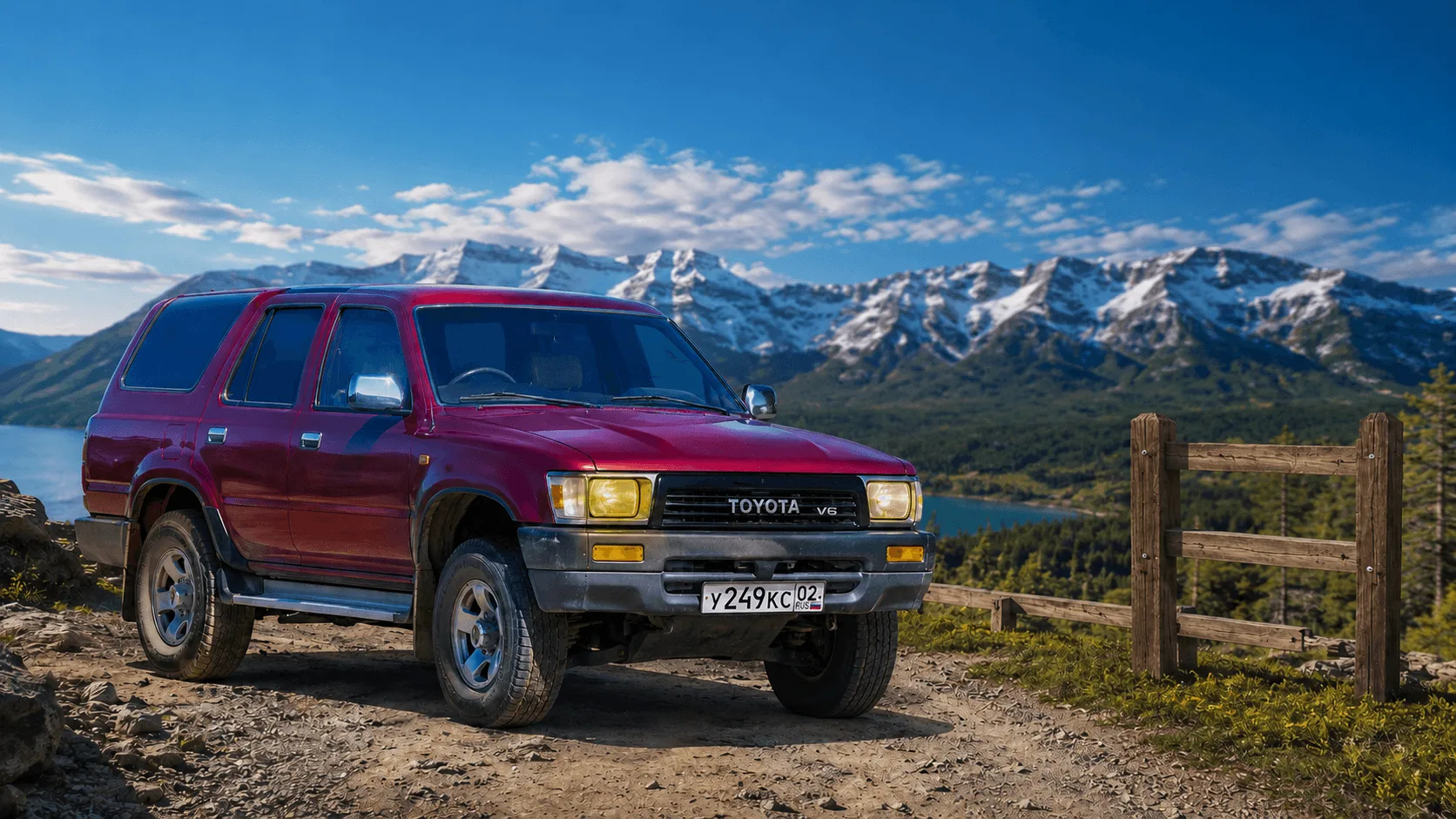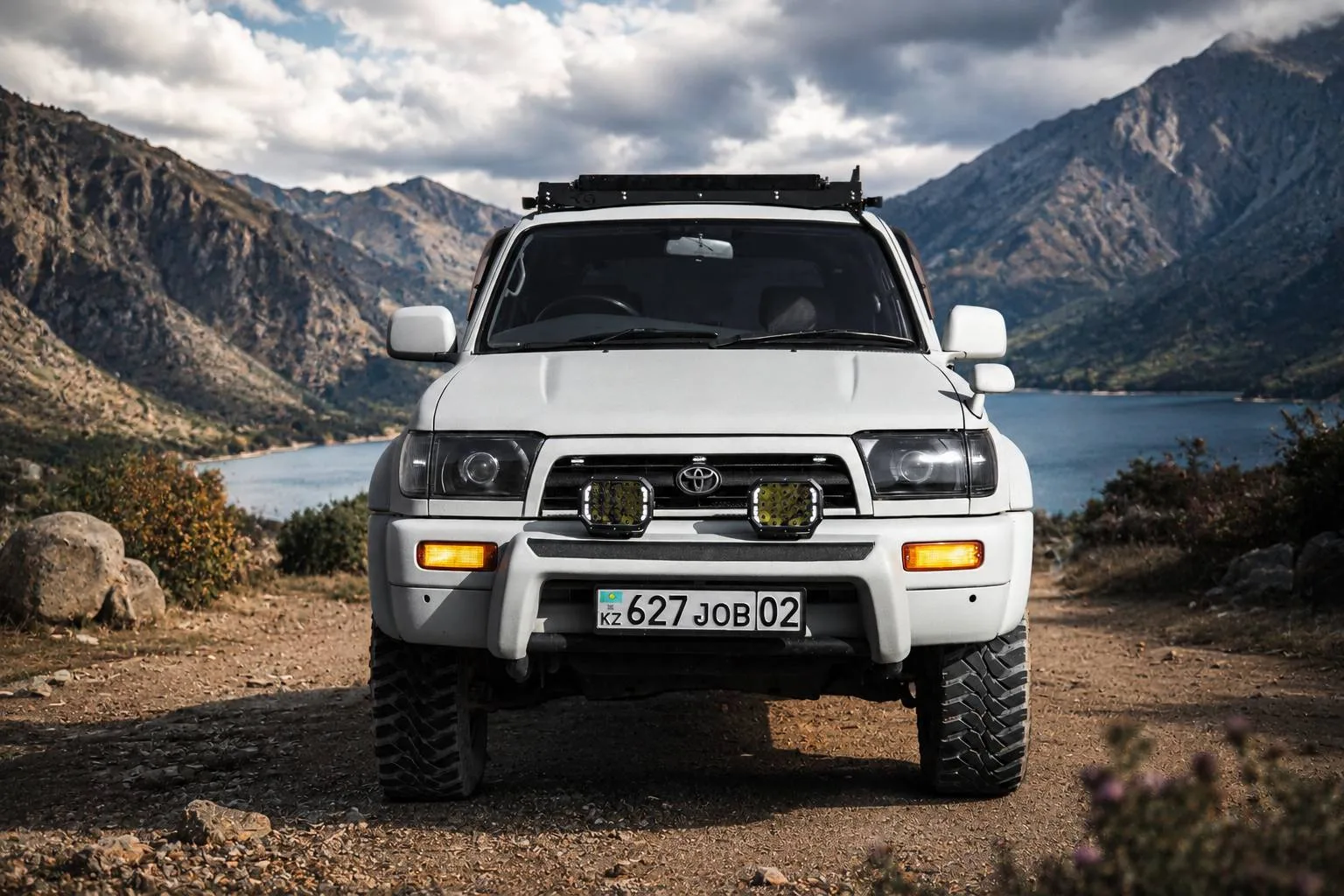


I’ve been asked countless times whether someone should buy a Toyota 4Runner or go through the effort of importing a Hilux Surf from Japan. At first glance, they look nearly identical, and to be honest, they’re much more closely related than most people realize.
But once you dig beneath the sheet metal, you’ll find several important differences that can completely change your ownership experience. That’s exactly why I decided to put together this Hilux Surf vs 4Runner comparison.
I’ll walk you through their engines, drivetrains, features, reliability, ownership costs, and real-world practicality so you can confidently choose the SUV that best fits your lifestyle.
- The Straight Answer
- Hilux Surf vs. 4Runner – Key Differences
- Hilux Surf Vs 4Runner – Key Differences
- Is a Toyota Hilux the Same as a 4Runner?
- What Car Is Most Comparable to a 4Runner?
- Is the Toyota Hilux Surf Reliable?
- What Is the Difference Between Hilux and Hilux Surf?
- Toyota Hilux Surf – Overview
- Toyota Hilux Surf Generations
- Toyota 4Runner – An Overview
- Toyota 4Runner Generations
- Hilux Surf vs. 4Runner – Which One Should You Buy?
The Straight Answer
If you are looking for the short version, here it is: the Hilux Surf vs 4Runner debate comes down to market and powertrain. The Toyota 4Runner was built primarily for North America with left-hand drive and gasoline engines, while the Hilux Surf was Toyota’s Japanese-market SUV, available in both gasoline and Hilux Surf diesel variants, and typically configured with right-hand drive. Mechanically, they’re closely related and share much of their DNA. If you ask me, choose the 4Runner for easier ownership in the U.S., and pick the Hilux Surf if you want a unique JDM experience and the efficiency of a diesel-powered SUV.
Hilux Surf vs. 4Runner – Key Differences
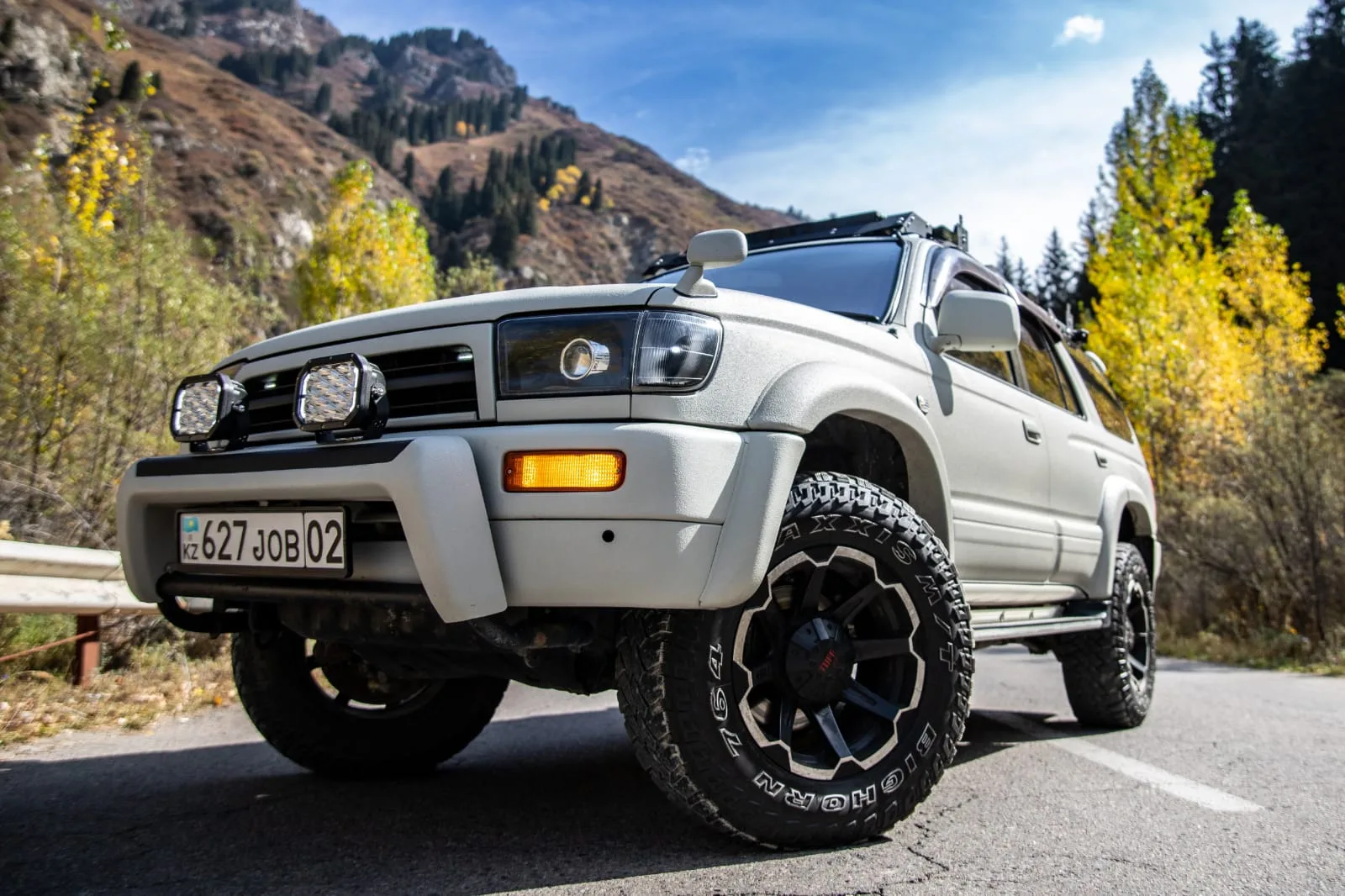
Although the Hilux Surf and the Toyota 4Runner share the same DNA, they were built for two very different markets. The 4Runner was designed primarily for North America, while the Hilux Surf was developed for Japan’s domestic market (JDM). If you’re a U.S. buyer trying to decide between the two, these differences are worth understanding before making a purchase.
1: Market Availability
The biggest difference is where Toyota intended to sell them. The Toyota 4Runner was officially sold in the United States through Toyota dealerships, making it easy to buy, service, and insure.
The Hilux Surf, on the other hand, was exclusively a Japanese Domestic Market (JDM) model and was never officially offered in the U.S. Newer examples can only be imported once they become eligible under the federal 25-year import rule.
For most American buyers, that means the 4Runner is far easier to own, while the Surf appeals to enthusiasts who want something unique.
2: Left-Hand Drive vs. Right-Hand Drive
This is probably the first thing you’ll notice.
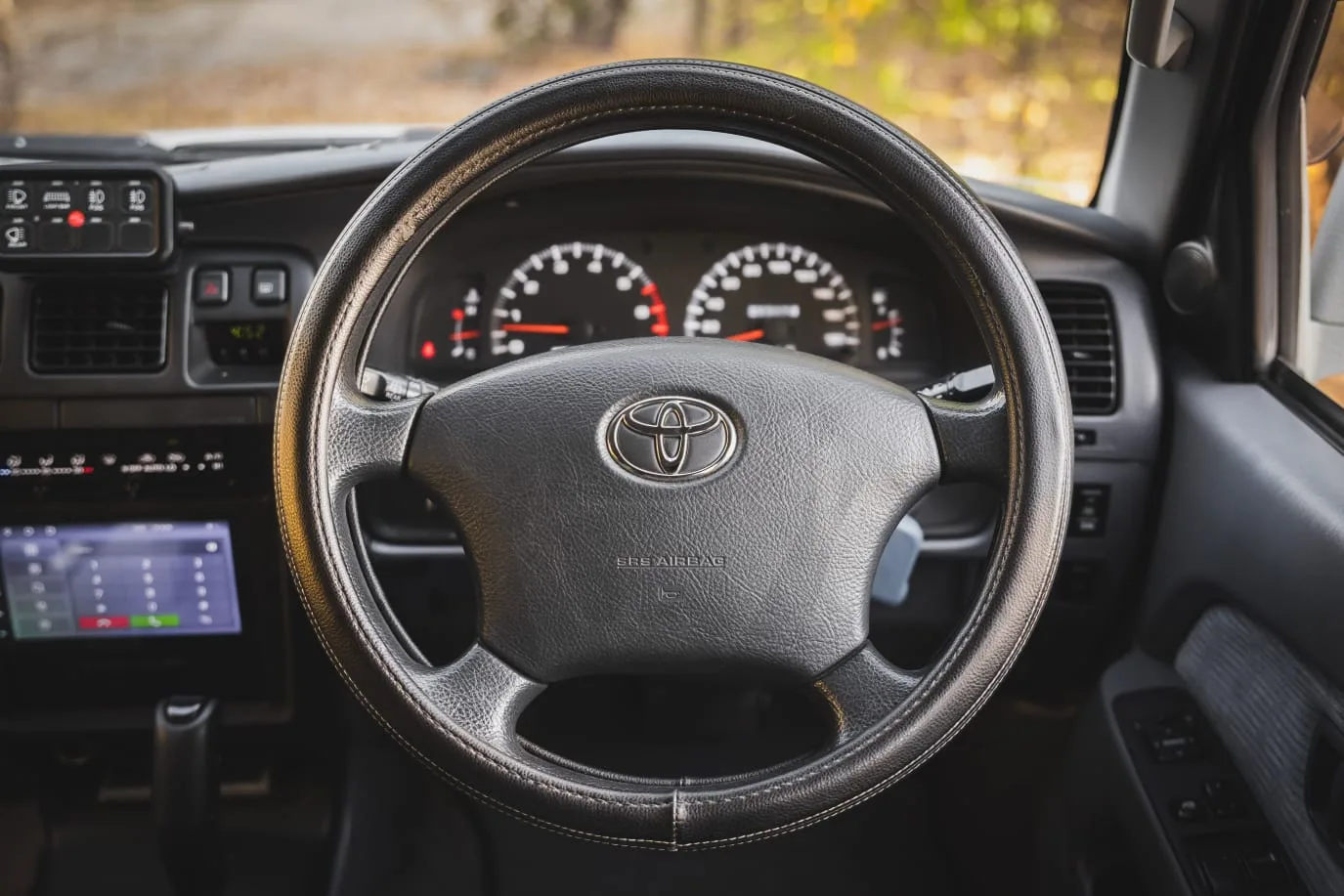
Every U.S.-spec 4Runner is left-hand drive (LHD), while nearly every Hilux Surf is right-hand drive (RHD) because it was built for Japan.
Personally, I think this comes down to preference. If you’ve never driven an RHD vehicle, there’s a short learning curve, especially when overtaking on two-lane roads or using drive-thrus. However, many JDM enthusiasts quickly adapt and actually enjoy the unique driving experience.
3: Engine Options (The Biggest Mechanical Difference)
If you ask me, this is what truly separates the two SUVs.
The U.S.-market 4Runner was sold exclusively with gasoline engines, whereas the Hilux Surf offered both gasoline engines and several diesel options throughout its production run.
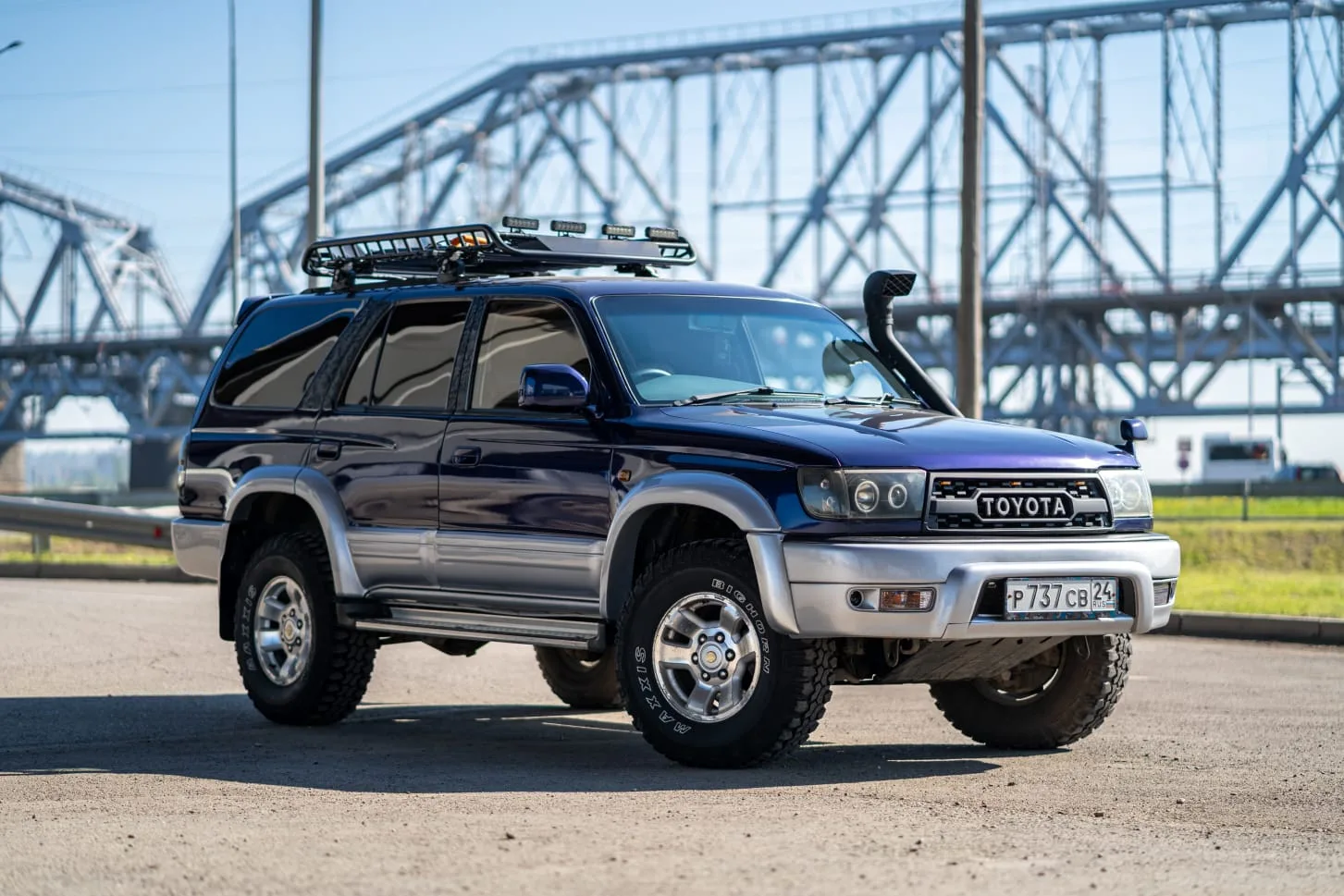
One of the biggest reasons enthusiasts import a Hilux Surf diesel is the legendary 3.0L 1KZ-TE turbo-diesel engine. It isn’t the most powerful engine Toyota ever built, but it produces excellent low-end torque, impressive fuel economy, and a reputation for long-term durability when properly maintained.
Meanwhile, the U.S. 4Runner focused on smoother gasoline V6 performance, making it a better fit for American highways and higher-speed driving.
4: Fuel Economy
The diesel engine gives the Hilux Surf a noticeable advantage in fuel efficiency.
Because of its torque-rich diesel powertrain, the Hilux Surf diesel generally consumes less fuel than comparable gasoline-powered 4Runners, particularly during highway cruising and long-distance travel. The tradeoff is that diesel maintenance can sometimes be more specialized depending on where you live in the United States.
If your priority is lower fuel consumption and excellent cruising range, I’d lean toward the diesel Surf.
5: Trim Levels and Features
Toyota gave the Japanese-market Hilux Surf its own trim hierarchy.
Instead of familiar U.S. trims like SR5, Sport Edition, or Limited, the Surf used names such as:
SSR-X SSR-G SSR-V SSR-X Limited SSR-G Wide
These trims often included equipment that wasn’t always available on equivalent U.S. 4Runners, including unique upholstery, digital climate controls, wood-grain interiors, sunroofs, and premium electronics depending on the model year.
6: Parts Availability in the U.S.
This is one area where the 4Runner clearly wins.
Because millions of 4Runners were sold across North America, replacement parts are readily available from Toyota dealers, aftermarket suppliers, and local salvage yards.
Fortunately, owning a Hilux Surf isn’t nearly as difficult as many people assume. Suspension components, brakes, steering parts, and much of the chassis are shared with the equivalent-generation 4Runner.
However, diesel-specific engine components, right-hand-drive interior parts, and some JDM-only trim pieces usually need to be sourced from import specialists or overseas suppliers.
7: Reliability
Here’s the good news: both vehicles are exceptionally reliable.
Mechanically, they’re closely related and share Toyota’s reputation for longevity. Whether you choose a gasoline 4Runner or a diesel Hilux Surf, regular maintenance is far more important than the badge on the tailgate.
The diesel-powered Surf does require owners to understand diesel maintenance, but the 1KZ-TE engine has earned a loyal following for its durability around the world.
8: Importing and Registration
This is something every American buyer should understand before shopping for a Surf.
A 4Runner can be purchased, titled, financed, and insured almost anywhere in the United States without additional paperwork.
The Hilux Surf requires importing under the federal 25-year rule, after which state registration requirements still vary. Before purchasing one, I’d always recommend confirming your state’s registration and emissions requirements.
9: Resale Value and Exclusivity
The 4Runner enjoys strong resale because of its proven reliability and broad demand.
The Hilux Surf appeals to a different buyer altogether.
Since relatively few Surfs exist in the U.S., especially clean Hilux Surf diesel examples, values have steadily increased among JDM enthusiasts. If exclusivity matters to you, the Surf offers something the 4Runner simply can’t: rarity.
10: Ownership Experience
At the end of the day, these SUVs offer two different ownership experiences.
The 4Runner is the logical choice. It’s easy to maintain, parts are everywhere, every mechanic knows how to service it, and it integrates seamlessly into daily American life.
The Hilux Surf is more of an enthusiast’s vehicle. You get right-hand drive, unique Japanese trim levels, the option of a legendary diesel engine, and the satisfaction of owning a genuine JDM SUV that turns heads wherever it goes.
If I were choosing with my head, I’d buy the 4Runner.
If I were choosing with my heart, especially if I wanted something unique, I’d happily import a well-maintained Hilux Surf diesel.
Hilux Surf Vs 4Runner – Key Differences
| Feature | Toyota Hilux Surf (JDM) | Toyota 4Runner (U.S. Spec) |
|---|---|---|
| Primary Market | Japan (Japanese Domestic Market) | United States, Canada, and other global markets |
| Steering Position | Right-Hand Drive (RHD) | Left-Hand Drive (LHD) |
| Availability in the U.S. | Import only (25-year import rule) | Officially sold through Toyota dealerships |
| Target Buyer | JDM enthusiasts, collectors, diesel fans | Families, off-road enthusiasts, daily drivers |
| Diesel Engine Availability | ✅ Yes – 2.4L, 3.0L, and later Hilux Surf diesel turbo-diesel engines depending on generation | ❌ No diesel engines offered in the U.S. |
| Gasoline Engine Options | 2.7L I4, 3.4L V6, 2.7L VVT-i, 4.0L V6 (varies by generation) | 2.7L I4 (early models), 3.4L V6, 4.0L V6, 4.7L V8 (4th Gen), 4.0L V6 (5th Gen) |
| Most Popular Engine | 3.0L 1KZ-TE Turbo Diesel | 4.0L 1GR-FE V6 |
| Fuel Type | Diesel or Gasoline | Gasoline only |
| Fuel Economy | Generally better (especially diesel variants) | Lower than comparable diesel Surf models |
| Driving Experience | Strong low-end torque, relaxed cruising | Smoother acceleration and higher-speed highway performance |
| Transmission Choices | 5-speed manual or automatic (varies by year) | Primarily automatic; manual available on some earlier generations |
| Trim Names | SSR-X, SSR-G, SSR-V, SSR-X Limited, SSR-G Wide | SR5, Sport Edition, Limited, Trail, TRD Off-Road, TRD Pro |
| Interior Layout | JDM dashboard, RHD controls, unique upholstery and options | U.S.-market dashboard and controls |
| Instrument Cluster | Kilometer-per-hour (km/h) primary speedometer | Miles-per-hour (mph) primary speedometer |
| Navigation System | Japanese-language navigation on many imports | English-language navigation |
| Radio Frequencies | Japanese FM band (often replaced in U.S.) | U.S. FM/AM frequencies |
| Climate Control | Japanese labeling and controls on many models | English controls |
| Safety Equipment | Meets Japanese regulations | Meets U.S. FMVSS regulations |
| Towing Focus | Lower towing emphasis | Designed for U.S. towing requirements |
| Off-Road Capability | Excellent; shares much of the 4Runner’s chassis | Excellent, with additional TRD-specific packages on newer models |
| Suspension Components | Largely shared with equivalent-generation 4Runner | U.S.-spec tuning depending on trim |
| Parts Availability (U.S.) | Shared chassis parts are easy to source; diesel and RHD-specific parts usually require import | Excellent availability through Toyota dealers and aftermarket suppliers |
| Maintenance | Diesel models require specialized knowledge and parts | Easier for most U.S. mechanics to service |
| Insurance | May require specialty insurers depending on state | Standard insurance through most providers |
| Registration | Must meet federal 25-year import rule and state regulations | Simple registration in all states |
| Resale Market | Smaller but strong among JDM enthusiasts | Broad national demand and excellent resale value |
| Collector Appeal | Very high, especially clean diesel models | High, particularly TRD Pro and limited-production models |
| Uniqueness | Rare sight in the U.S.; attracts enthusiasts | Common and widely recognized |
| Aftermarket Support | Good, but some JDM-specific parts require importing | Outstanding aftermarket support in North America |
| Best For | Buyers wanting a unique JDM SUV, diesel efficiency, and collector appeal | Buyers seeking easy ownership, strong resale, dealer support, and everyday practicality |
Is a Toyota Hilux the Same as a 4Runner?
This is probably the biggest misconception I see, and the short answer is no.
Although the Hilux Surf vs 4Runner debate exists because the two SUVs look nearly identical, they aren’t exactly the same vehicle. The Toyota 4Runner is the North American version of the Hilux Surf, but each was built for a different market and buyer.
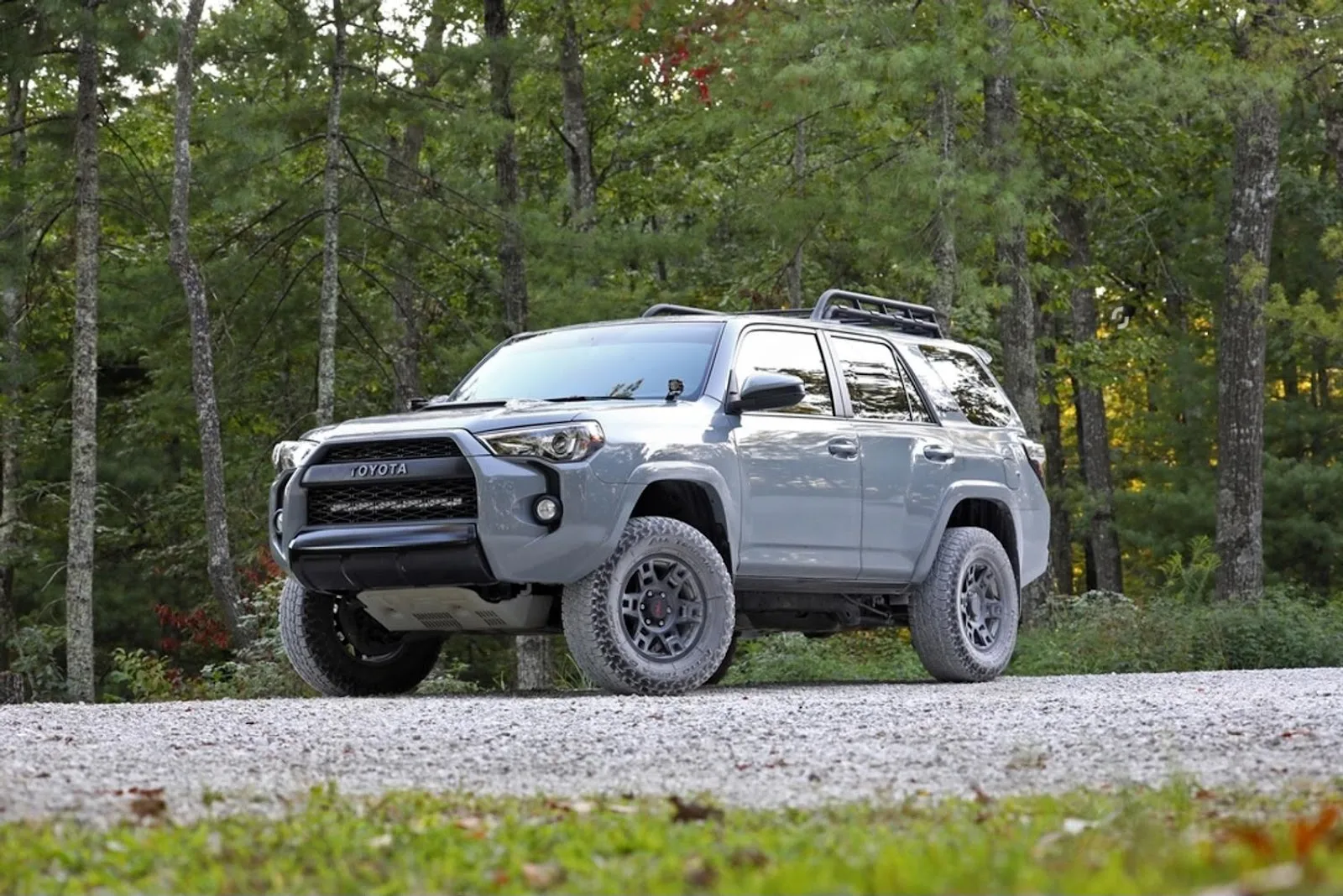
Mechanically, they share the same body-on-frame platform for equivalent generations, along with many suspension, chassis, and drivetrain components. However, the biggest differences are in their engine choices, steering position, and market specifications. The U.S.-spec 4Runner was sold exclusively with gasoline engines and left-hand drive, while the Hilux Surf was offered in both gasoline and Hilux Surf diesel variants and was almost always right-hand drive for the Japanese market.
If you ask me, the 4Runner is the better choice for buyers who want straightforward ownership in the United States because parts, service, insurance, and registration are much easier. On the other hand, if you’re after something rare and enjoy the character of a turbo-diesel JDM SUV, the Hilux Surf offers an ownership experience that’s difficult to replicate with any U.S.-market vehicle.
What Car Is Most Comparable to a 4Runner?
If someone asked me to name the vehicle that’s most comparable to the Toyota 4Runner, my answer would actually depend on where they live.
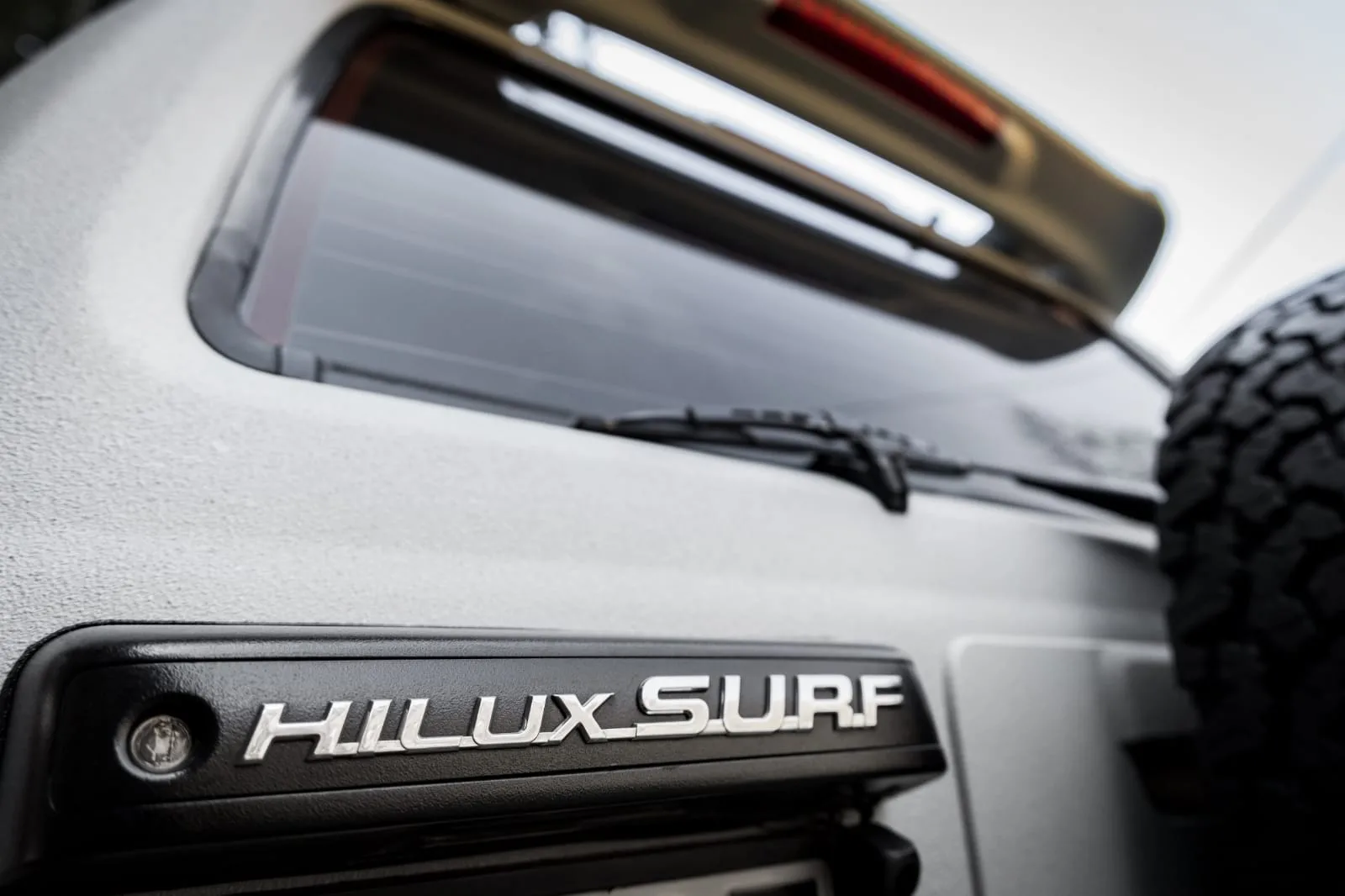
For buyers in the United States, the closest equivalent is the Toyota Hilux Surf, especially when comparing the third and fourth generations. The two SUVs share the same body-on-frame construction, similar dimensions, proven Toyota reliability, and excellent off-road capability. In fact, the Hilux Surf is essentially the Japanese-market counterpart to the 4Runner, with the biggest differences being right-hand drive, JDM-specific trim levels, and the availability of the Hilux Surf diesel engine.
Outside of Toyota’s lineup, the closest competitors include the Jeep Wrangler, Ford Bronco, and Nissan Xterra. All are body-on-frame SUVs designed for adventure, although each has its own strengths and weaknesses.
If you ask me, nothing matches the 4Runner quite like the Hilux Surf. If you want easy ownership, dealer support, and left-hand drive, the 4Runner is the obvious choice. But if you’re looking for something unique with classic JDM appeal and the option of a durable turbo-diesel engine, the Hilux Surf is easily the closest—and perhaps the most interesting—alternative.
Is the Toyota Hilux Surf Reliable?
In my opinion, yes, the Toyota Hilux Surf is one of the most reliable SUVs Toyota has ever built. Much of that reputation comes from the fact that it shares its platform and many mechanical components with the Toyota 4Runner, a vehicle that’s well known for lasting well beyond 200,000 miles with proper maintenance.
The reliability, however, depends on the engine and how well the vehicle has been cared for. The Hilux Surf diesel, particularly models equipped with the 3.0L 1KZ-TE turbo-diesel engine, has earned a loyal following worldwide for its durability and excellent low-end torque. Like any older diesel, it does require regular maintenance, including timely cooling system service and quality fuel, but major failures are uncommon when it’s properly maintained.
Because most Hilux Surfs are now over 25 years old, I recommend paying more attention to the vehicle’s maintenance history than its mileage. Check for rust, suspension wear, cooling system condition, and service records before buying.
If you find a clean, well-maintained example, I believe the Hilux Surf remains one of the most dependable JDM SUVs you can own, offering legendary Toyota reliability with the added appeal of being a rare import in the United States.
What Is the Difference Between Hilux and Hilux Surf?
Although their names are similar, the Toyota Hilux and the Hilux Surf are two completely different vehicles built for different purposes.
The Toyota Hilux is a pickup truck designed for work, towing, hauling, and off-road use. It’s known worldwide for its rugged durability and is available with a cargo bed, making it a favorite among commercial users and adventure travelers.
The Hilux Surf, on the other hand, is a body-on-frame SUV that was developed using the Hilux pickup platform. Instead of an open cargo bed, it features an enclosed cabin with seating for up to five passengers, making it much more practical for families and everyday driving. It’s also the Japanese-market counterpart to the Toyota 4Runner, which is why you’ll often see the Hilux Surf vs 4Runner comparison.
Another major difference is engine availability. While both models were offered with gasoline engines, the Hilux Surf diesel, particularly the 3.0L 1KZ-TE turbo-diesel, became especially popular among JDM enthusiasts because of its strong torque and long-distance fuel efficiency.
If you ask me, the Hilux is the better choice if you need a hardworking pickup, while the Hilux Surf is ideal if you want Toyota’s legendary reliability in a capable SUV with genuine off-road credentials.
Toyota Hilux Surf – Overview
The Toyota Hilux Surf is one of the most respected JDM SUVs ever built, known for combining Toyota’s legendary truck durability with everyday SUV practicality. First introduced in the late 1980s, the Hilux Surf was developed as a more versatile, enclosed-body version of the Hilux platform, offering improved comfort, passenger space, and usability without sacrificing off-road strength.
Built on the same foundation as the Hilux pickup, the Hilux Surf quickly gained popularity in Japan and other global markets where rugged yet comfortable SUVs were in demand. Over its production run, it evolved through multiple generations, with each version improving in refinement, safety, and on-road comfort while maintaining its core off-road capability.
Most Hilux Surf models were offered with a range of gasoline and turbo-diesel engines, depending on the generation and market. Popular options include Toyota’s 2.4L and 3.0L diesel engines, as well as reliable gasoline variants designed for smooth daily driving. These engines are well known for their longevity, strong low-end torque, and ability to handle both highway cruising and demanding terrain with ease.
One of the key reasons the Hilux Surf remains highly sought after today is its body-on-frame construction, shared with the Hilux pickup. This design gives the SUV exceptional strength and long-term durability, making it a favorite among off-road enthusiasts, overland builders, and collectors of classic JDM vehicles. Even today, well-maintained examples continue to perform reliably in harsh conditions around the world.
Inside, the Hilux Surf offers a more comfortable and practical layout compared to the pickup it is based on. Depending on the trim level, it can include features such as upgraded seating, improved interior materials, and enhanced climate control systems, making it suitable for both daily driving and long-distance travel.
Because of its shared engineering DNA with the Hilux, the Hilux Surf is often compared to Toyota’s global SUV lineup, especially the 4Runner. While both vehicles share a similar foundation, the Hilux Surf represents Toyota’s JDM-focused approach, offering unique configurations and specifications not always found in export-market models.
Today, the Toyota Hilux Surf continues to attract strong interest from enthusiasts and collectors, especially in the United States, where imported JDM SUVs are highly valued for their reliability, simplicity, and distinctive character.
Toyota 4Runner – An Overview
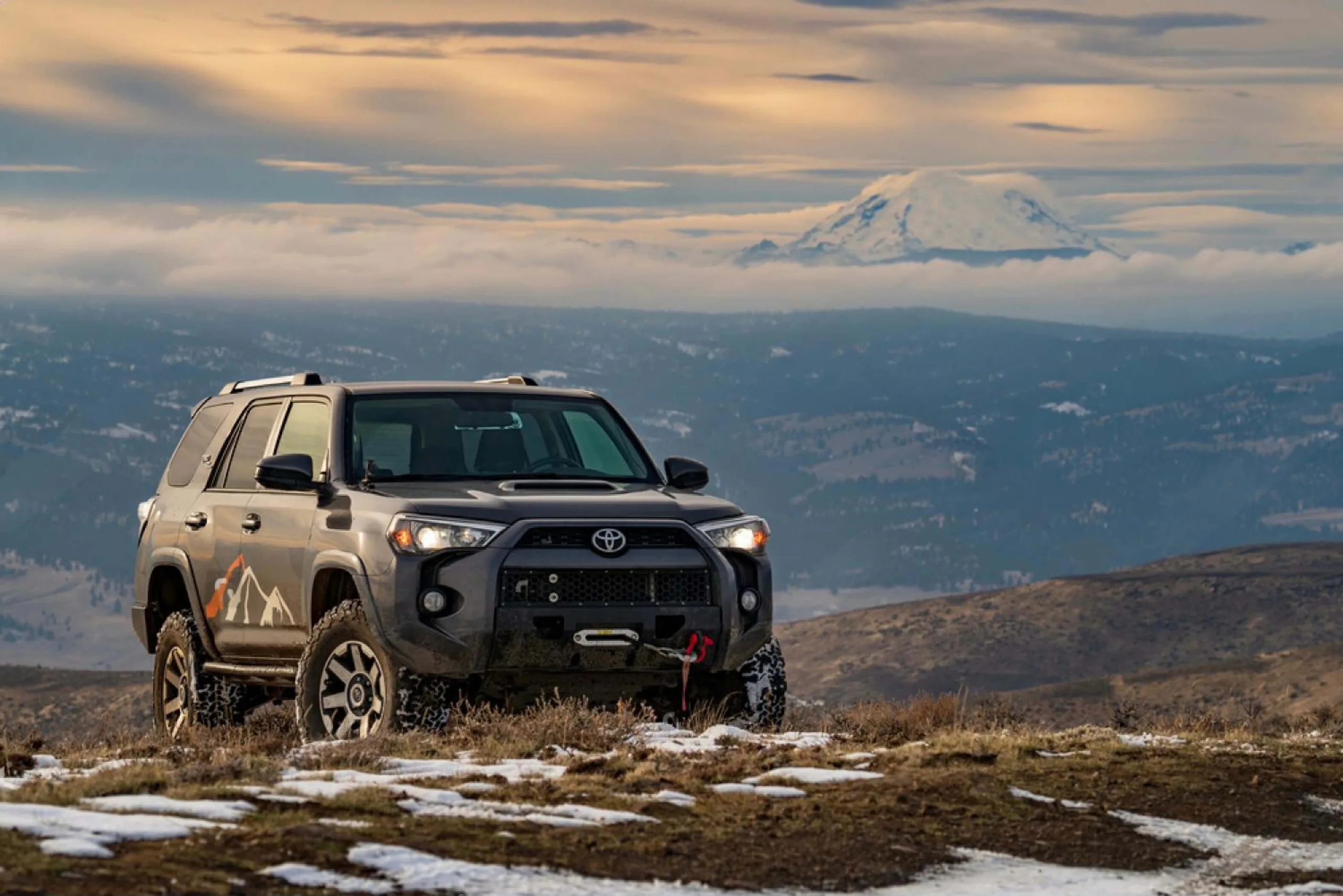
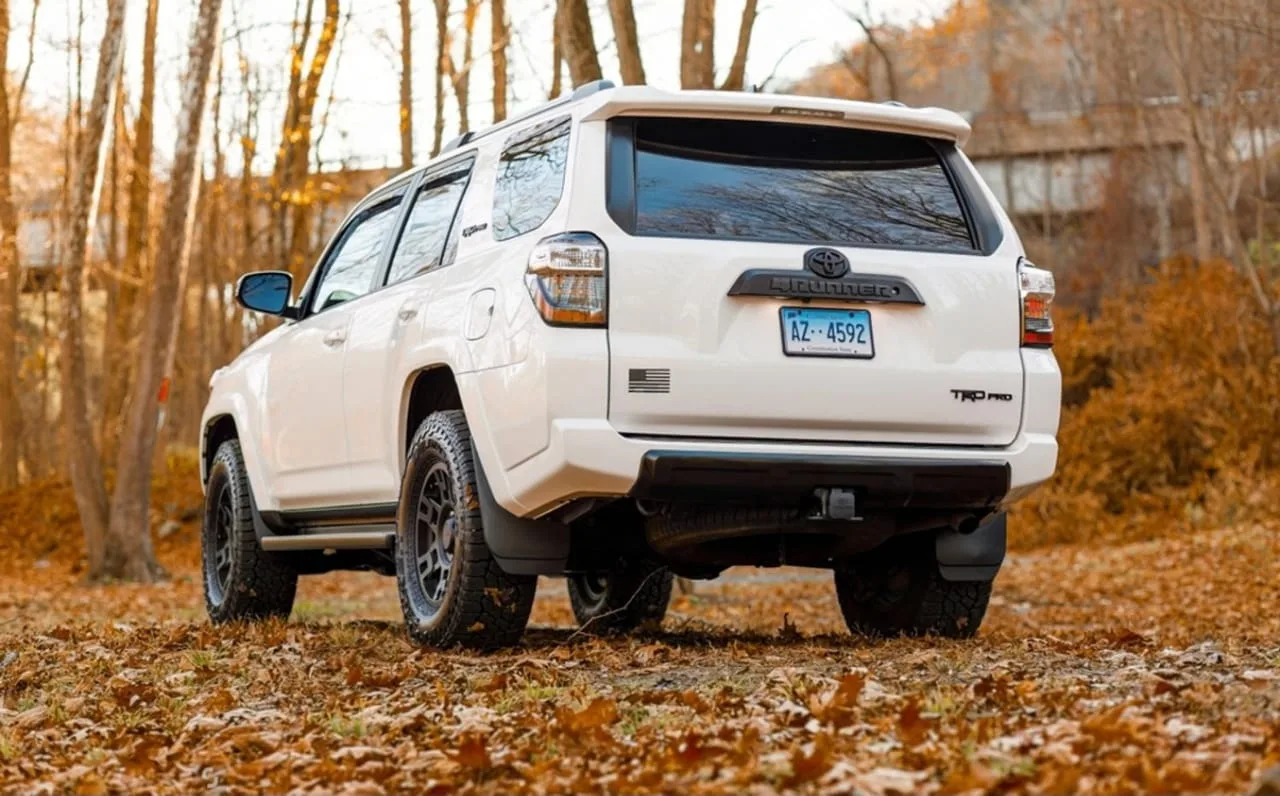
The Toyota 4Runner is one of the few traditional body-on-frame SUVs still available today, and in my opinion, that’s exactly what makes it so special. Introduced in 1984, the first-generation 4Runner started life as a Toyota Hilux pickup with an enclosed rear cabin and removable fiberglass top. As buyer demand grew, Toyota transformed it into a standalone SUV, and over the years it became one of the most respected off-road vehicles in North America.
Today, the 4Runner is in its sixth generation, which debuted for the 2025 model year, and it remains in production. Unlike many modern SUVs that have switched to unibody construction, the 4Runner continues to use a body-on-frame chassis, giving it exceptional durability, towing capability, and off-road performance.
The latest generation is built on Toyota’s TNGA-F platform, the same architecture used by the new Tacoma, Land Cruiser, and Tundra. Under the hood, Toyota replaced the outgoing 4.0L V6 with a 2.4L turbocharged i-FORCE four-cylinder engine, while higher trims receive the i-FORCE MAX hybrid powertrain, producing up to 326 horsepower and 465 lb-ft of torque.
Buyers can choose between rear-wheel drive and a highly capable part-time or full-time four-wheel-drive system, depending on the trim.
One of the reasons the 4Runner has such a loyal following is its versatility. It serves as a comfortable daily driver, a dependable family SUV, and a highly capable off-road vehicle. Features such as Multi-Terrain Select, Crawl Control, locking rear differentials on select trims, and generous ground clearance make it one of the most trail-ready SUVs available directly from the factory.
Although the Hilux Surf vs 4Runner comparison is common because both share Toyota’s rugged heritage, the 4Runner was specifically developed for North American buyers. It combines legendary Toyota reliability with modern technology, making it one of the most capable and dependable SUVs on the market today.
Toyota Hilux Surf Generations
First Generation (1984–1989)
The first-generation Toyota Hilux Surf was introduced as Toyota’s early step into the growing SUV market. Built on the Hilux pickup platform, it combined a rugged ladder-frame chassis with a removable fiberglass top, creating a versatile vehicle that could handle both daily driving and off-road use. Early models were offered with gasoline and diesel engine options, paired with manual transmissions and part-time four-wheel drive systems.
While simple in design, this generation laid the foundation for what the Hilux Surf would become. Its durability, straightforward mechanics, and strong off-road capability made it especially popular in markets where reliability mattered more than luxury. It also marked the beginning of Toyota’s reputation for building dependable, adventure-ready SUVs.
Second Generation (1989–1995)
The second-generation Hilux Surf brought noticeable improvements in comfort, refinement, and capability. Toyota refined the suspension system, improved interior space, and introduced more powerful engine options, including turbo-diesel variants that became highly sought after in global markets.
This generation also benefited from better on-road manners while still maintaining strong off-road performance. Four-wheel drive systems became more advanced, and the overall driving experience felt more stable and controlled. As a result, the Hilux Surf began appealing not only to off-road enthusiasts but also to families looking for a practical and durable SUV.
Third Generation (1995–2002)
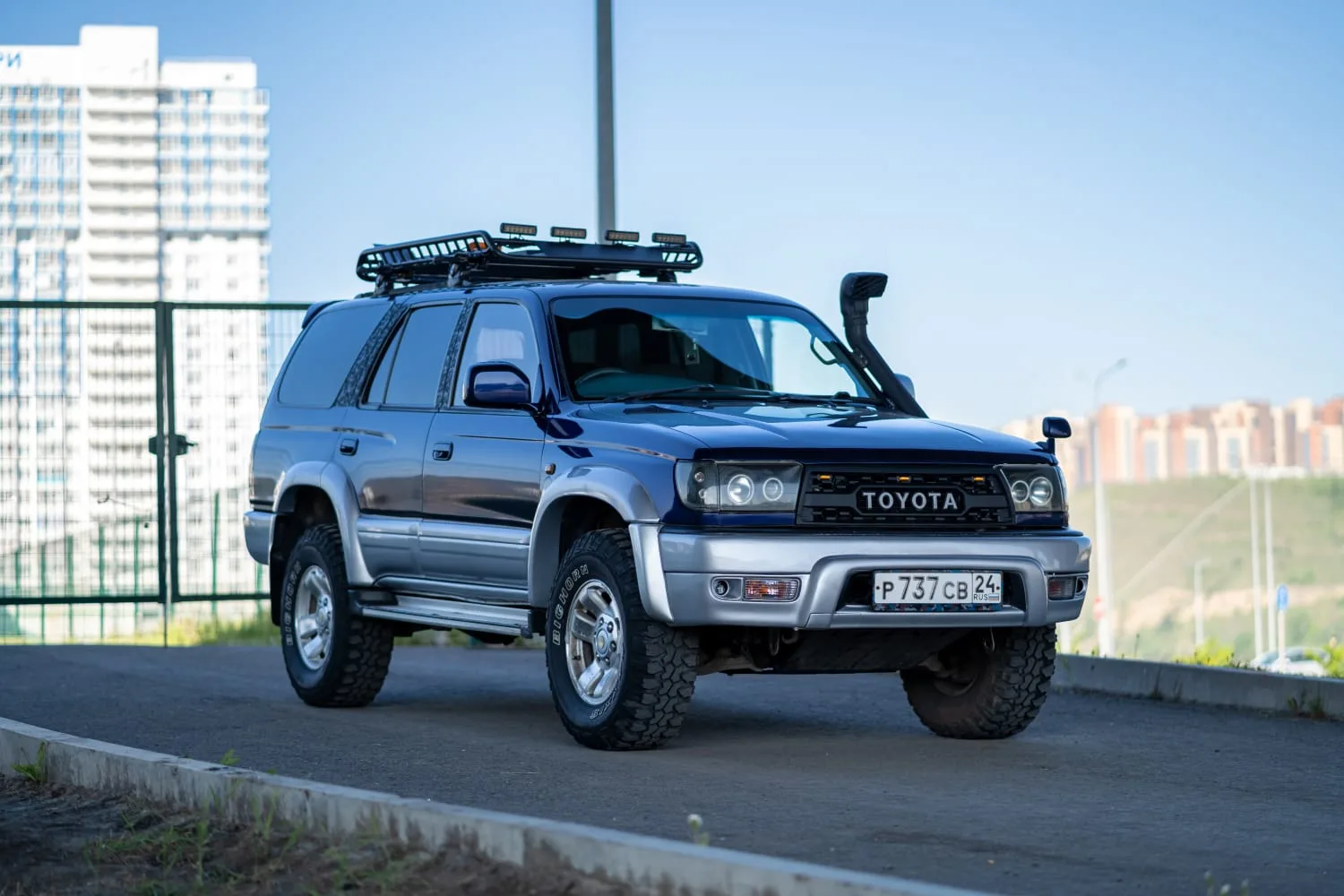
The third-generation Hilux Surf is widely regarded as the most refined and desirable version of the model. Built on the N180 platform, it featured a more modern design, improved safety, and significantly upgraded comfort compared to earlier generations.
Engine options included reliable gasoline units as well as Toyota’s well-known diesel engines, such as the 1KZ-TE turbo-diesel, which became a favorite for its balance of power and efficiency. Independent front suspension improved ride quality, making it more comfortable for daily use while still maintaining strong off-road capability.
This generation is especially popular among JDM enthusiasts today due to its durability, classic Toyota engineering, and strong aftermarket support. It represents the point where the Hilux Surf fully matured into a capable and well-rounded SUV.
Fourth Generation (2002–2009)
The fourth-generation Hilux Surf transitioned into a more modern SUV platform, sharing design elements with Toyota’s global SUV lineup. It featured improved safety systems, more refined interiors, and advanced four-wheel drive technology.
Engine options became more efficient, with a focus on cleaner diesel and gasoline performance. The ride quality improved significantly, and the vehicle became more comfortable for long-distance travel. While it moved further away from its purely utilitarian roots, it still retained the rugged reliability that defined the Hilux Surf name.
The End of an Era: The Hilux Surf Legacy
In 2009, with the conclusion of the fourth generation, Toyota officially discontinued the Hilux Surf nameplate globally. There is no official “Fifth Generation” Hilux Surf. Instead, its position in the Japanese market was effectively absorbed by the Toyota Land Cruiser Prado (and later the Land Cruiser 250), which shared the same rugged DNA.
Meanwhile, across the ocean, the spirit of the Surf lived on through the North American Toyota 4Runner, which continued to evolve into its fifth (2010–2024) and now sixth generations (2025–Present). While you can no longer buy a brand-new Hilux Surf, its legendary reputation for durability, adventure, and JDM charm remains alive and well among enthusiasts worldwide.
Toyota 4Runner Generations
1: First Generation (1984–1989)
The first-generation Toyota 4Runner debuted in 1984 as a rugged SUV based on the Toyota Hilux pickup. Early models featured a removable fiberglass rear top, making them part pickup and part SUV.
Buyers could choose between a 2.4L four-cylinder gasoline engine or a 2.4L turbo-diesel in some global markets, with manual or automatic transmissions available. A solid front axle on early models provided excellent off-road capability, helping establish the 4Runner’s reputation as a dependable adventure vehicle.
Here’s our in-depth take on all Toyota 4Runner generations: Click to Read.
2: Second Generation (1990–1995)
Toyota transformed the 4Runner into a purpose-built SUV for its second generation. The removable top disappeared, replaced by a fully enclosed steel body that improved safety and comfort.
Engine options expanded to include a more powerful 3.0L V6, while interior quality, suspension, and ride comfort improved significantly. The second generation also introduced more family-friendly features without compromising the SUV’s off-road credentials.
3: Third Generation (1996–2002)
Many enthusiasts, myself included, consider the third-generation 4Runner one of Toyota’s greatest SUVs. Built on a stronger platform with independent front suspension, it offered a smoother ride while maintaining excellent off-road capability. Engine choices included the reliable 2.7L four-cylinder and the legendary 3.4L V6, both known for exceptional longevity. This generation earned its reputation for regularly surpassing 300,000 miles with proper maintenance.
4: Fourth Generation (2003–2009)
The fourth-generation 4Runner became larger, more refined, and significantly more powerful. Toyota introduced a 4.0L V6 alongside the optional 4.7L V8, giving buyers impressive towing capability and smooth highway performance.
Advanced features such as X-REAS suspension, full-time four-wheel drive on select models, and improved safety technology made it one of the most versatile SUVs in its class.
5: Fifth Generation (2010–2024)
The fifth-generation 4Runner enjoyed one of the longest production runs in Toyota’s history. Powered by the dependable 4.0L 1GR-FE V6 paired with a five-speed automatic transmission, it became famous for its reliability and strong resale value.
Throughout its lifecycle, Toyota introduced trims such as TRD Off-Road, TRD Pro, Venture Special Edition, and Trail Special Edition. Features like Crawl Control, Multi-Terrain Select, locking rear differentials, and Toyota Safety Sense in later years kept the 4Runner competitive while preserving its rugged body-on-frame construction.
6: Sixth Generation (2025–Present)
Introduced for the 2025 model year, the sixth-generation 4Runner represents the biggest redesign in more than a decade. It rides on Toyota’s modern TNGA-F body-on-frame platform shared with the Tacoma, Land Cruiser, Tundra, and Sequoia.
The long-running V6 was replaced by a 2.4L turbocharged i-FORCE engine, while higher trims receive the i-FORCE MAX hybrid producing up to 326 horsepower and 465 lb-ft of torque.
Toyota also introduced larger infotainment displays, Toyota Safety Sense 3.0, Trailhunter and Platinum trims, and further improved off-road capability, ensuring the 4Runner remains one of the most capable adventure SUVs available today.
Hilux Surf vs. 4Runner – Which One Should You Buy?
After comparing every major aspect of the Hilux Surf vs 4Runner, I don’t think there’s a single winner. Instead, the better choice depends entirely on your lifestyle and what you expect from your SUV.
If you are looking for the easiest ownership experience in the United States, I’d recommend the Toyota 4Runner. Since it was built specifically for the North American market, you’ll enjoy left-hand drive, excellent parts availability, straightforward servicing at Toyota dealerships and independent shops, easier insurance, and hassle-free registration.
It’s an outstanding choice if you want a dependable daily driver that can also handle weekend adventures and serious off-road trips.
However, if you are someone who appreciates unique vehicles and wants something that stands out from the crowd, I’d seriously consider the Hilux Surf.
There’s something special about owning a genuine Japanese-market SUV that most people have never seen in person. The availability of the legendary Hilux Surf diesel is another major advantage. Its strong low-end torque, impressive fuel economy, and worldwide reputation for durability make it a favorite among JDM enthusiasts and overlanders alike.
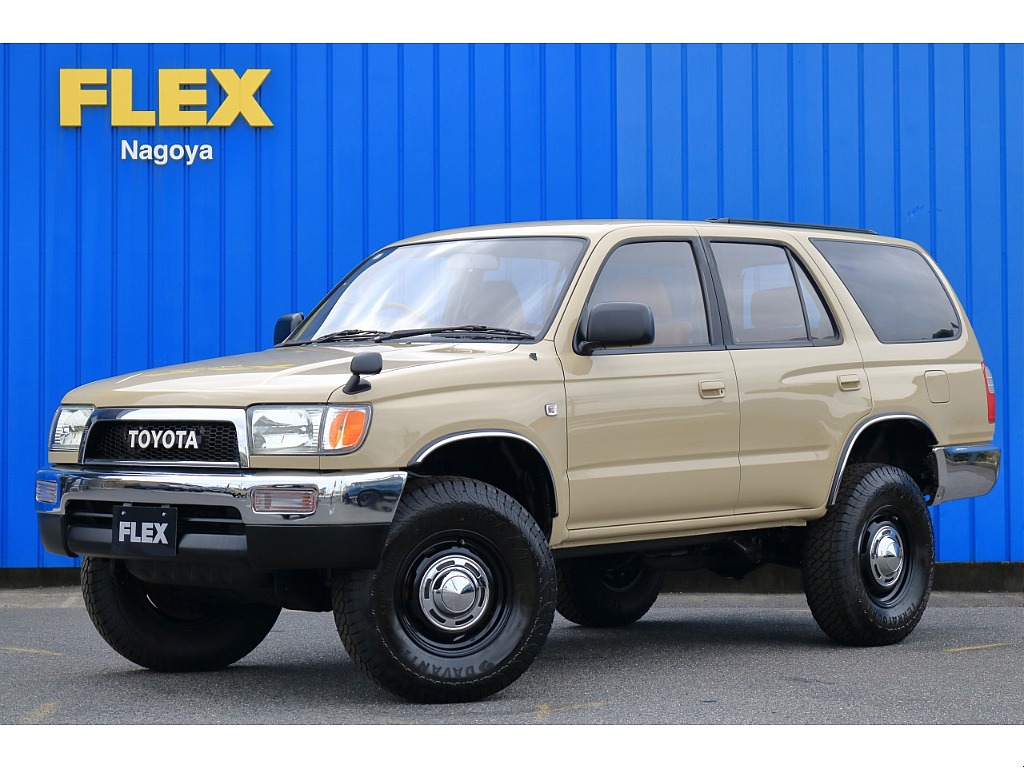
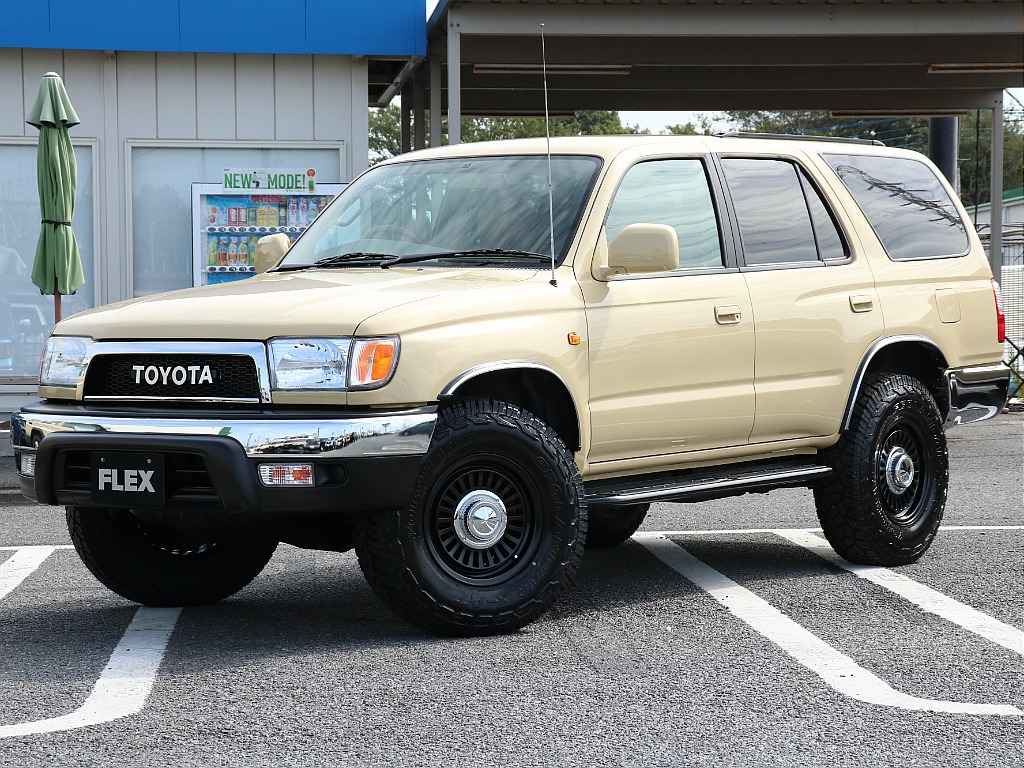
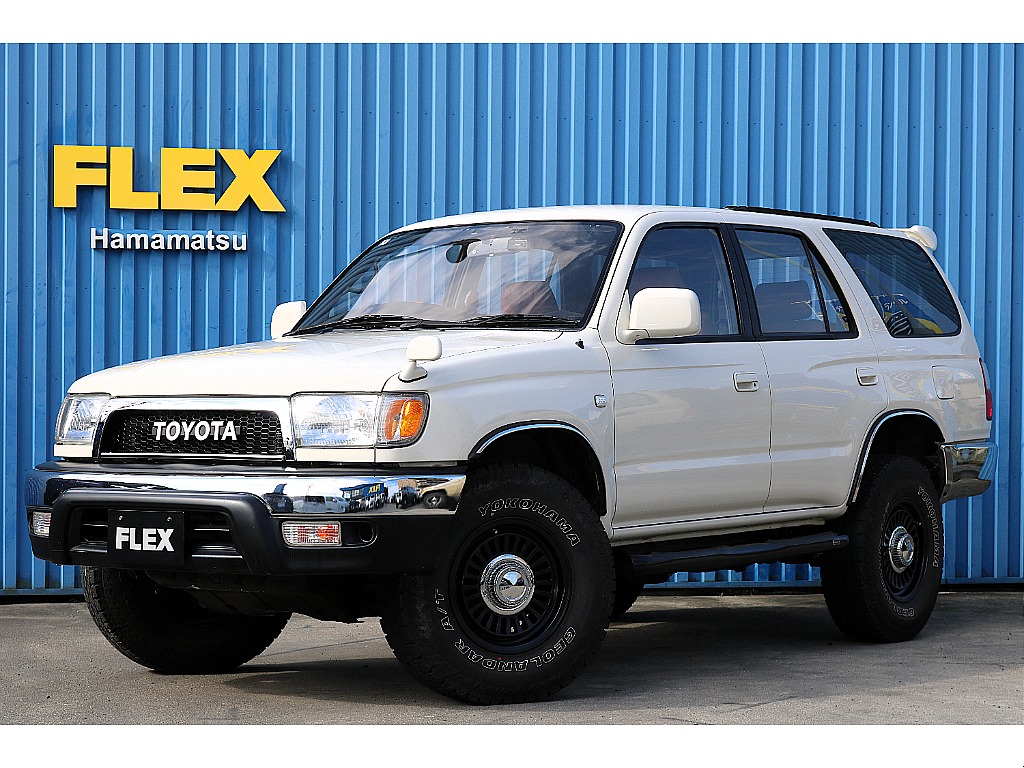
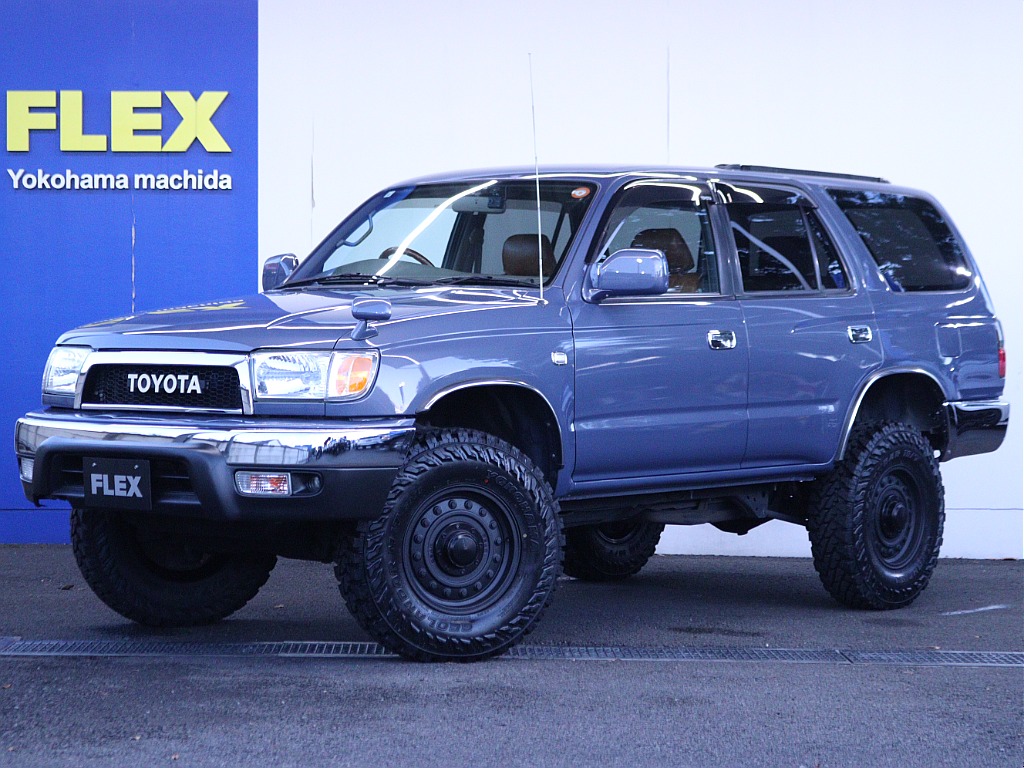
If you are searching for either a Toyota 4Runner or a carefully selected Hilux Surf, Flex San Diego is one of the dealerships I’d recommend considering. Flex San Diego specializes in Japanese vehicles and has extensive experience sourcing, inspecting, and importing quality JDM models for U.S. buyers.