


The Toyota Land Cruiser Prado 90 was never sold new in the United States. It was built from 1996 to 2002, mostly for Japan and other markets, while Americans got its close cousin, the third-generation 4Runner. Today, every Prado 90 you can buy in the US is an import, and almost all of them are now old enough to bring in under the 25-year rule.
That leaves US buyers with questions a normal used-car guide does not answer. Which years changed what? Is the diesel worth it, and which diesel? How do you tell an early truck from a late one when the paperwork is in Japanese? And which recalls should you check on a truck that was never part of Toyota’s US system?
We sell Prado 90s imported from Japan. This guide covers the year-by-year changes, the four engines, the recalls and common problems to check, and what it is like to own one in the US.
- The Best Prado 90 Years at a Glance
- What Is the Prado 90 (J90)?
- Which Prado 90 Models Can You Import in 2026?
- Prado 90 Year-by-Year Changes
- Engines Compared: Which Prado 90 Should You Buy?
- Best Prado 90 Years to Buy
- Prado 90 Versions to Approach With Caution
- Common Problems to Check
- Trims and Options
- Owning a Prado 90 in the US: Parts, Service and Registration
- What a Prado 90 Costs in the US (as of November 2026)
- How to Inspect a Prado 90 Before You Buy
- Prado 90 vs. the Alternatives
- Frequently Asked Questions
- Conclusion
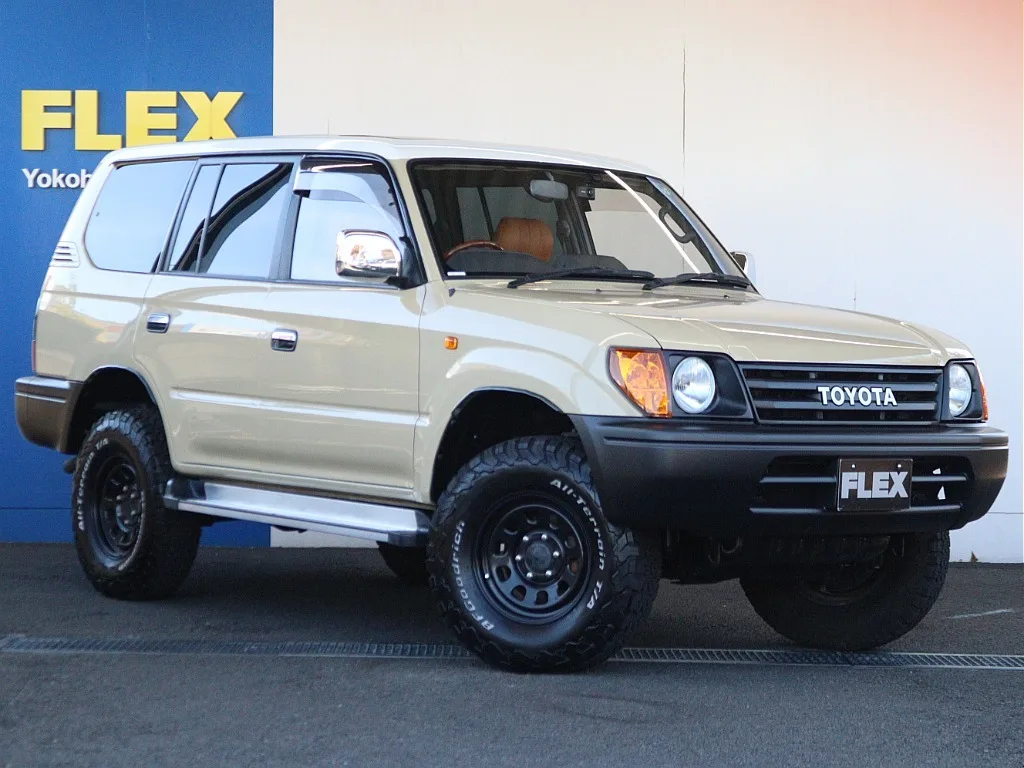
Land Cruiser Prado for sale


The Best Prado 90 Years at a Glance
| Pick | Period | Engine | Why |
|---|---|---|---|
| Best overall | June 1999 to 2002 | 3.4L V6 (5VZ-FE) | The facelifted truck with the engine whose parts are easiest to find in the US |
| Best value | 1996 to early 1999 | 3.4L V6 or 3.0L diesel (1KZ-TE) | Early trucks with the same core hardware; in our November 2026 listings, early V6 trucks were listed for a little less |
| Best for diesel fans | June 1999 to July 2000, or July 2000 to 2002 | 1KZ-TE (145 PS) or 1KD-FTV | The last and strongest version of the 1KZ-TE, or the more powerful common-rail diesel |
| Use caution | Built April 1996 to January 1999 | All engines | Check that Toyota Japan’s rear axle shaft recall was done |
| Use caution | Built May 2001 to August 2002 | 2.7L, 3.4L and 1KD-FTV | Check that Toyota Japan’s front ball joint recall was done |
| Use caution | Any year | 1KZ-TE with no cooling records | Owners link cracked heads to overheating and neglected cooling systems |
We did not find a Prado 90 year that deserves a flat “avoid” label. The cautions above are about recalls to confirm and maintenance to verify, not about a year that was built badly.
What Is the Prado 90 (J90)?
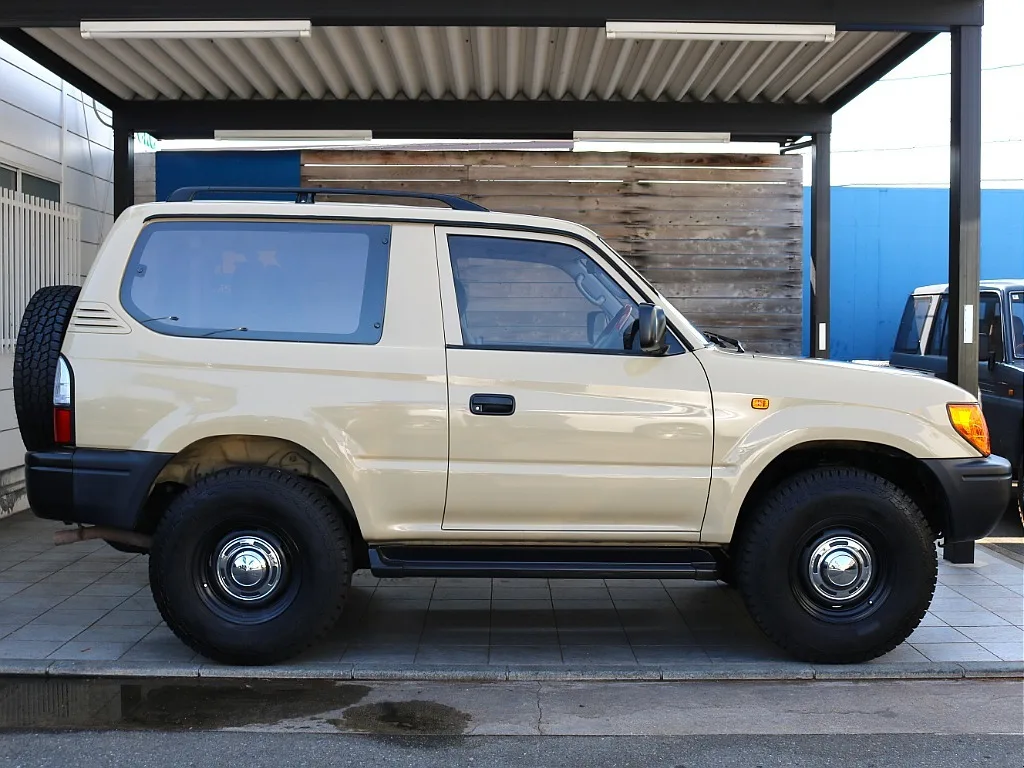
The Prado 90 is the second-generation Land Cruiser Prado. Toyota launched it in Japan on May 8, 1996, according to Toyota’s 75-year history. It came in two body styles:
- 3-door (J90): 2,370 mm (93.3 in) wheelbase, 4,240 mm (166.9 in) long, five seats
- 5-door (J95): 2,675 mm (105.3 in) wheelbase, 4,675 mm (184.1 in) long, up to eight seats with a third row
Compared with the 70 Series Prado it replaced, the 90 moved to independent front suspension and full-time four-wheel drive. Toyota’s 1996 launch release also lists dual front airbags and ABS as standard. In Japan, it was replaced by the 120 Series on October 7, 2002, according to Toyota’s announcement.
The 90 shares much of its chassis with the Hilux Surf 185 and the 1996–2002 4Runner, which matters when you need parts (more on that below). For the full story of the model, see our history of the Toyota Land Cruiser 90 Prado.
Which Prado 90 Models Can You Import in 2026?
Under federal rules, a vehicle not built to US standards can be imported once it is at least 25 years old, and NHTSA counts that from the month of manufacture. In December 2026, that means a Prado 90 built in or before December 2001 is eligible.
- 1996 to 2001 trucks: eligible now
- 2002 trucks: become eligible month by month during 2027, based on the month each one was built
- The first 120 Series Prados: Toyota launched the 120 Series in Japan in October 2002, so based on the launch month, the first ones become eligible around fall 2027; each truck’s build month sets its exact date
Some 2002 trucks are already listed in our inventory. We list Japanese trucks about three months before they turn 25, so you can buy one now, but it will not arrive before its eligibility date. For a month-by-month list, see our guide to JDM Toyotas legal to import in 2027.
One detail trips up many buyers: Japanese export papers show the first registration date, not the build date. The build month comes from the frame number. A good importer checks it before the truck ships.
Prado 90 Year-by-Year Changes
Japanese vehicles do not have US-style model years. When a listing says “1999,” it usually means the year the truck was first registered in Japan. The changes below follow Toyota’s own release dates, so the build month matters more than the year on the listing.
The easiest way to place a truck is the prefix on its Japanese model code, which you will see on the export certificate and on our listings. Japan’s Ministry of Land, Infrastructure, Transport and Tourism publishes what these prefixes mean:
| Model code | Engine | Sold in Japan |
|---|---|---|
| E-VZJ90W / E-VZJ95W | 3.4L V6 | May 1996 to June 1999 |
| E-RZJ90W / E-RZJ95W | 2.7L four-cylinder | April 1997 to June 1999 |
| KD-KZJ90W / KD-KZJ95W | 1KZ-TE diesel, 140 PS | May 1996 to June 1999 |
| GF-VZJ9_W / GF-RZJ9_W | 3.4L V6 or 2.7L | June 1999 to 2002 |
| KH-KZJ90W / KH-KZJ95W | 1KZ-TE diesel, 145 PS | June 1999 to July 2000 |
| KH-KDJ90W / KH-KDJ95W | 1KD-FTV diesel | July 2000 to 2002 |
1996–1999: Early Models
The first trucks launched in May 1996 with two engines: the 3.4L V6 (5VZ-FE) and the 3.0L 1KZ-TE turbodiesel with an intercooler. Toyota added the 2.7L four-cylinder (3RZ-FE) in April 1997, according to its 75-year history.
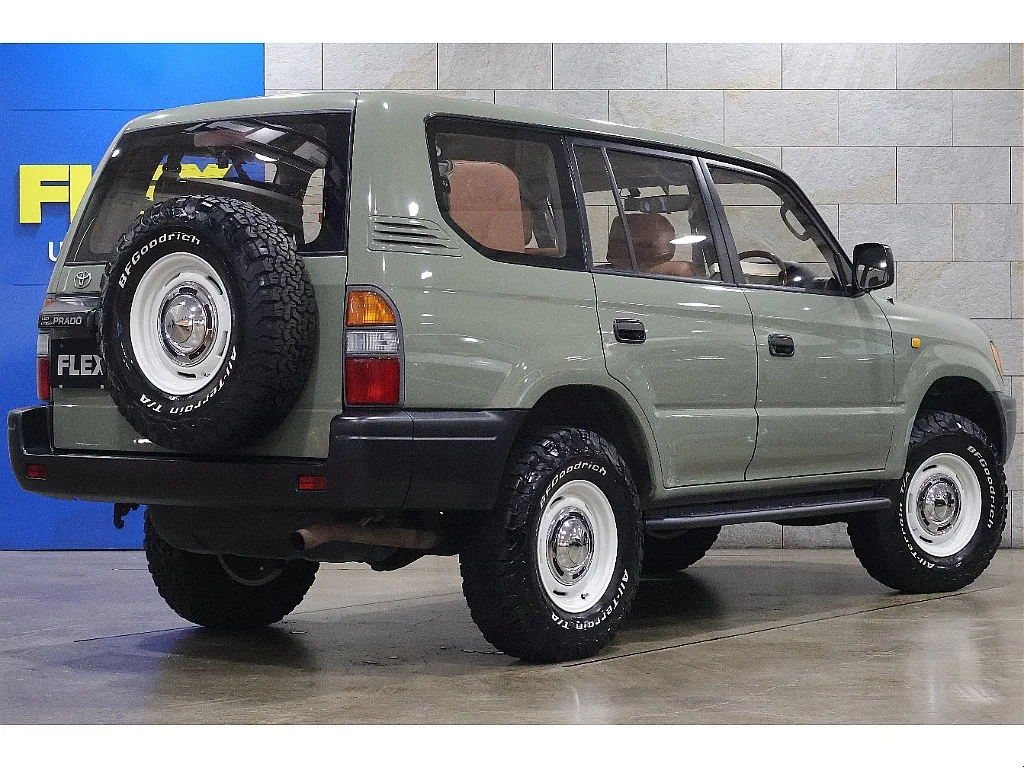
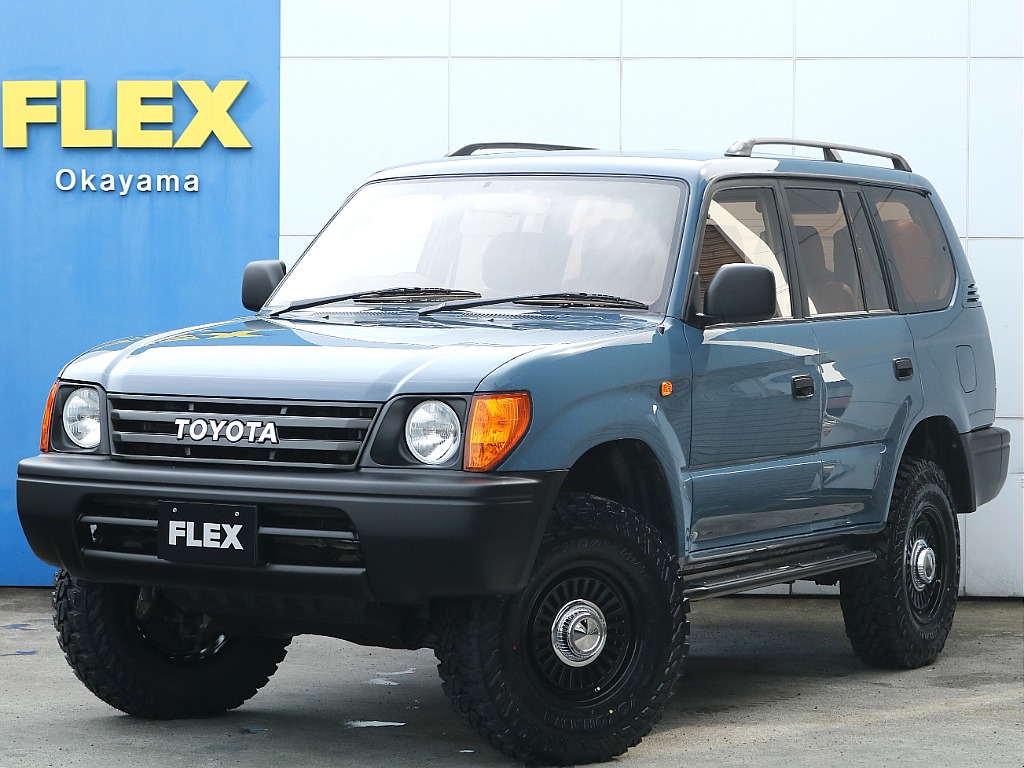
You can spot an early truck by its face. The 3-door had round headlights and a vertical-slat grille, and the 5-door had a horizontal grille. Early lineups also included basic RJ and TJ trucks with steel wheels and a five-speed manual, but they are rare today.
Japanese catalog data shows a small update in January 1998 that added UV-cut glass and third-row headrests, along with option packages. Toyota’s own release for that update has not surfaced, so treat those details as a guide, not a rule.
What it means for a buyer: These are usually the oldest, highest-mileage trucks, and nearly all of them fall inside the build-date range of the rear axle shaft recall described below.
1999–2000: The Facelift and the Last 1KZ-TE
Toyota gave the Prado 90 its main facelift on June 9, 1999, according to Toyota’s release. The changes were easy to see:
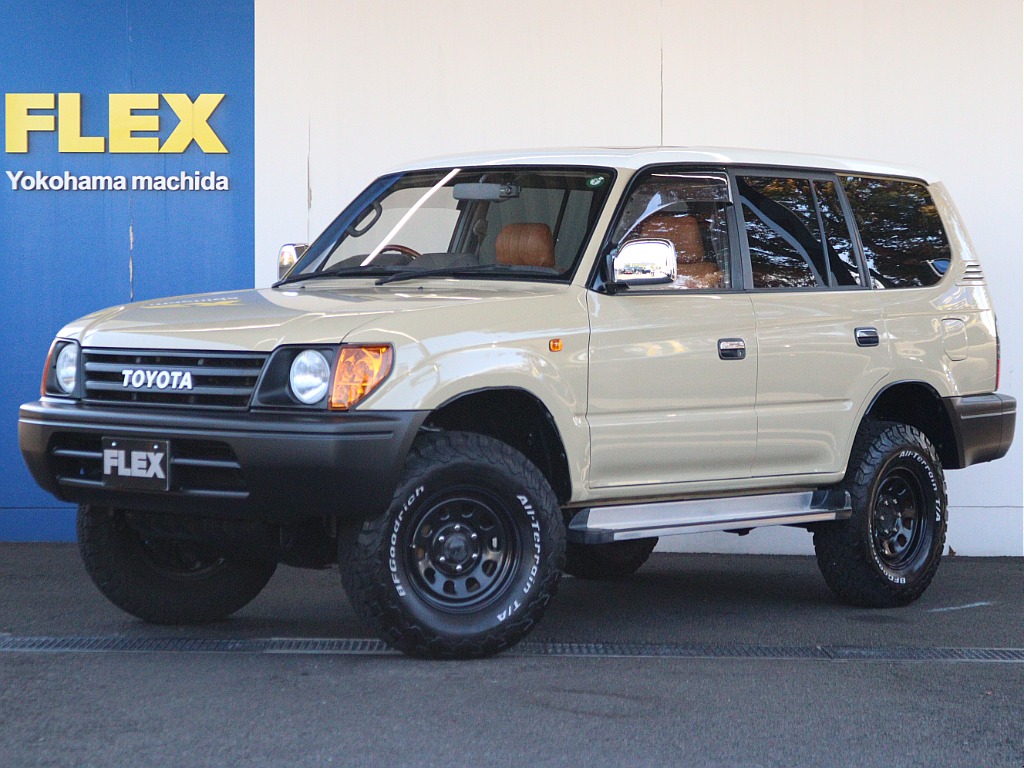
- One three-bar grille for both body styles, with larger multi-reflector headlights and clear lenses
- New gauges, including Optitron meters on most trims
- A 60/40 split second-row seat on the 5-door
- More power from the 1KZ-TE: 145 PS (143 hp) and 343 Nm (253 lb-ft), up from 140 PS (138 hp) and 333 Nm (246 lb-ft)
From August 1999, Toyota also offered Active TRC traction control as an option on some automatic trucks, and VSC stability control on 1KZ-TE automatics.
What it means for a buyer: A truck from June 1999 to July 2000 with a KH-KZJ code is the final, strongest version of the 1KZ-TE, with the updated look and interior.
2000–2002: The 1KD-FTV Diesel Arrives
On July 31, 2000, Toyota replaced the 1KZ-TE with the 1KD-FTV, a 3.0L common-rail diesel rated at 170 PS (168 hp) and 352 Nm (260 lb-ft), according to Toyota’s release. An engine immobilizer became standard at the same time. Toyota’s price list from that date shows only the new diesel, so the two diesels do not appear to have been sold side by side in Japan.
What it means for a buyer: These are the newest Prado 90s and the only ones with the common-rail 1KD-FTV diesel. Gasoline trucks from this period carry over the facelift changes. Trucks built from May 22, 2001, to August 19, 2002, fall inside the front ball joint recall.
Engines Compared: Which Prado 90 Should You Buy?
| Engine | Type | Output (Toyota, Japan) | Timing drive | Years |
|---|---|---|---|---|
| 3RZ-FE | 2.7L four-cylinder, gasoline | 150 PS (148 hp), 235 Nm (173 lb-ft) | Chain | April 1997 to 2002 |
| 5VZ-FE | 3.4L V6, gasoline | 185 PS (182 hp), 294 Nm (217 lb-ft) | Belt | 1996 to 2002 |
| 1KZ-TE | 3.0L turbodiesel with intercooler | 140 PS (138 hp), then 145 PS (143 hp) from June 1999 | Belt | 1996 to July 2000 |
| 1KD-FTV | 3.0L common-rail turbodiesel | 170 PS (168 hp), 352 Nm (260 lb-ft) | Belt | July 2000 to 2002 |
Output figures come from Toyota’s history pages and press releases. Toyota quotes metric horsepower (PS), and the hp figures are our conversions.
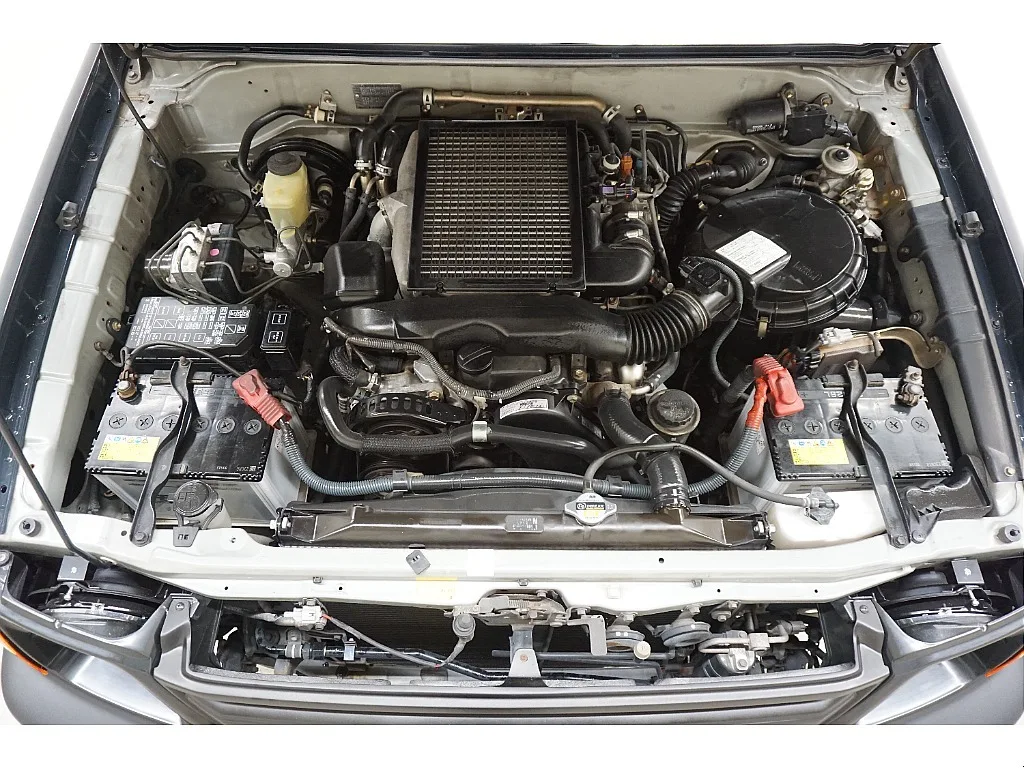
1KZ-TE 3.0L Turbo Diesel
The 1KZ-TE is the engine most people picture when they think of a diesel Prado. Every Prado 90 version has an intercooler. One owner in the IH8MUD thread linked below blames many of the worst cracked-head stories on earlier engines without an intercooler, but Prado 90 owners report cracked heads too, so the intercooler is not a guarantee.
The engine’s reputation is mixed, and the reason is consistent. Some owners report cracked cylinder heads, and in owner discussions such as this IH8MUD thread on 1KZ-TE reliability, the cause they point to is overheating. That usually means a weak fan clutch, a clogged radiator, old coolant, or a truck worked hard on long grades. Owners who keep the cooling system healthy describe the engine as very durable, and one owner reports about 436,000 km with no major repairs other than a new radiator.
The 1KZ-TE has a timing belt. Japanese service stickers mark it at 100,000 km (about 62,000 miles). For more on this engine, see our 1KZ-TE engine guide.
1KD-FTV 3.0L Common-Rail Diesel (and How It Compares to the 1KZ-TE)
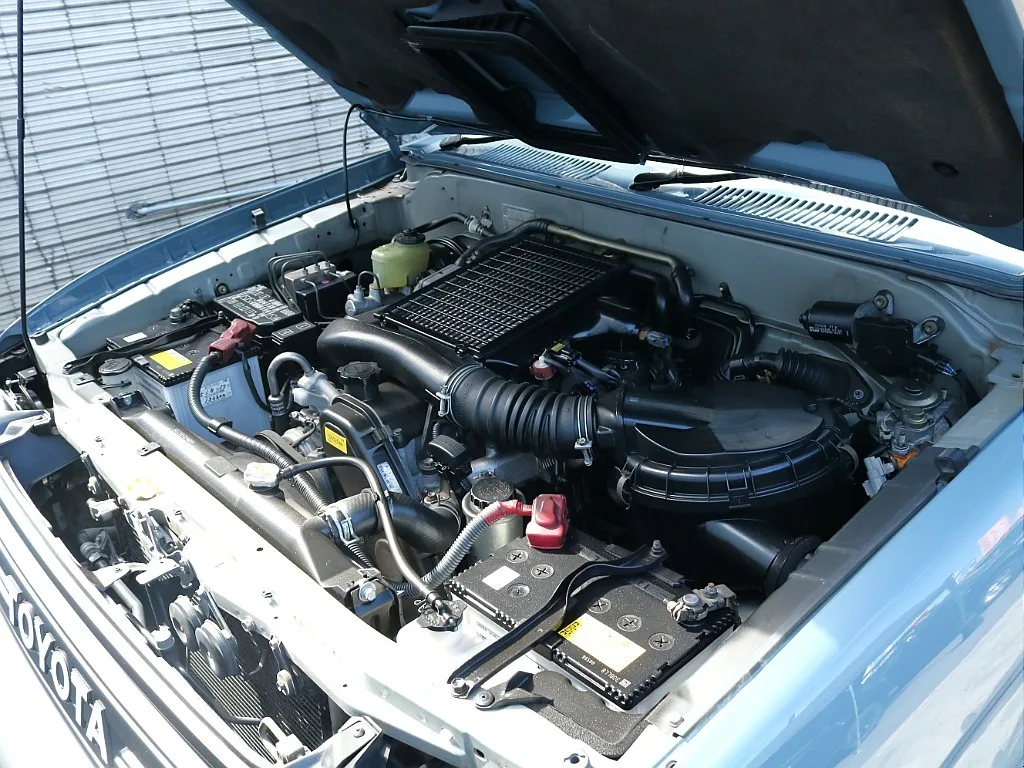
The 1KD-FTV makes 25 more PS than the last 1KZ-TE, and Toyota rates its peak torque across a wide band from 1,800 to 3,400 rpm. The tradeoff is complexity: a common-rail system with high-pressure injectors that are expensive to replace and sensitive to water in the fuel, so fuel filter changes matter.
Two problems often come up when people search this engine. Reports of injector seat blow-by mostly involve later trucks, such as 120 Series Prados. A parts guide on 1KD-FTV pistons ties cracked pistons to later piston versions used from the mid-2000s and describes the 2000–2004 pistons as problem-free. We did not find reports tying either problem specifically to the early 1KD-FTV in the Prado 90, but we would still budget for injectors on a high-mileage truck.
| 1KZ-TE | 1KD-FTV | |
|---|---|---|
| Output | 140–145 PS (138–143 hp) | 170 PS (168 hp) |
| Fuel system | Electronically controlled distributor pump | Common rail |
| Main thing to watch | Cooling system and head | Injectors and fuel quality |
| In the Prado 90 | 1996 to July 2000 | July 2000 to 2002 |
Because the 1KD-FTV arrived in July 2000, these trucks have only recently become legal to import, and there are fewer of them in the US.
5VZ-FE 3.4L V6
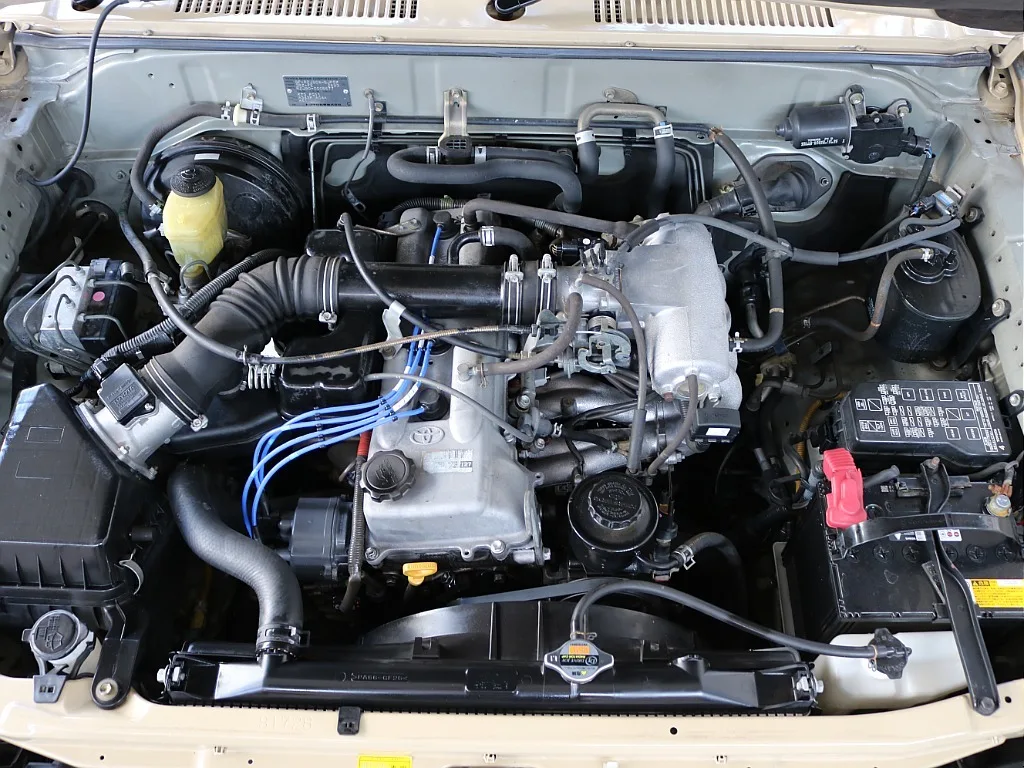
The 3.4L V6 is the easiest Prado 90 engine to live with in the US. It is the same engine Toyota used in the 1996–2002 4Runner, the 1995–2004 Tacoma, the T100 and the 2000–2004 Tundra, so parts and mechanics who know it are everywhere.
Repair sources such as this 5VZ-FE engine guide list few serious problems. Valve cover gaskets are a common source of oil leaks, and the guide calls head gasket failure extremely rare. The timing belt is commonly cited at 90,000 miles, though some sources give 60,000 miles for earlier engines. With no records, treat it as due. In Japan, five-door V6 trucks came only with the four-speed automatic.
3RZ-FE 2.7L Four-Cylinder
The 2.7L four-cylinder is the engine you will see most often in our inventory. Like the V6, it was also sold in the US, in the Tacoma and in 1996–2000 4Runners. It uses a timing chain instead of a belt, which removes one big service item.
The downside is power. At 150 PS in a truck that weighs more than 1,700 kg (3,750 lb) even as a 3-door, it is slow on highway grades, and 4X4 Australia’s buyer’s guide is blunt about it. It suits buyers who drive mostly around town and value simplicity. On high-mileage engines, this 3RZ-FE engine guide suggests inspecting the timing chain past 100,000 miles, listening for rattling, and keeping up with valve clearance adjustments. In Japan, every 2.7L Prado 90 came with the four-speed automatic.
Best Prado 90 Years to Buy
Best Overall: 1999–2002 With the 3.4L V6
A facelifted V6 truck gives you the updated interior and gauges, the larger headlights, and an engine any Toyota shop in the US already knows. It is the easiest Prado 90 to own if you do not live near a diesel specialist. If yours was built from May 2001 to August 2002, confirm that the front ball joint recall was done.
Best Value: 1996–1999 Early Trucks
Early trucks are mechanically very close to later gasoline trucks. In our listings in mid-November 2026, the two V6 trucks from 1996–1998 were listed for less than the four V6 trucks from 2000–2002, though that is a small sample. The 3.4L V6 is the safest pick here. Early 1KZ-TE trucks suit diesel buyers who want the simpler diesel, but in our listings they were not cheaper than later 1KD-FTV trucks. Almost every early truck needs proof that the rear axle shaft recall was done.
Best for Diesel Fans: The Last 1KZ-TE or the 1KD-FTV
If you want the classic, simpler diesel, look for a KH-KZJ truck built from June 1999 to July 2000. It has the 145 PS version of the 1KZ-TE and the facelift changes. If you want more power and accept higher injector costs, choose a KH-KDJ truck with the 1KD-FTV. Either way, ask for cooling system and fuel filter records.
Best for Daily Driving in the US: A 5-Door V6 or Late 2.7L
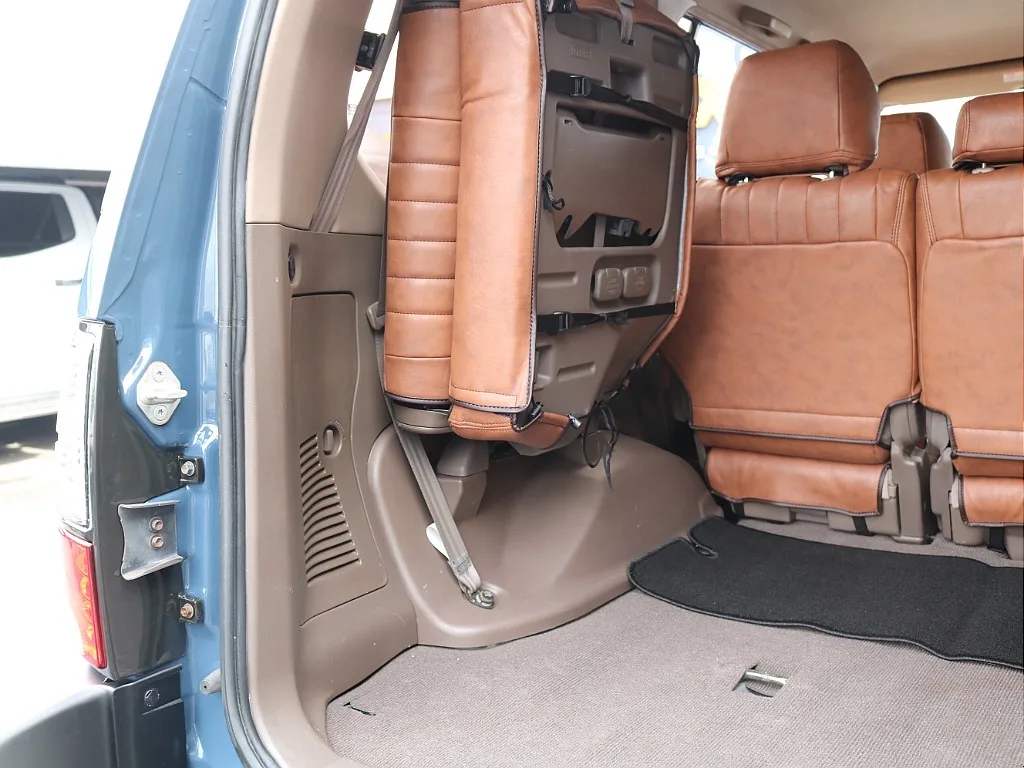
For a family or daily driver, the 5-door gives you the third row and a longer, calmer ride. Pair it with the V6 if you drive on highways, or with the 2.7L if you mostly drive locally and want the simplest engine. If you live in California, note that diesels currently cannot be registered there as direct imports, while gasoline trucks still have to go through CARB’s direct import program. We cover this below.
Prado 90 Versions to Approach With Caution
No Prado 90 year is a true “year to avoid,” but these trucks need extra checking:
- Trucks built from April 17, 1996, to January 6, 1999 (all engines): Toyota Japan’s recall 1660, filed in 2006, covers a rear axle shaft flange that is not strong enough and can crack after repeated high-speed driving on winding mountain roads. In the worst case, the shaft can break and a wheel can come off. Toyota’s recall notice lists 107,767 trucks in Japan, across every engine and both body styles.
- Trucks built from May 22, 2001, to August 19, 2002 (2.7L, 3.4L and 1KD-FTV): Toyota Japan’s recall 1424, filed in 2005, covers front lower ball joints whose surfaces may have been damaged by improper assembly. They can wear quickly, and in the worst case a joint can separate from the knuckle arm. Toyota’s recall notice lists 13,093 Prado 90s. The 1KZ-TE trucks are not included because that engine had ended by then.
- 1KZ-TE trucks with no cooling system records: Owners most often report cracked heads on trucks that overheated, and some owners in this IH8MUD thread on the 1KZ say automatic trucks are more likely to run hot.
Toyota Japan’s recall pages are in Japanese. Recall checks are done by frame number, so ask the seller or importer to confirm the work with paperwork or a check against Toyota’s records. On trucks that had the rear axle shaft recall done, Toyota Japan’s filing says a No. 1660 sticker was placed in the lower-left corner of the rear glass, though stickers can go missing over 25 years.
Common Problems to Check
These are based on owner reports and repair sources, not Toyota data on how often each problem occurs.
1KZ-TE Overheating and Cylinder Head Cracks
Look for a low coolant reservoir, bubbles in the coolant overflow, a temperature gauge that moves around, or exhaust gas coming out of the radiator cap. A 1KZ-TE owner describes these symptoms in this IH8MUD cracked-head thread. If there are no records, plan to replace the radiator, water pump, thermostat, fan clutch and hoses. Owners in the 1KZ-TE reliability thread recommend an exhaust gas temperature gauge, and some owners in the 1KZ in the Prado thread say the factory temperature gauge is not a reliable warning.
Timing Belt Service
Three of the four engines use a timing belt: the 1KZ-TE, the 1KD-FTV and the 3.4L V6. Japanese service stickers mark the 1KZ-TE at 100,000 km, a Toyota parts supplier lists the 1KD-FTV at 150,000 km, and V6 intervals range from 60,000 to 90,000 miles depending on the source. If there is no record or sticker, plan to replace the belt and water pump soon after purchase.
Rust and Body Condition
Japanese trucks are often cleaner underneath than US trucks from road-salt states, but trucks from northern Japan can still have corrosion. Check the frame and crossmembers, suspension mounts, the inner rear wheel arches, the floor under the rear seats, around the windshield, and the spare tire mount on the rear door. Rear door hinges can wear and let the door sag. Owners also report that some interior plastics become brittle with age.
Front Suspension, Ball Joints and Steering
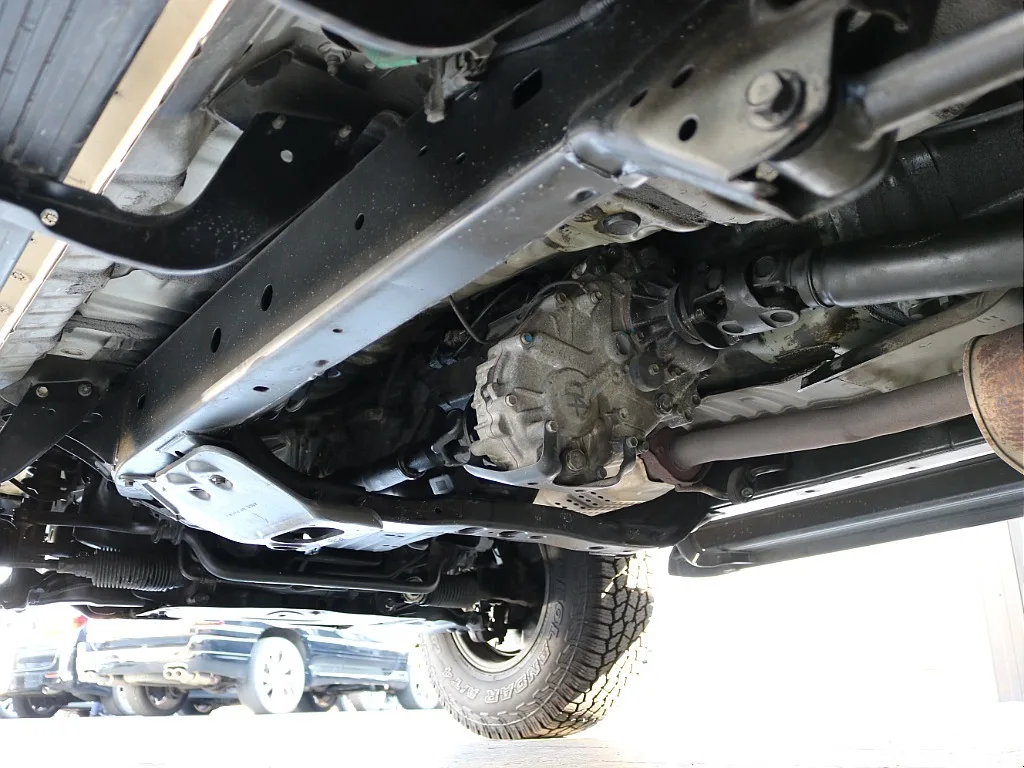
Lower ball joints come up often in owner discussions such as this IH8MUD thread on lower ball joint failure, even on trucks outside the recall. If there is no record of replacement, owners there recommend genuine Toyota ball joints from a reputable source rather than cheap aftermarket parts. Also check CV boots for tears and the steering rack mounting bushings for wear.
Automatic Transmission and 4WD
We did not find a widespread transmission defect on the Prado 90. Check that the fluid is not dark or burnt, that shifts are smooth, and that reverse engages promptly. Some owners report that the center differential lock light can stay on after unlocking. In this ExplorOz thread, owners cleared it by driving slowly on gravel while turning the steering wheel, or by reversing a short distance. An owner in the 1KZ-TE reliability thread also warns that the transmission cooler built into the bottom of the radiator can corrode and leak, mixing coolant and transmission fluid.
Trims and Options
Japanese trim names tell you the body style and width:
| Trim | Body | Notes |
|---|---|---|
| RJ, RS | 3-door, standard width | RJ was a basic early trim with a five-speed manual |
| RX, RZ | 3-door, wide body | Wide fenders and 265/70R16 tires; RZ is the top 3-door |
| TJ, TS | 5-door, standard width | TJ was a basic early trim with a five-speed manual |
| TX | 5-door, wide body | The most common trim in our listings; later trucks offered option packages |
| TZ | 5-door, wide body | The top 5-door trim; Japanese catalog data lists a limited-slip rear differential on some years |
| TX Limited | 5-door, wide body | A special edition first offered around 1997–1998 and offered again after the 1999 facelift and the 2000 update. Toyota’s June 1999 release lists roof rails, wood-grain trim, Optitron gauges and cold-weather equipment |
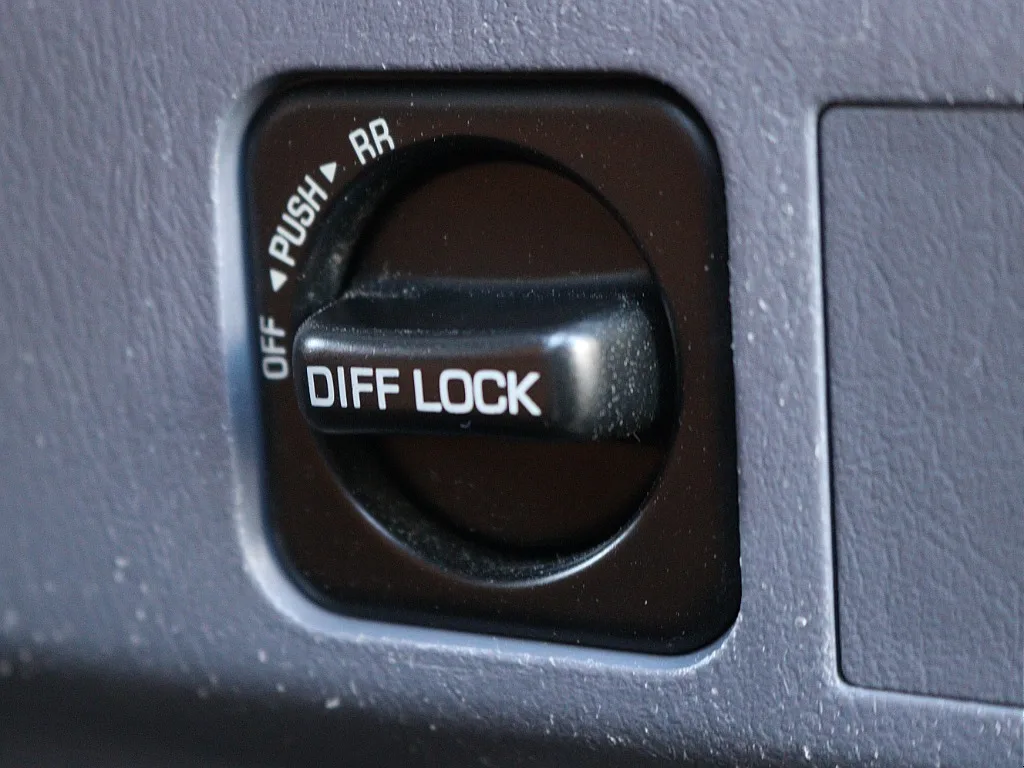
As of mid-November 2026, our Prado 90 listings were mostly TX Limited and TX trucks, with a few TZ models. Japanese catalog data describes a two-speed transfer case and a lockable center differential. Some trucks also have options such as a sunroof, leather or a rear differential lock. For example, a 1996 TZ we listed in November 2026 has a rear locker switch on the dash. Equipment varies by truck, so check the switches and the listing photos rather than assuming by trim.
Owning a Prado 90 in the US: Parts, Service and Registration
Gasoline parts are easier. The 3.4L V6 and 2.7L engines are the same engine types used in US 4Runners and Tacomas. Owners also report that many front suspension and front brake parts match the 1996–2002 4Runner, and owners in this IH8MUD thread describe the two as sharing a platform. For example, owners on IH8MUD’s 90 Series FAQ list the same front rotor part number as the larger of the two front rotors used on US 4Runners. Steering parts are a different story, because the Prado 90 is right-hand drive. One difference is the rear brakes: the Prado 90 has discs, while the 4Runner uses drums. Always order by part number, because not every parts site separates the versions.
Diesel parts take more planning. Neither the 1KZ-TE nor the 1KD-FTV was sold in US Toyotas, so local parts stores rarely stock them. Owners buy from Land Cruiser specialists, from Toyota parts suppliers in Japan, or from Australia and New Zealand, where these engines are common.
Right-hand drive and the gauges. Federal import rules do not restrict right-hand drive. The speedometer reads in kilometers per hour, and the odometer in kilometers.
Registration. Most states ask for import documents such as CBP Form 7501, DOT Form HS-7 and EPA Form 3520-1, along with the title paperwork. For example, see the Virginia DMV’s page on imported vehicles. California is different: according to the California DMV, a direct-import vehicle cannot be registered there unless it is modified and tested under CARB’s program, and diesel vehicles cannot currently be converted. Check your state’s requirements before you buy.
Duty. The base US duty rate for passenger vehicles is 2.5%. Since July 24, 2026, an additional Section 301 duty applies to many goods from Japan, and customs brokers describe the combined rate for passenger vehicles as 12.5% as of November 2026. Confirm the current rate with your broker or importer.
What a Prado 90 Costs in the US (as of November 2026)
Prices depend on condition, mileage and engine more than on the year. As of mid-November 2026, we had 50 Prado 90s listed, all in Japan. Trucks that are not yet 25 years old ship after their eligibility date:
| Engine | Trucks listed | Listed price range | Median | Median mileage |
|---|---|---|---|---|
| 2.7L four-cylinder | 29 | $20,200–$32,760 | $24,596 | About 94,000 miles |
| 3.4L V6 | 9 | $20,828–$28,364 | $23,968 | About 78,000 miles |
| Diesel (1KZ-TE and 1KD-FTV) | 12 | $20,200–$27,736 | $22,084 | About 98,000 miles |
Listed prices are not the final amount you pay. Each listing page shows the total for your location or lets you request a total estimate. Our inventory changes daily, so see the current Land Cruiser Prado listings for today’s trucks.
How to Inspect a Prado 90 Before You Buy
- Model code and build month: Match the code prefix (KD-, KH-, E- or GF-) to the engine and period you want, and confirm the build month for import eligibility.
- Recall work: Ask for proof of the rear axle shaft recall on trucks built through January 1999, and the front ball joint recall on trucks built from May 2001 to August 2002.
- Cooling system: On diesels, check the coolant level, coolant condition, and any signs of overheating. Ask when the radiator and water pump were last replaced.
- Timing belt sticker: Japanese trucks often have a sticker under the hood showing when the belt was last replaced.
- Japanese auction sheet: If the truck came through a Japanese auction, the sheet shows a grade, mileage and marked damage. Ask for a translation.
- Underbody photos: Frame, crossmembers, rear arches and the spare tire mount.
- Function checks: 4WD and center differential lock, transmission shifts, air conditioning, and every power window and lock.
- Mileage: Odometers read in kilometers. 150,000 km is about 93,000 miles.
Prado 90 vs. the Alternatives
Prado 90 vs. Hilux Surf 185
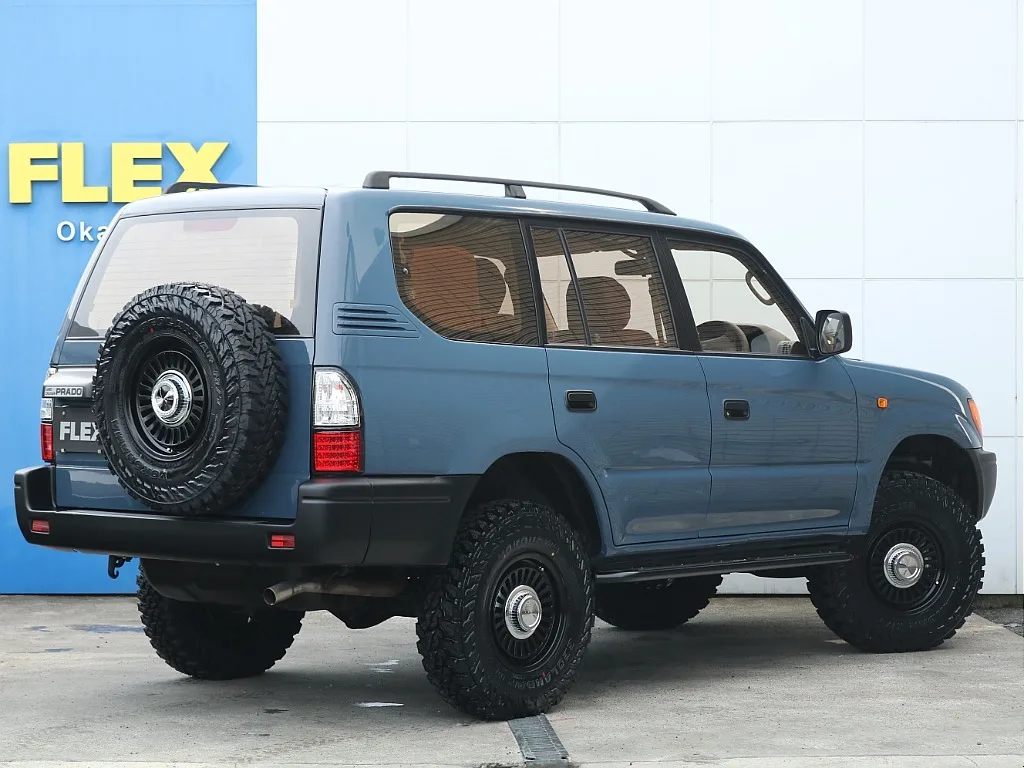
The Hilux Surf 185 shares much of the Prado 90’s chassis and engines. The biggest everyday difference is the back of the truck: the Surf has a top-hinged tailgate with a rear window that powers down, while the Prado has a side-hinged rear door with the spare tire mounted on it. See our Hilux Surf vs. Land Cruiser Prado 90 comparison for the details.
Prado 90 vs. 70 Series Prado
The 70 Series Prado is older and more basic, with a solid front axle, and it appeals to buyers who want a more traditional Land Cruiser. The 90 is more comfortable on the road. Our 70 Prado vs. 90 Prado comparison covers the differences.
Prado 90 vs. Prado 120 and the 3rd Gen 4Runner
The 120 Series Prado is newer and more refined. It launched in Japan in October 2002, so based on the launch month, the first ones become eligible to import around fall 2027, depending on each truck’s build month. See our guide to the pre-owned 120 Prado. The 1996–2002 4Runner is the Prado 90’s US-market relative, with the same gasoline engines and many shared parts. As a US-market truck, it registers like any other used car, but it was never offered with a diesel or a third row. If you are still choosing between Land Cruiser generations, our used Land Cruiser buying guide compares them all.
Frequently Asked Questions
Is a 90 Series Prado still worth buying in 2026?
Yes, if you buy the right truck. The youngest Prado 90s are now about 25 years old, so condition and records matter more than the year. A well-kept V6 or a diesel with a healthy cooling system can still be a dependable, comfortable 4×4. Budget for deferred maintenance such as the timing belt, cooling system and ball joints.
What years was the Prado 90 made?
Toyota launched the Prado 90 in Japan in May 1996 and replaced it with the 120 Series in October 2002.
Is the 1KZ-TE engine reliable?
Owners who maintain the cooling system report long lives from the 1KZ-TE. Most reports of cracked heads involve overheating, so a 1KZ-TE truck with cooling records is a much safer buy than one without them.
Can you legally import a Prado 90 into the US?
Yes, once it is 25 years old, counted from the month of manufacture. In December 2026, that covers trucks built in or before December 2001. Trucks built in 2002 become eligible month by month during 2027.
What is the difference between the Prado 90 and the Prado 95?
They are the same generation in two body styles. The J90 is the 3-door with a shorter wheelbase and five seats. The J95 is the 5-door with a longer wheelbase and up to eight seats.
Are Prado 90 parts easy to find in the US?
Parts for the gasoline trucks are easier to find because the engines and many front suspension and front brake parts are shared with US 4Runners and Tacomas. Diesel engine parts usually come from specialists or overseas suppliers.
Conclusion
The Prado 90 is a practical Land Cruiser to import today: comfortable, roomy in 5-door form, and available with four engines. For most US buyers, a facelifted V6 truck is the easiest to own. Diesel fans should look for a well-documented late 1KZ-TE or a 1KD-FTV, and every buyer should check the recall work that applies to their truck’s build dates.
Take your time with the details: the model code, the build month, the recall paperwork and the cooling system. A good Prado 90 rewards that care.
Looking for a JDM of your dream?
As one of the top Land Cruiser vendors in Japan, our specialists will assist you to acquire your dream vehicles.


