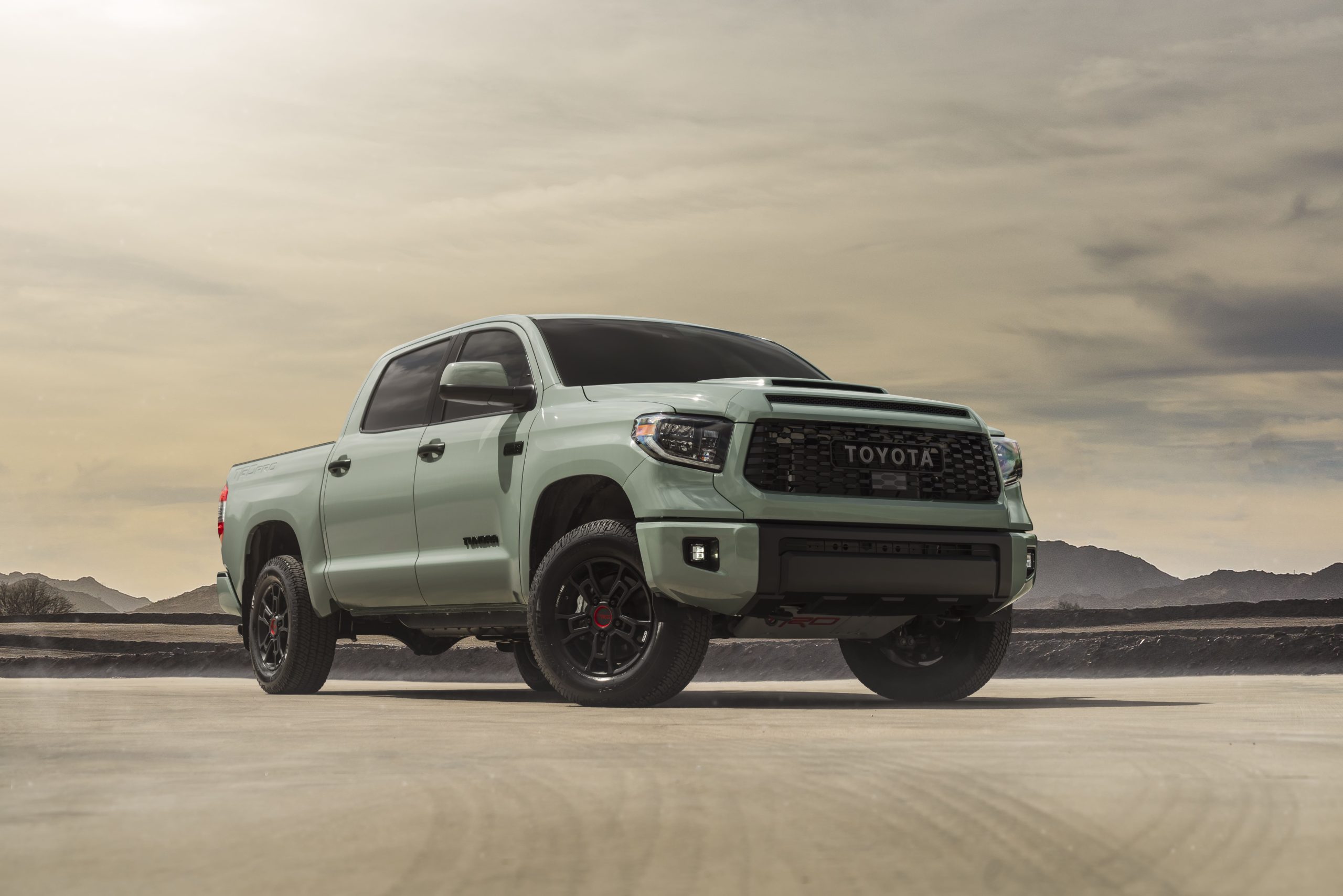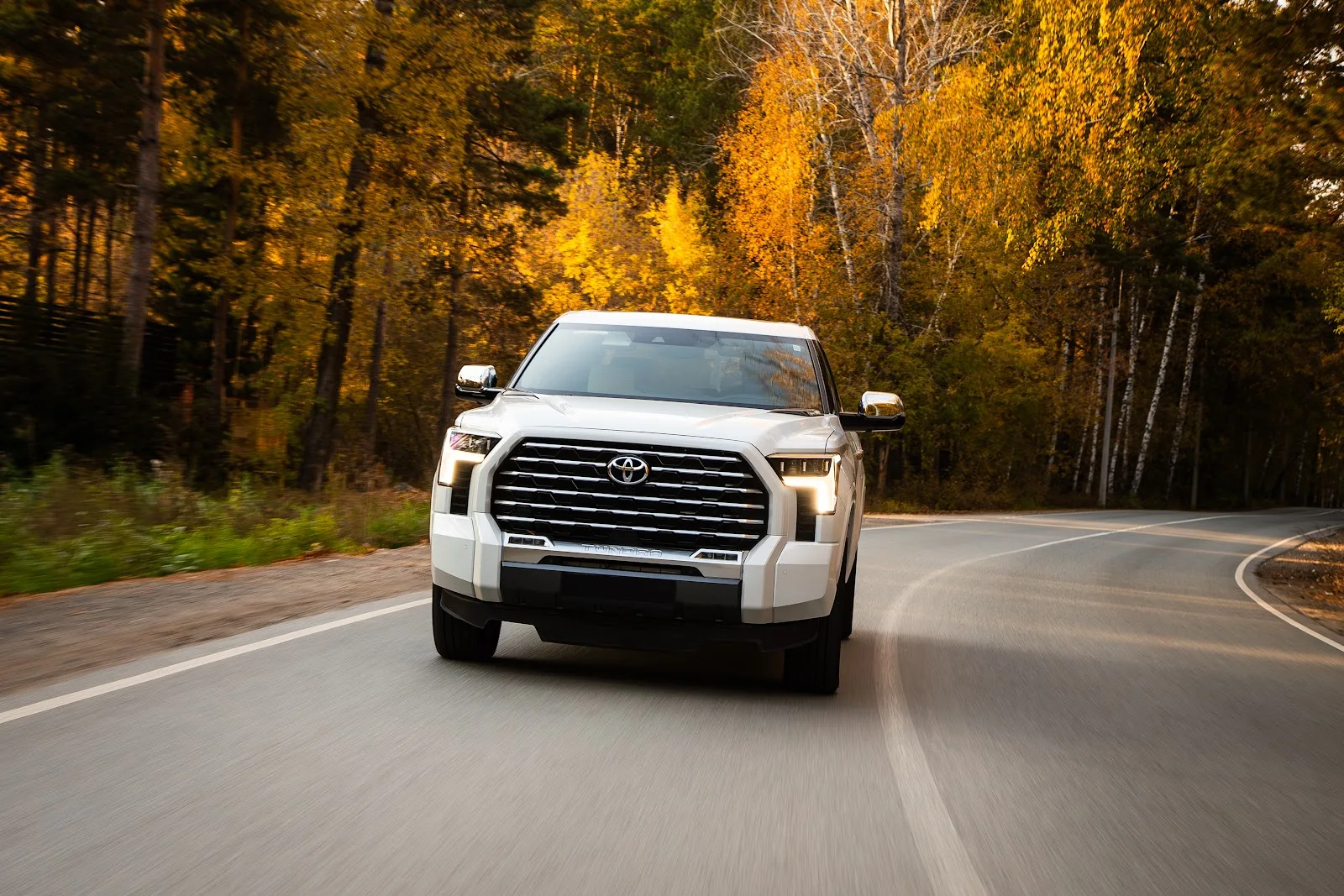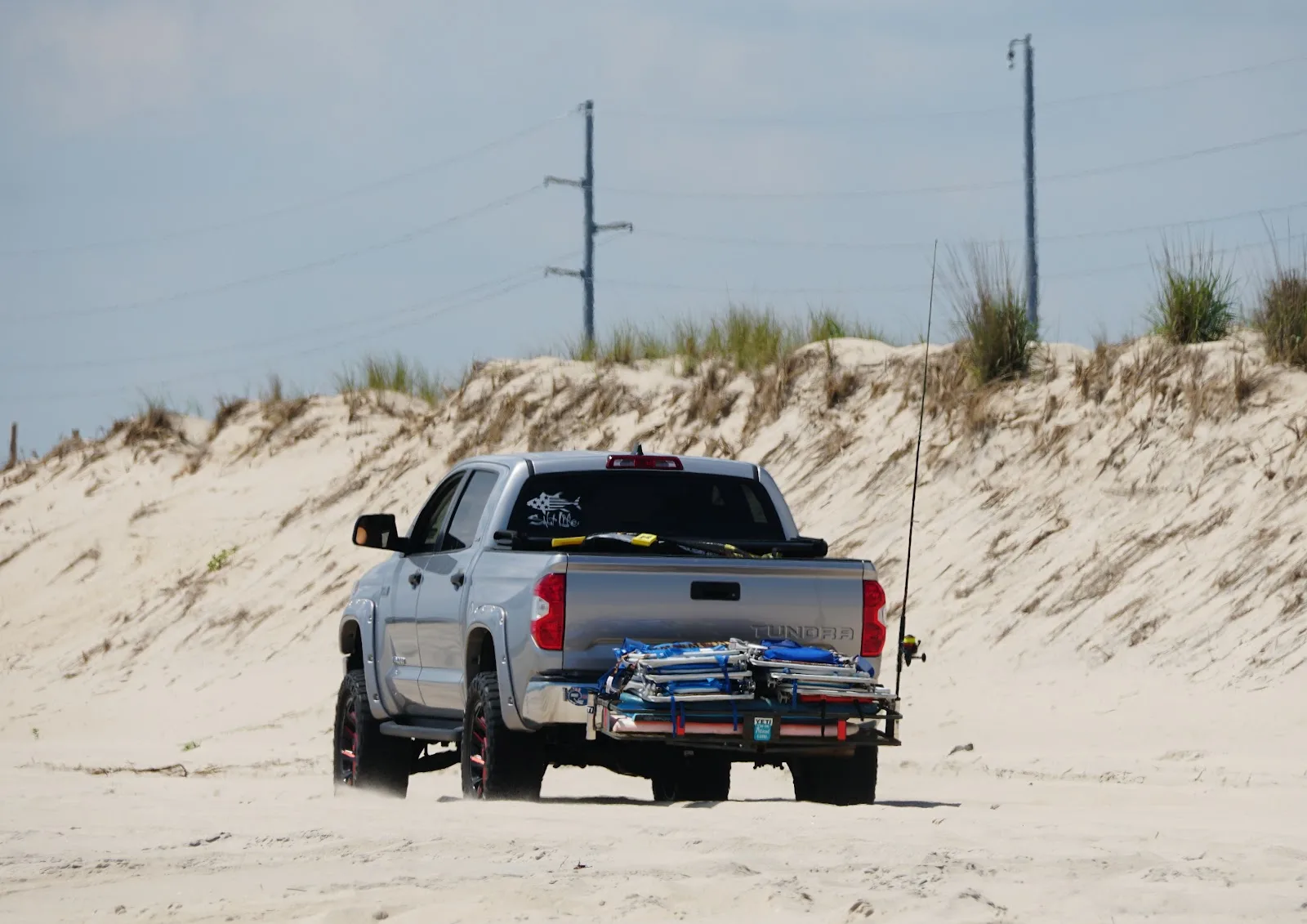


Whether you’re shopping for a used Tundra or simply researching its history, knowing which model years shine and which ones to skip can save you thousands of dollars and countless headaches. This guide cuts through the noise to give you a clear, generation-by-generation breakdown of every Toyota Tundra year — from the original 2000 model all the way through 2026.
- Quick Summary: The Toyota Tundra Timeline & Generations
- Overall Toyota Tundra Reliability: How Long Does It Last?
- Best Years for Toyota Tundra (Most Reliable)
- Toyota Tundra Years to Avoid (The Worst Years)
- Crucial Tips for Buying a Used Toyota Tundra
- How We Reviewed The Toyota Tundra Years to Avoid
- Final Thoughts
- FAQs
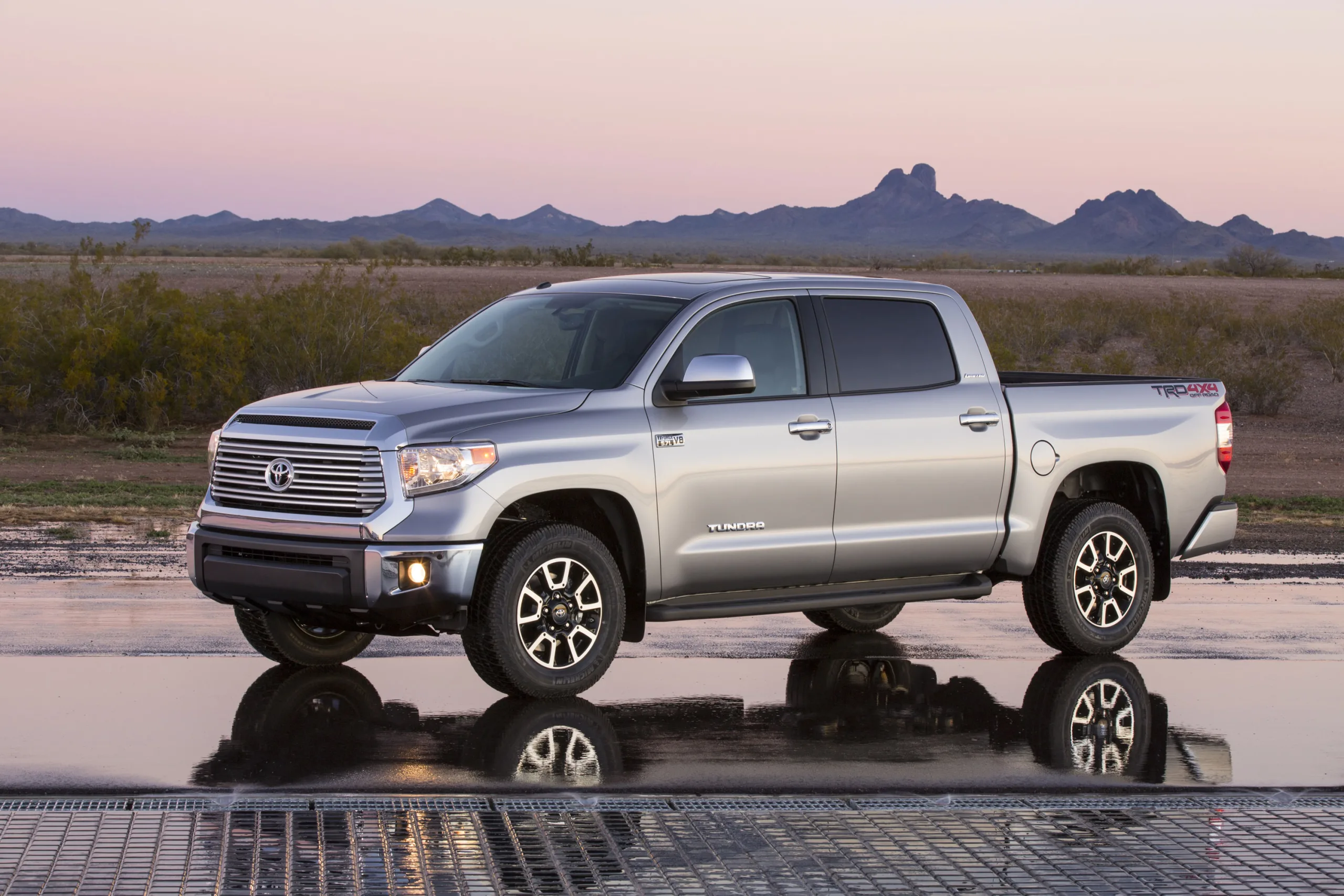
Photo by Toyota
Quick Summary: The Toyota Tundra Timeline & Generations
The Toyota Tundra has gone through three distinct generations, each bringing meaningful changes in power, technology, and reliability:
| Generation | Years | Key Engine | Notes |
|---|---|---|---|
| 1st Gen | 2000–2006 | 4.7L V8 | Solid starter, smaller footprint |
| 2nd Gen | 2007–2021 | 5.7L V8 (i-Force) | The legendary era; most popular used Tundras |
| 3rd Gen | 2022–present | Twin-Turbo 3.4L V6 / i-Force MAX Hybrid | Bold redesign; 2022–2024 models have critical engine recalls |
Understanding which generation a used Tundra belongs to is the single most important factor in your buying decision.
Overall Toyota Tundra Reliability: How Long Does It Last?
The Toyota Tundra consistently ranks as one of the most reliable full-size pickup trucks on the market. It’s not uncommon to see second-generation Tundras roll past 300,000 miles with nothing more than routine maintenance. RepairPal gives the Tundra a reliability rating of 4.0 out of 5.0, placing it above average for its segment.
That said, “reliable” doesn’t mean “problem-free.” Each generation has its weak spots, and a handful of model years have specific known issues that can turn a great truck into an expensive headache.
The End of an Era: What Was the Last Year of the 5.7 Tundra?
One of the most frequently searched questions about the Tundra is: what was the last year of the 5.7 Tundra?
The answer is 2021. The beloved 5.7-liter i-Force V8 engine — introduced with the second generation in 2007 — was discontinued after the 2021 model year. When Toyota launched the third generation in 2022, it replaced the 5.7L V8 entirely with a new twin-turbocharged 3.4-liter V6 (3,445cc), available in both standard and i-Force MAX hybrid configurations.
For buyers who prioritize a proven, time-tested powerplant, the 2021 Tundra represents the last opportunity to own a brand-new 5.7L V8 Tundra — though of course, used 2007–2021 models with this engine remain widely available.
Toyota Tundra Reliability Ratings by Generation
| Generation | Overall Reliability | Common Issues | Owner Satisfaction |
|---|---|---|---|
| 1st Gen (2000–2006) | ★★★★☆ | Frame rust (early models), minor electrical | High |
| 2nd Gen (2007–2021) | ★★★★★ | Air induction pump (2012–2013), cam phaser (some years) | Very High |
| 3rd Gen (2022–present) | ★★★☆☆ | Critical engine recall (2022–2024 non-hybrids), infotainment bugs | Mixed |
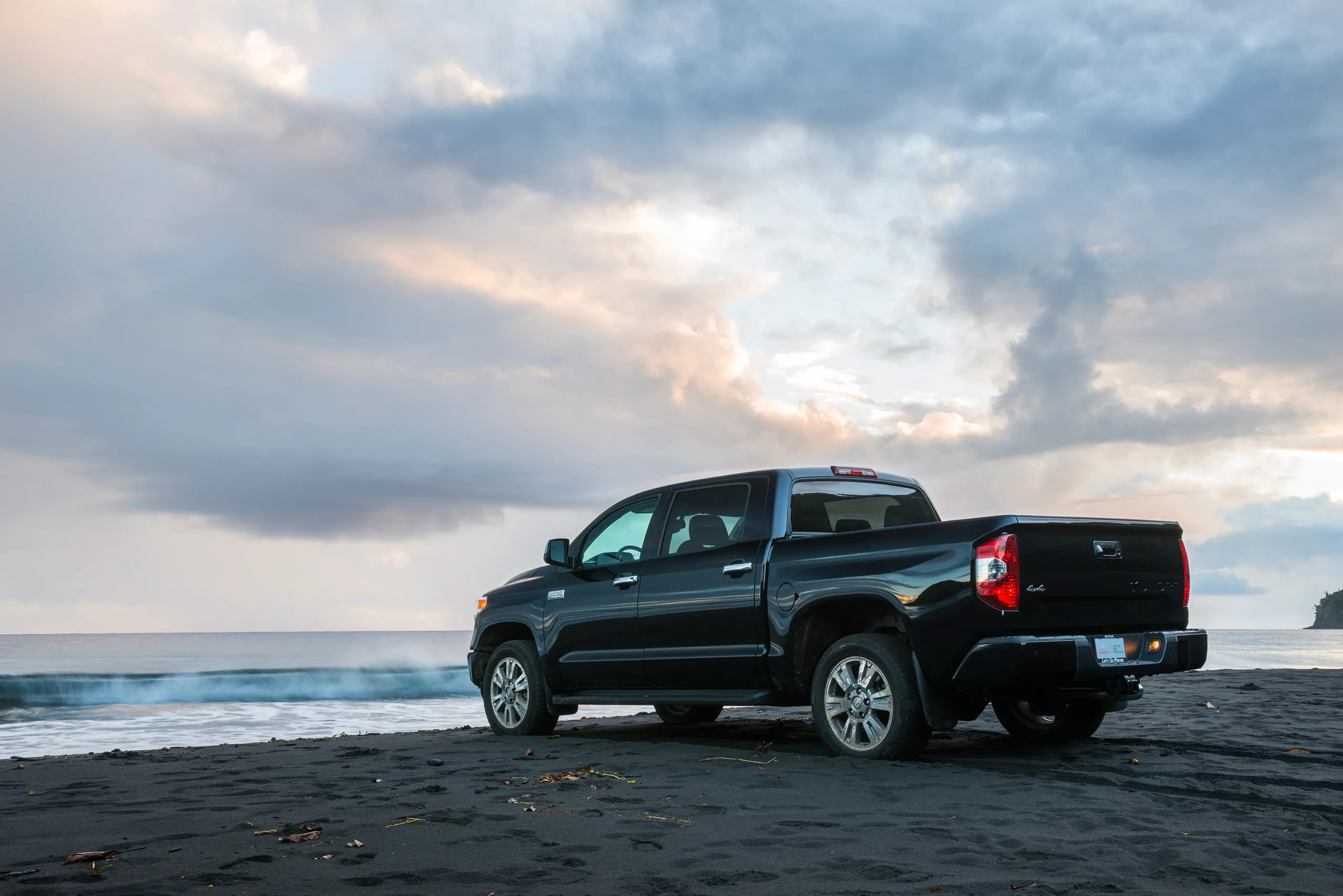
Photo by Toyota
Best Years for Toyota Tundra (Most Reliable)
2014 Toyota Tundra: Consistently Powerful and Sturdy
The 2014 Tundra is widely regarded as a sweet spot for used buyers. By this point, Toyota had ironed out the early second-generation quirks from 2007, and the truck arrived with a fully mature 5.7L V8 producing 381 horsepower and 401 lb-ft of torque — numbers that still hold up today.
Why the 2014 stands out:
- Robust body-on-frame construction proven over seven years of production
- Towing capacity up to 10,500 lbs (5.7L V8 with tow package)
- Spacious Double Cab and CrewMax options with genuine rear-seat room
- Strong resale value and widely available parts
- Lower average repair costs than competitors
Watch out for: Transmission hesitation complaints were reported on some 2014 units. In most cases, this issue can be resolved via an ECM/TCM software update from the dealer. Test drive carefully, and check the vehicle’s service history to ensure all electronic control updates have been applied.
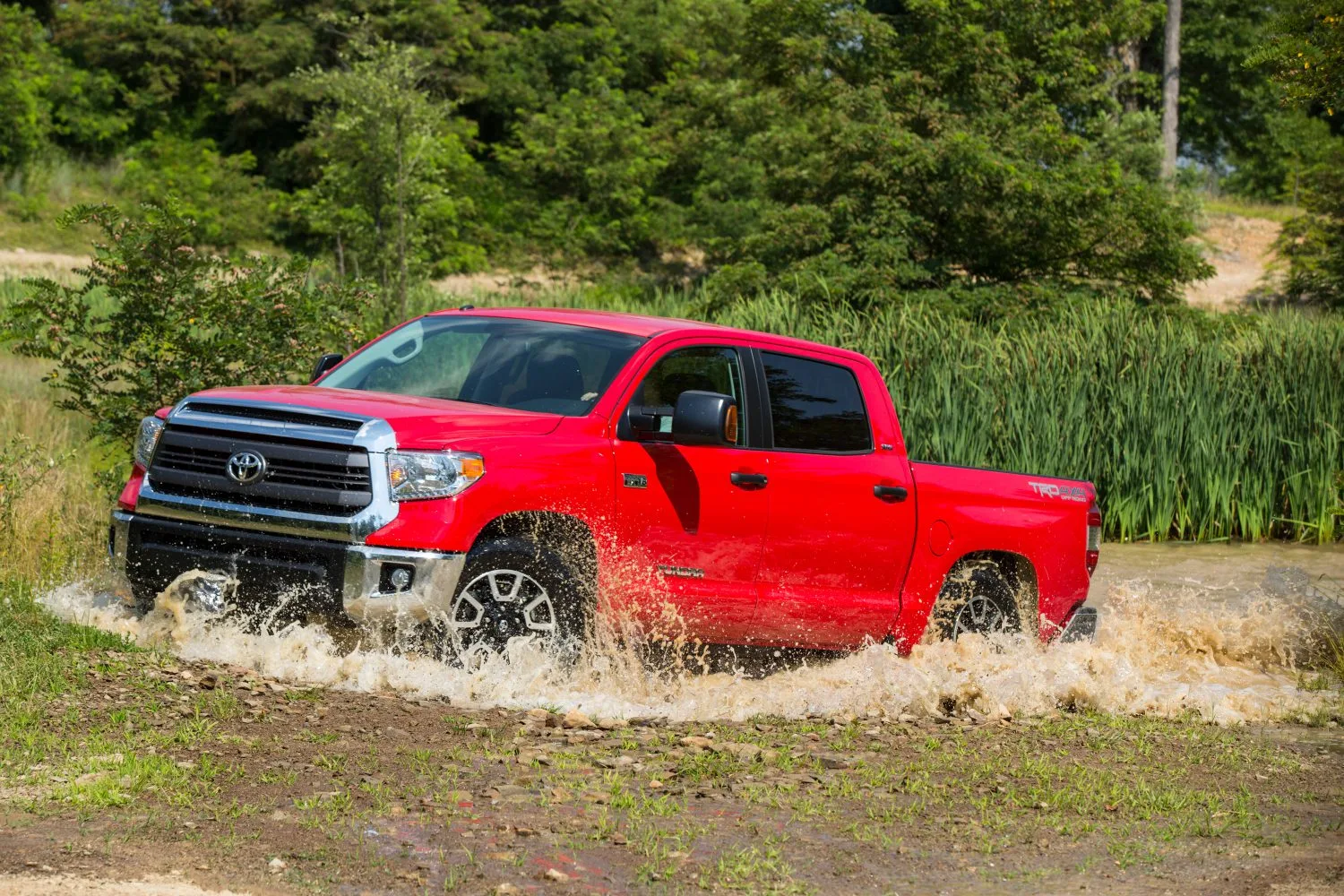
Photo by Toyota
2019 Toyota Tundra: Performance and Safety in Combination
The 2019 model year benefits from Toyota’s decision to make safety a top priority. Following its complete standardization in 2018, the Toyota Safety Sense-P (TSS-P) suite—including pre-collision warning, lane departure alert, and adaptive cruise control—comes standard across every single trim level for 2019, making advanced safety highly accessible on the used market.
Why the 2019 stands out:
- The same proven 5.7L i-Force V8 with an excellent long-term track record
- Toyota Safety Sense-P included as a standard features across all trims
- Refreshed infotainment with better smartphone integration
- Excellent long-term reliability data now available (5+ years of owner feedback)
- Strong towing and payload numbers unchanged
Best trim for value: The SR5 or TRD Sport in 2019 hits the sweet spot between features and price on the used market.
2020 Toyota Tundra: State-of-the-Art Technology and Unmatched Reliability
The 2020 model added Apple CarPlay and Android Auto as standard features across more trims — a significant upgrade over previous years, which had relied on Toyota’s aging Entune system. This alone makes the 2020 a notable step up for daily drivers.
Why the 2020 stands out:
- Apple CarPlay and Android Auto now standard on most trims
- Improved Entune 3.0 infotainment system
- Full lineup of cab and bed configurations available
- Toyota’s legendary 5.7L V8 still going strong
- Excellent owner satisfaction ratings
The 2020 Tundra is an ideal pick if you want the familiarity of the second-gen platform with modern connectivity. It also benefits from the full weight of 13+ years of 5.7L V8 refinement.
2021 Toyota Tundra: The Ultimate Best Year for Toyota Tundra 4×4
If you could only pick one model year for a used Tundra, 2021 deserves serious consideration. As the final year of the second generation, the 2021 Tundra represents the most refined expression of a formula Toyota spent 14 years perfecting.
Why the 2021 stands out:
- Last model year with the legendary 5.7L i-Force V8 — a known quantity with proven durability
- All the modern connectivity features introduced in 2020
- TRD Pro available with FOX shocks, TRD-tuned suspension, and skid plates
- Strong towing capacity and payload
- Typically priced lower than 2022+ models on the used market
Caveat: Some 2021 owners have reported infotainment connectivity bugs — verify that software updates have been applied before purchase.
2024–2026 Toyota Tundra: A Refined New Era with Hybrid Power
After a rocky start, the third-generation Tundra offers a significantly improved interior design with a 14-inch touchscreen and an advanced Toyota Safety Sense 2.5 suite. However, buyers must remain cautious.
Why 2024–2026 stand out:
- i-Force MAX Hybrid Engine: Delivers up to 437 hp and 583 lb-ft of torque, significantly outperforming the old 5.7L V8.
- Dramatically improved fuel economy: Hybrid versions achieve ~20 mpg combined vs. ~13 mpg for the old V8.
- Towing capacity: Up to 12,000 lbs in proper configurations.
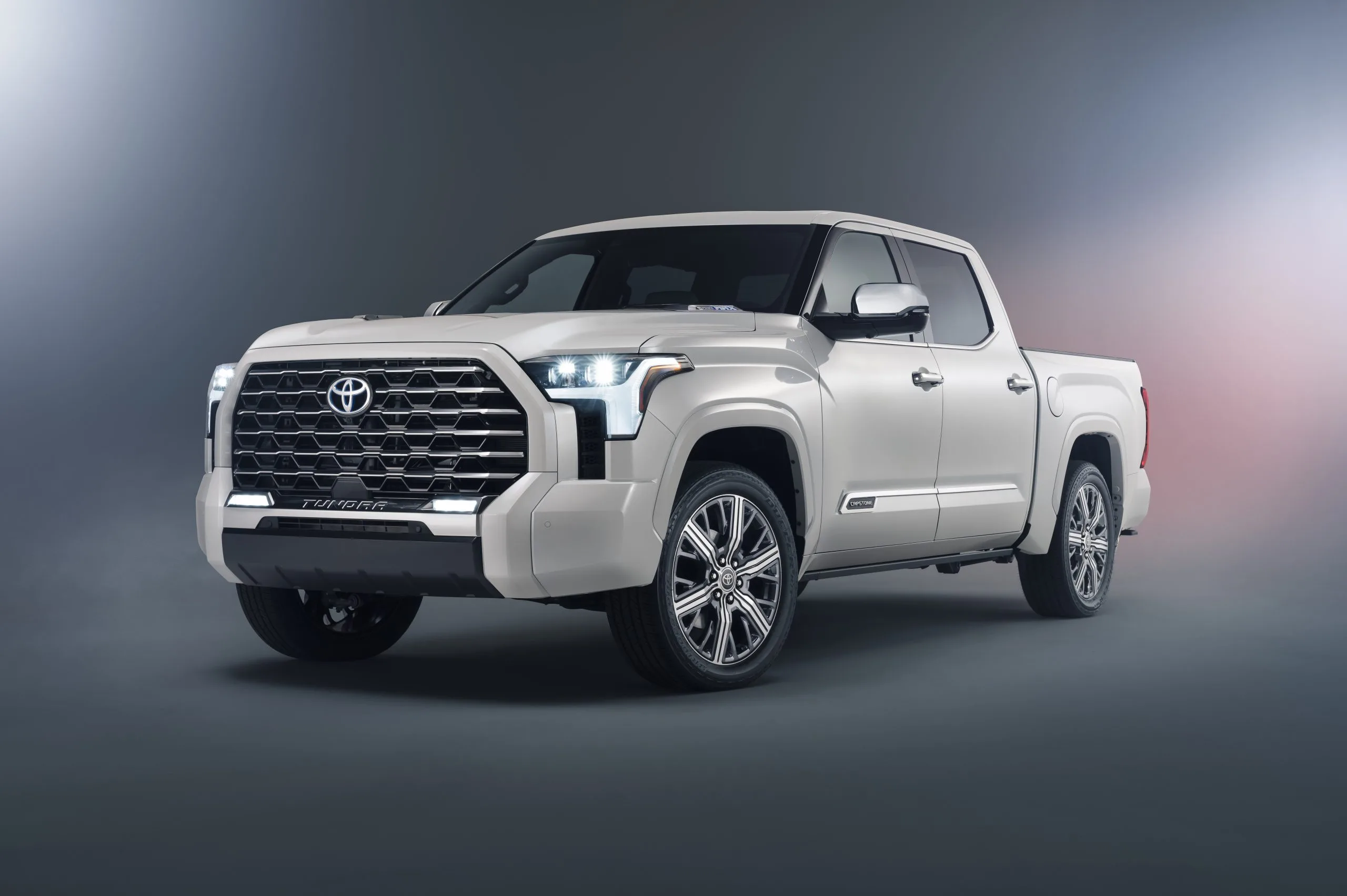
Photo by Toyota
🚨 CRITICAL BUYER’S ALERT: 2022–2024 Engine Recall
If you are shopping for a third-generation Tundra, you must be aware of a massive and severe engine recall affecting 2022 through 2024 model year non-hybrid (i-FORCE) twin-turbo V6 trucks.
- The Issue: Due to machining debris left inside the engine during manufacturing, these powerplants can experience sudden main bearing failure, leading to engine knocking, loss of power, or a complete engine stall/seizure while driving.
- The Fix: Toyota initially offered a complete engine replacement. However, under the latest updated guidelines, Toyota utilizes specific inspection software and vehicle drive data to diagnose whether an engine has suffered abnormal bearing wear. If damage is detected, a free engine replacement is authorized; if cleared, a software update is applied.
- What to Do: Before signing any paperwork on a used 2022, 2023, or 2024 Tundra, you must run the truck’s VIN (Vehicle Identification Number) through the official Toyota Recall lookup tool. Verify whether the truck is affected, and ask the seller for certified dealer documentation proving that the mandatory engine inspection protocol or replacement has been fully completed.
Toyota Tundra Years to Avoid (The Worst Years)
2007 Toyota Tundra (First Year of 2nd Gen Issues)
The 2007 Tundra was a landmark redesign — it finally gave Toyota a full-size truck that could genuinely compete with the F-150 and Silverado on capability. But first-year models always carry first-year risks, and the 2007 is no exception.
Known issues with the 2007:
- Secondary air injection pump failures — a persistent issue that would later affect 2008–2013 models as well. The pump corrodes and fails, triggering check engine lights and failed emissions tests. Replacement costs can run $800–$1,500+
- Cam gear and cam phaser noise — some 2007 owners reported ticking or rattling on startup, particularly after the engine had sat overnight
- Brake and rotors — earlier wear than expected was reported across the first model year
- Limited NHTSA investigation history at this point means some issues weren’t caught early
If you’re considering a 2007, have a trusted mechanic inspect the air injection system and listen carefully for cam-related noises on a cold start.
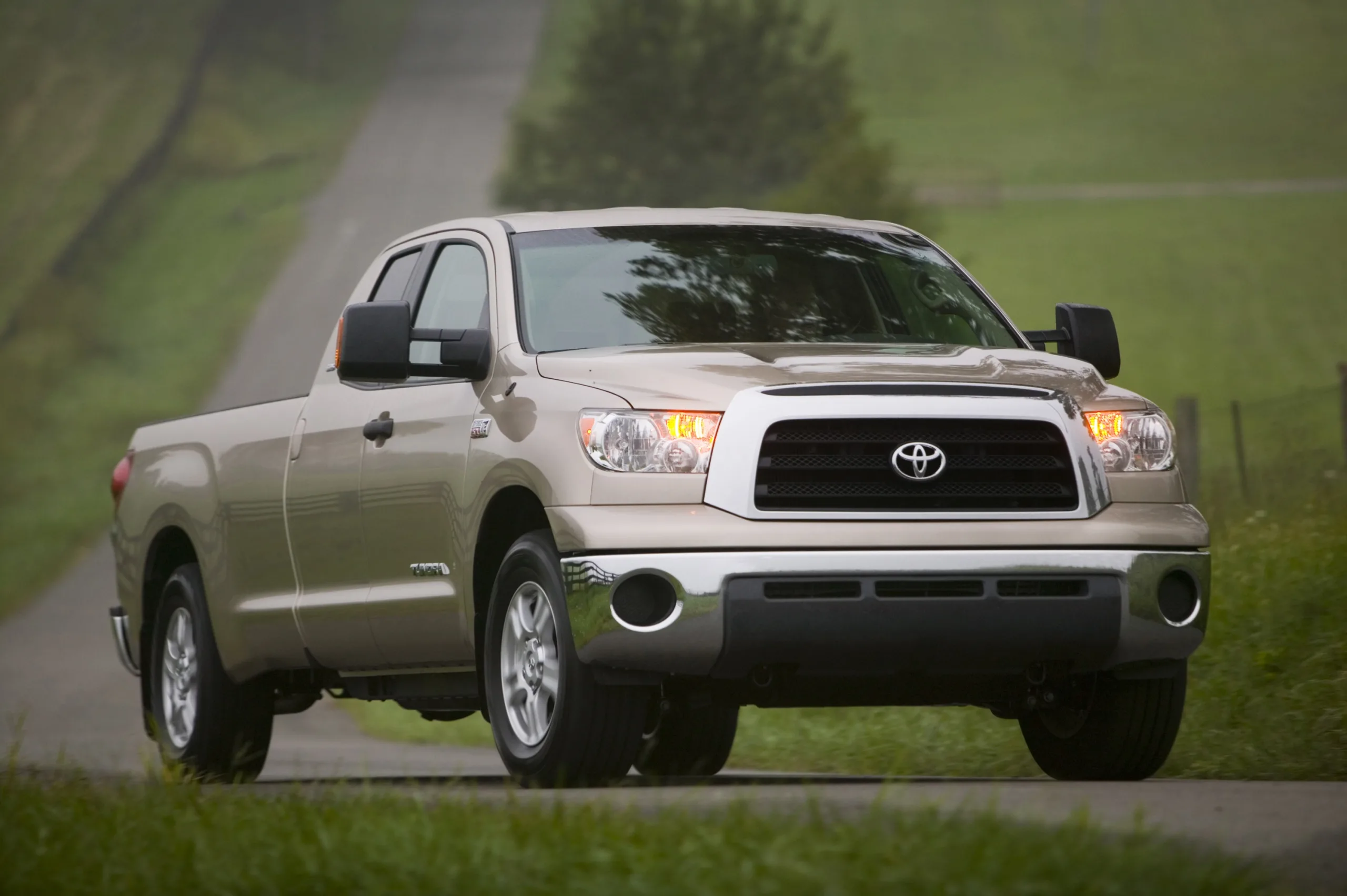
Photo by Toyota
2012 & 2013 Toyota Tundra (Air Induction Pump Failures)
The 2012 and 2013 model years are commonly cited as among the most problematic in the second-generation Tundra’s run. The root cause? A systemic secondary air injection pump failure that Toyota was slow to fully address.
Known issues with 2012–2013:
- Secondary air injection pump failure — the same issue as 2007, but with the highest complaint concentration in these years. Water intrusion corrodes the pump and valves, causing the P0418/P0410 error codes and check engine lights
- Gearbox hesitation and rough shifting — some owners on these years reported the 6-speed automatic transmission hesitating between 2nd and 3rd gear, particularly when accelerating from a stop
- Toyota issued a Technical Service Bulletin (TSB) for the air injection issue but never a full recall, leaving many owners to absorb the repair cost out of pocket
Before buying a 2012 or 2013 Tundra: Pull the CarFax, check for any TSB history, and specifically ask a mechanic to inspect the secondary air injection system. If it’s already been replaced, that’s actually a plus — it means the work is done.
2022 & 2023 Toyota Tundra (Early 3rd Gen Engine Recalls)
The third-generation Tundra launched with impressive specs on paper, but the real-world rollout exposed significant quality control issues in the 2022 and 2023 model years — particularly with the all-new twin-turbo engine.
Known issues with 2022–2023:
- Severe Fuel Leak & Fire Risk Recall — Toyota issued a major recall for a fuel leak risk. A plastic fuel tube could rub against brake lines, causing a fuel leak that increases the risk of a fire. Ensure this recall work (inspecting and replacing/re-routing the fuel tube) has been completed.
- Infotainment system instability — the large 14-inch multimedia screen was widely criticized for slow response times, random crashes, and Bluetooth connectivity failures. Multiple software updates were required
- Ride quality complaints — the stiffer suspension tuning on the new platform received significant criticism, particularly on rough roads with an empty bed
- Limited engine options — the single powertrain path (twin-turbo V6) left buyers with fewer choices, and early examples of the new engine lacked the proven track record of the outgoing 5.7L V8
Bottom line on 2022–2023: If you’re considering one of these, verify that all open recalls — especially the fuel leak and fire risk recall — have been completed by an authorized Toyota dealer. Check the NHTSA recall lookup tool using the VIN before any purchase.
Crucial Tips for Buying a Used Toyota Tundra
Regardless of which model year you’re targeting, follow these steps before committing to a purchase:
- 1. Run a VIN check: Use the NHTSA recall database (nhtsa.gov) with the vehicle’s VIN to confirm all open recalls have been addressed. This is especially important for 2022–2024 models.
- 2. Check for the secondary air injection pump (2007–2013): On second-gen Tundras, ask specifically about the air injection pump status. A mechanic can inspect it in under 30 minutes, and knowing its condition could save you $1,000+ in repairs.
- 3. Inspect for frame rust: Earlier Tundra models (particularly 2000–2006, and some 2007) from rust-belt states or coastal areas can suffer from frame corrosion. Toyota did issue frame replacement programs for early affected models, but verify what was done.
- 4. Test the transmission: During your test drive, specifically accelerate from a dead stop and pay attention to shifts between 2nd and 3rd gear. Any hesitation, clunking, or “hunting” between gears warrants further inspection.
- 5. Get a pre-purchase inspection: Always have an independent mechanic inspect any used Tundra before purchase — ideally someone familiar with Toyota trucks. A $100–$200 inspection fee is cheap insurance against a five-figure repair bill.
- 6. Prioritize high-mileage 5.7L V8 models over low-mileage 3rd-gen with unresolved issues: A well-maintained 2019 Tundra with 120,000 miles will often be a more reliable daily driver than a 2022 with 30,000 miles and unresolved recall work. Mileage matters less than maintenance history with the 5.7L V8.
How We Reviewed The Toyota Tundra Years to Avoid
Our analysis draws on multiple data sources to give you an accurate, unbiased picture of each model year:
- NHTSA complaint database — real owner-reported issues filed with the National Highway Traffic Safety Administration
- Technical Service Bulletins (TSBs) — manufacturer-issued guidance to dealers for addressing known issues
- RepairPal and J.D. Power reliability data — aggregated repair frequency and cost data
- Long-term owner reviews from platforms such as Edmunds, Consumer Reports, and TruckTrend
- Generation-specific community forums — where Tundra owners report real-world issues that may not surface in official data for months or years
This multi-source approach helps us distinguish between isolated complaints and true systemic issues affecting a significant portion of vehicles from a given model year.
Final Thoughts
The Toyota Tundra has earned its reputation as one of the most dependable full-size trucks ever built — but that reputation was built on the back of specific model years, not the nameplate alone.
Quick recap:
- Best years: 2019, 2020, 2021 (second-gen peak), and 2024–2026 i-Force MAX Hybrid models.
- Years to approach with caution: 2007 (first-year issues), 2012–2013 (air injection pump failures), 2022–2024 non-hybrid (i-FORCE) gas models due to critical twin-turbo V6 engine recalls.
- The 5.7L V8 era (2007–2021) remains the gold standard for Tundra reliability — the 2021 being the most refined version of that proven formula.
Whether you’re buying used or new, the Tundra is one of the safest bets in the full-size truck segment. Armed with the knowledge of which years to prioritize and which to scrutinize more carefully, you’re in an excellent position to find a truck that will serve you well for 200,000 miles and beyond.
FAQs
What makes certain years of the Toyota Tundra better than others?
The best Tundra years combine a proven, low-complaint powertrain with modern safety and technology features. Generally, this means late second-generation models (2019–2021) that have benefited from years of refinement on the 5.7L V8 platform, or third-generation i-Force MAX Hybrid models, which are naturally immune to the severe engine debris recall affecting non-hybrid trucks.
How do I know if the Toyota Tundra I’m interested in is a reliable model?
Check the NHTSA recall database using the vehicle’s VIN, review any available CarFax or AutoCheck reports, cross-reference owner complaints on Edmunds or similar platforms, and — most importantly — have an independent mechanic inspect the truck before purchase. Model-year knowledge is a starting point; individual vehicle history matters equally.
Are there any Toyota Tundra years I should completely avoid?
2022 through 2024 non-hybrid twin-turbo V6 models with unresolved engine recall work should be approached with significant caution. The 2012–2013 models are also worth scrutinizing closely due to the air injection pump issue. That said, “avoid” is too strong a word if the known issues have been resolved — a 2022–2024 Tundra with all recalls completed and documented is a very different proposition than one with open recall work.
What is the most reliable Toyota Tundra year ever made?
Among used buyers and long-term reliability experts, the 2019–2021 model years consistently rank as the most reliable Tundras ever produced. These vehicles combine the fully mature 5.7L i-Force V8 — now a decade-plus proven engine — with modern safety technology and connectivity features. The 2021 is particularly notable as the last and most refined expression of the second-generation platform before Toyota’s major redesign.
Don’t Just Look — Feel the Drive
Take your favorite model for a spin through the streets of San Diego. Feel the performance firsthand.