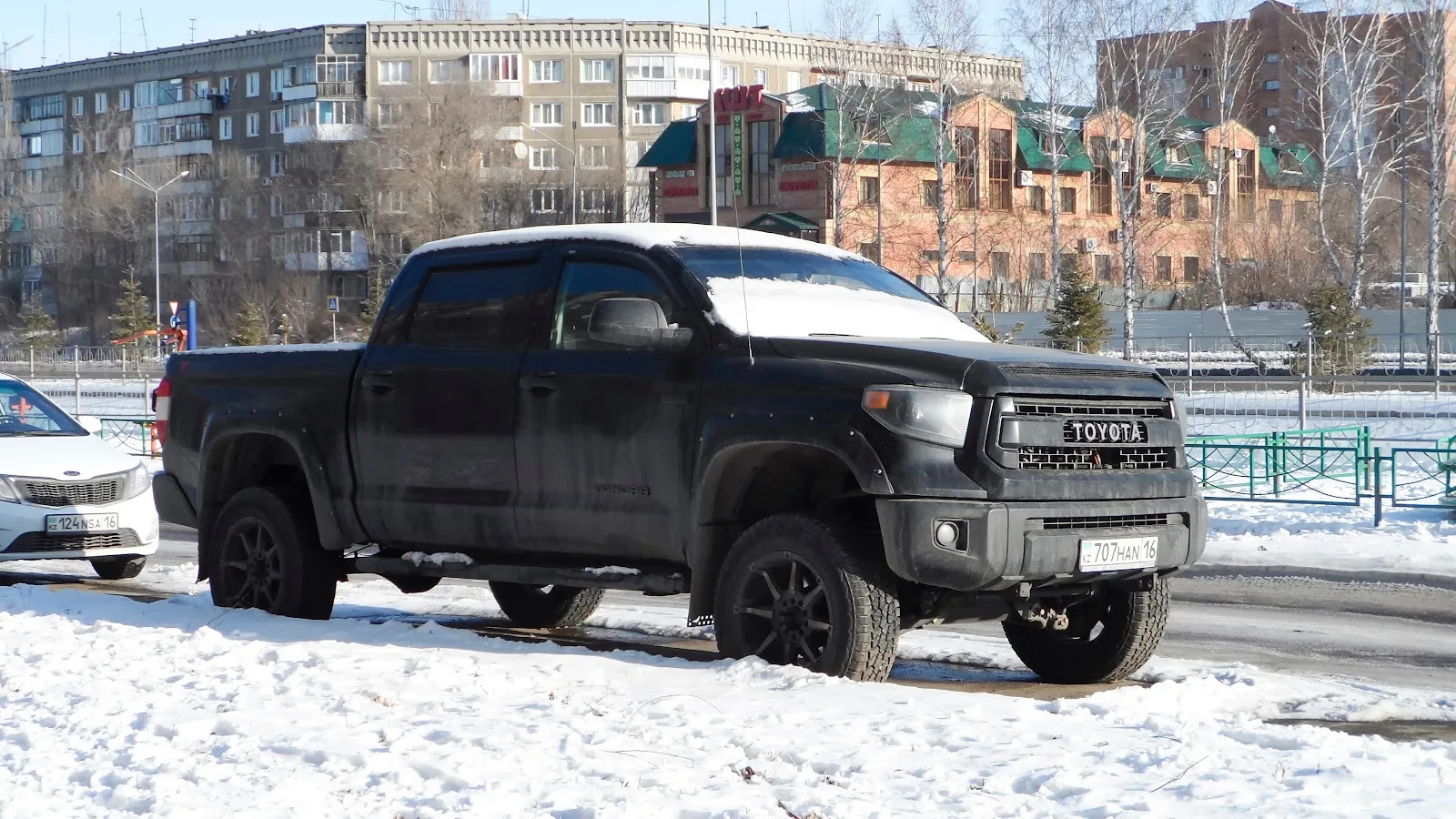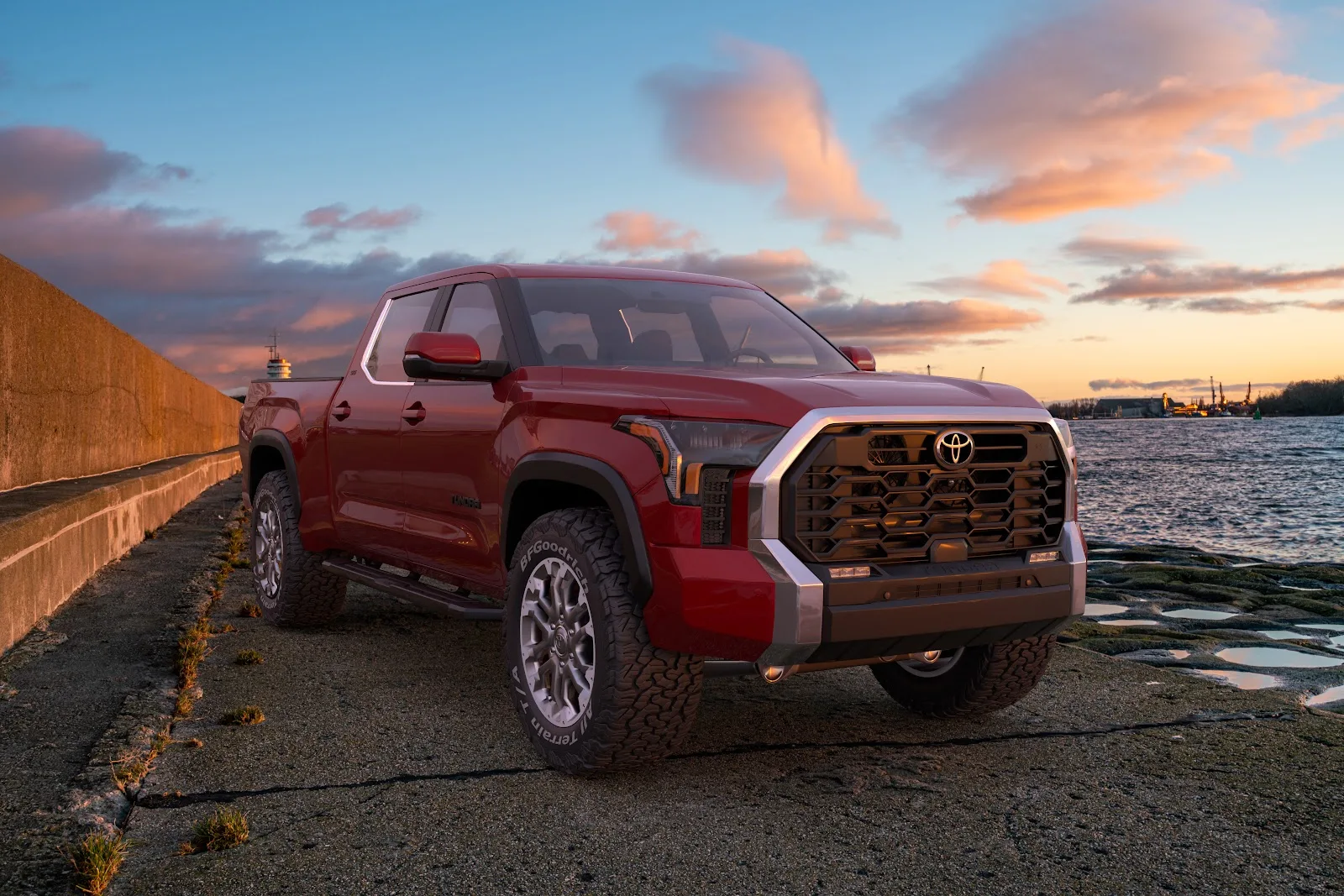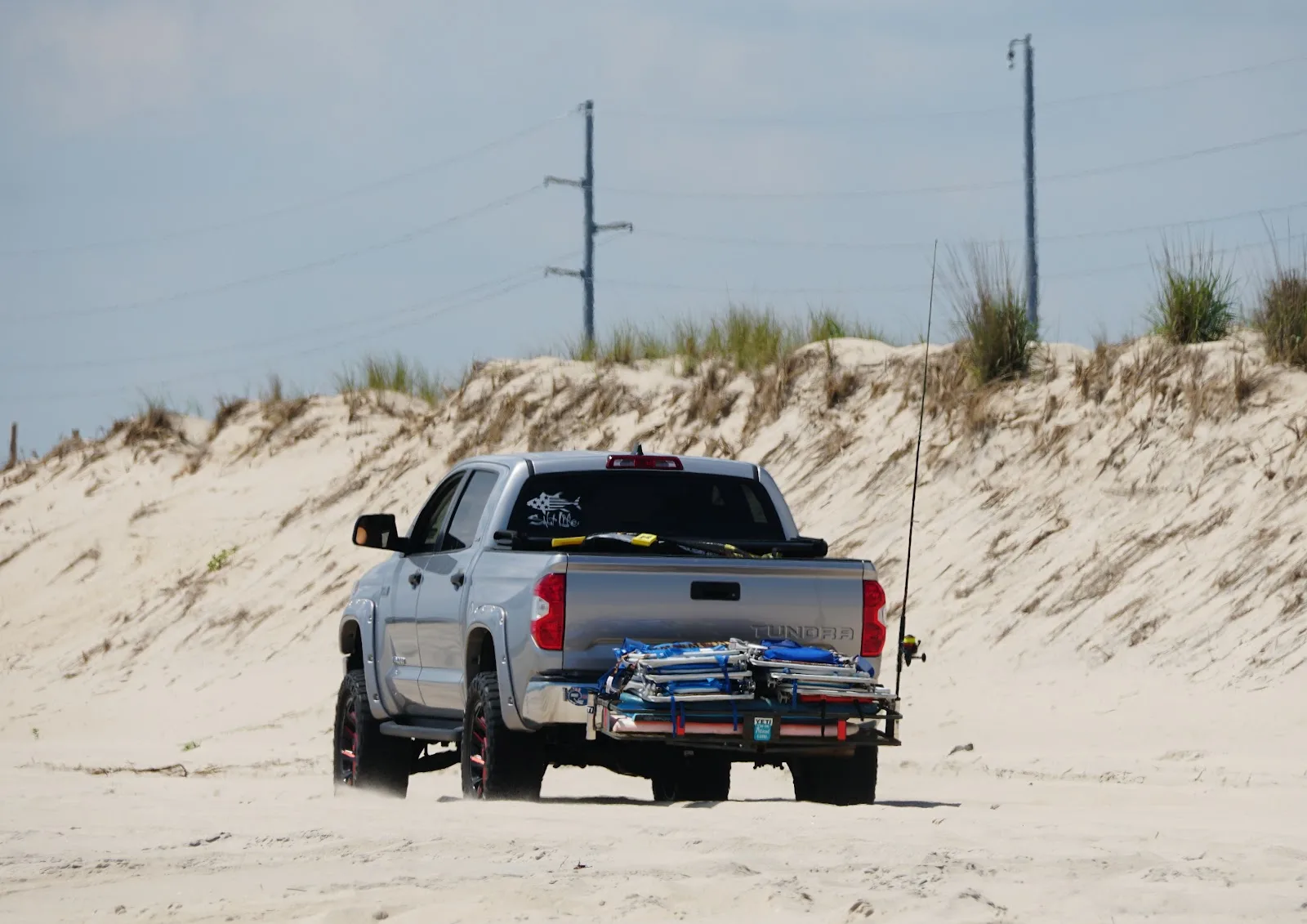


The full-size off-road truck segment has become one of the most competitive corners of the automotive market. For years, performance-focused pickups such as the Ford F-150 Raptor have dominated conversations among enthusiasts looking for factory-built desert runners capable of handling high-speed off-road terrain. Now, Toyota appears ready to enter that battle with a vehicle that has already generated significant excitement among truck fans: the Toyota Tundra TRD Hammer.
Although Toyota has not yet revealed every detail about the TRD Hammer, early reports, industry speculation, and trademark filings suggest that the company is developing a more aggressive version of the Tundra designed to sit above the current TRD Pro model. If those expectations prove accurate, the tundra trd hammer could become the most capable and performance-oriented production truck Toyota has ever built.
In this guide, we’ll examine everything currently known about the Toyota Tundra TRD Hammer, including its expected engine options, horsepower estimates, suspension upgrades, pricing predictions, release timeline, and how it could compare against established rivals like the Ford F-150 Raptor. We’ll also explore why this truck could become one of the most important additions to Toyota’s lineup in the coming years.
- What Is the Toyota Tundra TRD Hammer?
- Why Toyota Needs the TRD Hammer
- Expected Engine, Horsepower, and Performance Specs
- Suspension Upgrades Could Define the TRD Hammer
- 37-Inch Tires Could Be a Game-Changer
- Ground Clearance and Off-Road Capability
- Built for Baja-Inspired Performance
- What About Towing and Payload?
- On-Road Comfort and Daily Driving
- Expected Price and Release Date of the Toyota Tundra TRD Hammer
- Who Should Buy the Toyota Tundra TRD Hammer?
- Frequently Asked Questions
Toyota Tundra for sale
What Is the Toyota Tundra TRD Hammer?
The Toyota Tundra TRD Hammer is widely expected to be a new high-performance off-road truck that could sit at the very top of the Tundra lineup.
While Toyota has not yet released complete official specifications, growing industry speculation suggests the TRD Hammer is being developed as a more extreme alternative to the already capable Tundra TRD Pro.
For years, Toyota’s TRD (Toyota Racing Development) division has been responsible for creating some of the brand’s most respected off-road vehicles.
Models such as the Tacoma TRD Pro, 4Runner TRD Pro, and Tundra TRD Pro have earned strong reputations among enthusiasts thanks to their upgraded suspension systems, off-road hardware, and trail-ready engineering.
However, the emergence of ultra-capable factory-built performance trucks from competing manufacturers has raised expectations across the segment.
The rumored Toyota Tundra TRD Hammer appears to be Toyota’s answer to that challenge.
Rather than serving as a simple appearance package, the TRD Hammer is expected to focus on genuine performance improvements designed for high-speed off-road driving.
Industry observers anticipate significant upgrades in areas such as suspension travel, ground clearance, wheel articulation, tire size, chassis reinforcement, and overall durability. These enhancements would allow the truck to tackle demanding terrain with greater confidence while maintaining the everyday comfort expected from a modern full-size pickup.
One reason the Toyota Tundra TRD Hammer has attracted so much attention is its potential positioning within Toyota’s truck lineup.
Currently, the Tundra TRD Pro serves as the flagship off-road model, offering features such as FOX shocks, all-terrain tires, skid plates, and the powerful i-FORCE MAX hybrid powertrain.
The TRD Hammer could take those capabilities even further by introducing wider bodywork, longer-travel suspension components, upgraded cooling systems, and larger tires designed specifically for desert running and high-speed off-road environments.
Why Toyota Needs the TRD Hammer
The Toyota Tundra TRD Hammer is more than just an exciting new truck concept—it represents a strategic opportunity for Toyota to strengthen its position in one of the fastest-growing segments of the American automotive market.
As consumer demand for high-performance off-road trucks continues to rise, manufacturers are investing heavily in vehicles that combine everyday practicality with serious off-road capability. If Toyota wants to compete at the highest level, introducing a truck like the TRD Hammer may be a necessary step rather than simply an optional addition to the lineup.
1. The High-Performance Truck Segment Is Bigger Than Ever
Over the past decade, the American truck market has evolved dramatically. Buyers are no longer looking solely for towing capacity, payload ratings, or work-site durability. Increasingly, consumers want trucks that can serve multiple purposes, vehicles capable of handling daily commutes, family road trips, outdoor adventures, and extreme off-road terrain without compromise.
This shift has fueled the rapid growth of the performance truck category. Modern buyers are willing to pay premium prices for factory-built trucks equipped with advanced suspension systems, specialized off-road hardware, larger tires, and enhanced powertrains.
These vehicles offer capabilities that previously required extensive aftermarket modifications, making them attractive to enthusiasts who want performance straight from the showroom floor.
As a result, high-performance off-road trucks have become some of the most desirable vehicles in the industry. The segment continues to attract buyers who value adventure, exploration, overlanding, desert driving, and outdoor recreation, creating a lucrative opportunity for manufacturers that can deliver the right product.
2. Ford’s Raptor Has Dominated the Conversation
No discussion about performance trucks is complete without mentioning the Ford F-150 Raptor. Since its introduction, the Raptor has effectively defined the modern factory-built desert runner category. Its combination of long-travel suspension, powerful engines, aggressive styling, and Baja-inspired engineering has made it the benchmark against which every other performance truck is measured.
The Raptor’s success demonstrates that consumers are willing to invest in specialized off-road vehicles when the product delivers genuine capability. It has built a loyal following among truck enthusiasts and continues to enjoy strong demand across the United States.
For Toyota, the Raptor’s dominance highlights a significant gap in its current truck portfolio. While the Tundra TRD Pro offers impressive off-road performance, it has traditionally focused on balanced capability rather than outright desert-running performance. As the market continues to evolve, many enthusiasts believe Toyota needs a more aggressive offering capable of competing directly with the segment leader.
The Toyota Tundra TRD Hammer could be the vehicle that finally fills that role.
Expected Engine, Horsepower, and Performance Specs
One of the biggest questions surrounding the Toyota Tundra TRD Hammer is what will power Toyota’s most extreme off-road truck. Although the company has not yet released official specifications, industry experts and truck enthusiasts largely expect the TRD Hammer to build upon the current Tundra platform while introducing significant performance-focused upgrades.
If Toyota positions the TRD Hammer as a true rival to the Ford F-150 Raptor and other premium performance trucks, it will need more than aggressive styling and larger tires.
The truck must deliver meaningful improvements in power, suspension capability, durability, and overall off-road performance. Fortunately, the existing Tundra already provides a strong foundation.
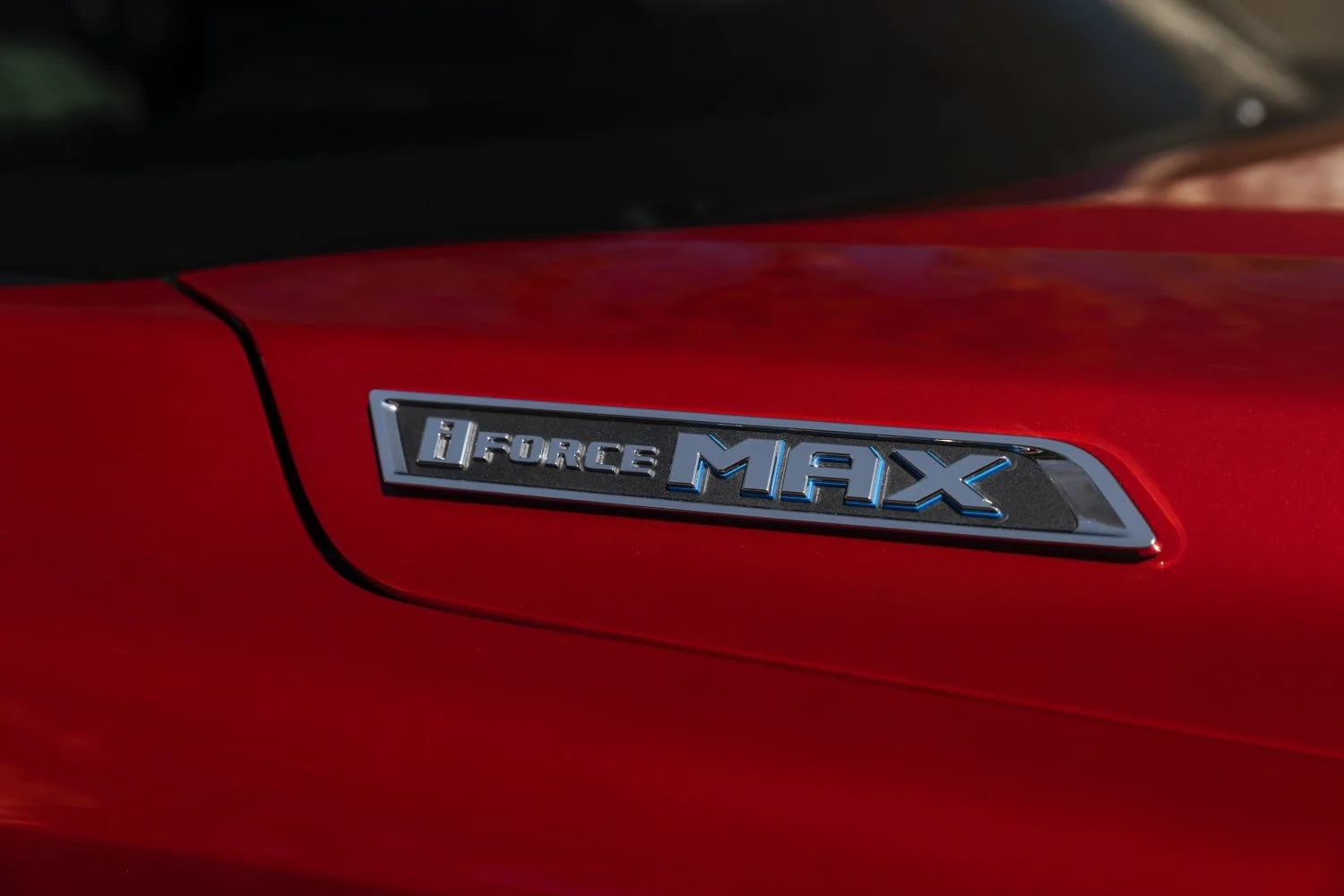
The i-FORCE MAX Hybrid V6 Is the Most Likely Powertrain
The most likely engine for the Toyota Tundra TRD Hammer is Toyota’s proven trd hammer hybrid v6 powertrain. Currently available in higher-end Tundra models, this setup combines a twin-turbocharged 3.4-liter V6 engine with an electric motor to deliver impressive performance across a wide range of driving conditions.
Toyota developed the i-FORCE MAX system to provide strong low-end torque, improved responsiveness, and enhanced towing capability. Those characteristics align perfectly with the mission of a high-performance off-road truck.
Unlike naturally aspirated engines that often require higher RPMs to access peak power, the hybrid-assisted twin-turbo V6 produces substantial torque almost immediately. This instant power delivery can be particularly beneficial when climbing steep trails, accelerating through loose terrain, or navigating technical off-road obstacles.
Because the current powertrain already exists within Toyota’s truck lineup, using the i-FORCE MAX system would allow engineers to focus resources on suspension, chassis, and durability upgrades while maintaining reliability and emissions compliance.
Expected Horsepower and Torque Numbers
While official figures remain unconfirmed, many analysts believe the Toyota Tundra TRD Hammer could receive a power increase over the standard Tundra TRD Pro.
The current i-FORCE MAX setup produces:
- 437 horsepower
- 583 lb-ft of torque
For a truck positioned above the TRD Pro, Toyota may choose to recalibrate the engine management system, improve cooling capacity, optimize turbocharger performance, or modify hybrid power delivery.
As a result, industry speculation suggests the TRD Hammer could potentially deliver:
| Specification | Estimated Output |
|---|---|
| Horsepower | 450–500+ HP |
| Torque | 600+ lb-ft |
| Transmission | 10-Speed Automatic |
| Drivetrain | Full-Time 4WD or Advanced 4WD System |
If these projections prove accurate, the TRD Hammer would become the most powerful production Toyota truck ever offered in the United States.
More importantly, the combination of hybrid torque and turbocharged power could provide exceptional acceleration both on-road and off-road, helping the truck compete against established performance truck rivals.
Suspension Upgrades Could Define the TRD Hammer
Horsepower may grab headlines, but suspension performance often determines whether an off-road truck succeeds or fails.
The Toyota Tundra TRD Hammer is expected to focus heavily on suspension development, particularly for high-speed desert driving and rough terrain. This is where Toyota has an opportunity to create meaningful separation from the standard Tundra lineup.
Many enthusiasts anticipate:
- Long-travel suspension components
- Increased wheel travel
- Upgraded control arms
- Reinforced suspension mounting points
- Improved shock absorbers
- Enhanced damping systems
- Wider track width
These modifications would allow the truck to absorb larger impacts, maintain stability over uneven terrain, and provide greater control during aggressive off-road driving.
Current Tundra TRD Pro models already utilize FOX internal bypass shocks. However, Toyota may introduce an even more advanced suspension package for the TRD Hammer, potentially featuring larger shock bodies, revised tuning, or race-inspired components designed specifically for desert performance.
The goal would be to create a truck capable of maintaining speed and control in challenging environments where standard pickups would struggle.
37-Inch Tires Could Be a Game-Changer
One of the most persistent rumors surrounding the Toyota Tundra TRD Hammer involves the possibility of factory-installed 37-inch tires.
In the performance truck segment, larger tires provide several key advantages:
- Increased ground clearance
- Improved approach angles
- Better obstacle clearance
- Enhanced traction on loose surfaces
- Greater confidence on rocky terrain
If Toyota equips the TRD Hammer with 37-inch all-terrain tires, it would immediately signal the truck’s serious off-road intentions.
Larger tires would likely require:
- Wider fender flares
- Revised suspension geometry
- Stronger axle components
- Additional chassis modifications
While these changes increase engineering complexity, they could significantly improve the truck’s capability and visual presence.
Ground Clearance and Off-Road Capability
Ground clearance plays a crucial role in off-road performance, particularly when navigating rocks, ruts, deep sand, and uneven trails.
The standard Tundra TRD Pro already offers respectable clearance, but the TRD Hammer is expected to push those numbers further. Increased ride height combined with larger tires and revised suspension components could provide substantial gains in off-road capability.
Potential improvements may include:
- Better approach angle
- Improved departure angle
- Enhanced breakover angle
- Increased water-fording capability
- Greater underbody protection
Combined with skid plates, reinforced components, and advanced traction management systems, these upgrades could make the TRD Hammer one of the most capable factory-built Toyota trucks ever produced.
Built for Baja-Inspired Performance
The Toyota Tundra TRD Hammer is widely expected to embrace a Baja-inspired philosophy similar to the approach that made the Ford Raptor famous.
Rather than focusing solely on rock crawling, the truck would likely be engineered to excel in high-speed off-road environments where suspension performance, stability, and durability become critical.
This type of driving places enormous stress on:
- Shock absorbers
- Suspension components
- Frame structures
- Cooling systems
- Drivetrain hardware
To withstand these conditions, Toyota may incorporate upgraded cooling systems, reinforced chassis components, and heavy-duty off-road engineering throughout the vehicle.
The result could be a truck capable of covering rough terrain quickly while maintaining composure and driver confidence.
What About Towing and Payload?
Performance-focused off-road trucks often sacrifice some towing and payload capacity in exchange for suspension travel and specialized hardware.
Even so, the Toyota Tundra TRD Hammer should remain highly capable compared to many competitors.
Because it is based on the Tundra platform, buyers can reasonably expect:
- Strong towing capability
- Useful payload capacity
- Trailer stability technology
- Integrated towing features
- Advanced driver assistance systems
Toyota will likely strive to maintain the practicality that full-size truck buyers expect while enhancing off-road performance.
On-Road Comfort and Daily Driving
One area where Toyota could differentiate the TRD Hammer is daily usability.
Many buyers want a truck that performs well off-road without becoming uncomfortable on pavement. Toyota’s reputation for refinement and reliability may help the TRD Hammer appeal to drivers who need a vehicle for commuting, road trips, towing, and weekend adventures.
Features likely to support daily driving include:
- Modern infotainment technology
- Premium interior materials
- Advanced safety systems
- Comfortable seating
- Quiet cabin design
- Adaptive driving modes
This balance between everyday comfort and extreme capability could become one of the truck’s strongest selling points.
Fuel Economy Expectations
Fuel economy is unlikely to be the primary focus of buyers considering the Toyota Tundra TRD Hammer. However, the use of a hybrid-assisted twin-turbo V6 could provide advantages over traditional large-displacement V8 engines.
While larger tires, increased ride height, and added off-road equipment may reduce efficiency, the hybrid powertrain should help maintain reasonable fuel economy for a truck in this category.
Ultimately, the TRD Hammer’s greatest strength may be its ability to combine modern hybrid technology, impressive horsepower, substantial torque, and advanced off-road engineering into a package designed to compete directly with the most capable performance trucks on the market.
If Toyota delivers on these expectations, the Toyota Tundra TRD Hammer could become one of the most exciting full-size off-road trucks available in the United States and a legitimate challenger to long-established segment leaders.
Toyota Tundra for sale
Expected Price and Release Date of the Toyota Tundra TRD Hammer
One of the most frequently asked questions about the Toyota Tundra TRD Hammer is how much it will cost and when it will arrive in dealerships. While Toyota has not confirmed official pricing or release timing, we can make informed predictions based on the current Tundra lineup, competitor positioning, and industry trends in the high-performance off-road truck segment.
Expected Release Date
The Toyota Tundra TRD Hammer is widely expected to arrive as either a late-cycle refresh or a next-step performance variant of the current-generation Tundra platform. Based on Toyota’s typical product development cycles and the timing of recent industry rumors, the most realistic release window appears to be between 2026 and 2027.
This timeline aligns with several strategic factors:
- The current Tundra generation is still relatively new and evolving
- Toyota continues refining its i-FORCE MAX hybrid system
- Competitors like Ford and Ram are aggressively expanding performance truck offerings
- Toyota may be preparing a mid-cycle update to strengthen its off-road lineup
If production plans are finalized, the TRD Hammer would likely be introduced as either a special performance trim or a limited-production flagship model before becoming more widely available.
Expected Price Range
Pricing for the Toyota Tundra TRD Hammer will likely place it at the top of the Tundra lineup, above the TRD Pro. To estimate its MSRP, we can look at current pricing trends in the full-size performance truck market.
Today, high-performance off-road trucks typically fall within the following range:
- Mid-tier off-road trims: $55,000 – $65,000
- Premium off-road trims: $65,000 – $75,000
- Flagship performance trucks: $75,000 – $95,000+
Given the expected upgrades—such as enhanced suspension systems, possible 37-inch tires, increased horsepower, and advanced off-road hardware—the tundra trd hammer price would likely start around:
Estimated Price Range: $72,000 – $90,000+ USD
Higher-end configurations with additional packages, luxury features, or specialized off-road equipment could push the price even further, especially if Toyota positions it as a halo performance model.
Who Should Buy the Toyota Tundra TRD Hammer?
The Toyota Tundra TRD Hammer is not designed to be an average full-size pickup truck. Instead, it is expected to be a specialized, high-performance off-road machine built for drivers who want capability, durability, and excitement in a single factory-built package.
Understanding who this truck is for is essential, especially because its expected price point, performance focus, and hardware upgrades place it in a premium category of the truck market.
1. Off-Road Enthusiasts and Desert Drivers
The primary audience for the Toyota Tundra TRD Hammer will likely be off-road enthusiasts who regularly drive in challenging terrain. This includes desert runners, trail explorers, and drivers who enjoy high-speed off-road environments.
With expected features like long-travel suspension, upgraded shocks, and possible 37-inch tires, the TRD Hammer would be well-suited for:
- Desert driving
- Sand dunes
- Rocky trails
- High-speed dirt roads
- Off-road racing-style environments
For these drivers, the TRD Hammer offers a factory-built solution that eliminates the need for aftermarket modifications.
2. Overlanding and Adventure Travelers
Another key audience includes overlanding enthusiasts and adventure travelers who prioritize self-sufficient exploration. These drivers often travel long distances into remote areas where durability, reliability, and off-road capability are essential.
The Toyota Tundra TRD Hammer is expected to combine Toyota’s proven reliability with enhanced off-road performance, making it appealing for:
- Long-distance overlanding trips
- Camping in remote locations
- Multi-day wilderness exploration
- Carrying gear and rooftop setups
Its combination of power, suspension capability, and Toyota engineering could make it a strong platform for adventure-focused builds.
3. Truck Buyers Who Want a Raptor Alternative
A significant portion of interest will come from buyers who admire trucks like the Ford F-150 Raptor but prefer Toyota’s reputation for reliability and long-term durability.
The TRD Hammer could appeal to these buyers by offering:
- Comparable or improved off-road performance
- Hybrid-assisted torque delivery
- Toyota build quality
- Strong resale value
- Lower long-term maintenance concerns
For many buyers, this combination may represent a more practical alternative to other high-performance trucks in the segment.
4. Daily Drivers Who Want Weekend Capability
Not all TRD Hammer buyers will be hardcore off-roaders. Some will be daily drivers who want a comfortable, modern pickup for commuting during the week and adventure driving on weekends.
For these users, the TRD Hammer’s expected balance of performance and comfort is especially important. Features like advanced driver assistance systems, comfortable interior design, modern infotainment technology, and hybrid efficiency benefits make it suitable for everyday use while still offering extreme capability when needed.
5. Buyers Seeking a Lifestyle Vehicle
Increasingly, trucks are not just utility vehicles—they are lifestyle statements. The Toyota Tundra TRD Hammer is expected to attract buyers who see their vehicle as part of an outdoor, adventure-oriented identity.
This includes individuals who enjoy camping, outdoor recreation, multi-day road trips, exploration, off-road photography, or travel content creation. For these buyers, the TRD Hammer represents more than transportation—it represents capability, freedom, and versatility.
Frequently Asked Questions
1. Is the Toyota Tundra TRD Hammer real?
The Toyota Tundra TRD Hammer has not been officially confirmed by Toyota as of now. However, multiple industry reports, trademark activity, and automotive speculation suggest that Toyota may be developing a high-performance off-road variant positioned above the TRD Pro.
2. What engine will the Toyota Tundra TRD Hammer use?
The most likely engine is Toyota’s i-FORCE MAX hybrid twin-turbo 3.4-liter V6. This powertrain is already used in the Tundra lineup and is expected to be tuned for higher performance and improved off-road capability.
3. How much horsepower will the TRD Hammer have?
While official figures are not available, estimates suggest the Toyota Tundra TRD Hammer could produce between 450 and 500+ horsepower, depending on final tuning and configuration.
4. Will the TRD Hammer be more capable than the Tundra TRD Pro?
Yes, the TRD Hammer is expected to sit above the TRD Pro in Toyota’s lineup, offering more aggressive off-road hardware, improved suspension, and potentially larger tires designed for desert and high-speed off-road driving.
5. Will the TRD Hammer have 37-inch tires?
There is strong speculation that the TRD Hammer could feature factory-installed 37-inch all-terrain tires, although this has not been confirmed. If included, it would significantly improve ground clearance and off-road capability.
6. When will the Toyota TRD Hammer be released?
The expected release window is between 2026 and 2027, depending on Toyota’s product development timeline and final approval of the model.
7. How much will the Toyota Tundra TRD Hammer cost?
Estimated pricing is expected to range between $72,000 and $90,000+ USD, depending on trim level, options, and final specifications.
8. Will the TRD Hammer compete with the Ford Raptor?
Yes, the Toyota Tundra TRD Hammer is widely viewed as a potential direct competitor to the Ford F-150 Raptor and other high-performance off-road trucks in the segment.
Final Thoughts!
The Toyota Tundra TRD Hammer is shaping up to be one of the most anticipated rumored additions to Toyota’s full-size truck lineup. While it has not yet been officially launched, the excitement around it reflects a broader shift in the automotive market—where buyers increasingly want factory-built performance trucks that combine off-road capability, modern technology, and everyday usability.
This is also why interest in the Toyota Tundra TRD Hammer specs, TRD Hammer horsepower, and expected Toyota TRD Hammer release date continues to grow. Enthusiasts see it as the next evolution of Toyota’s performance truck strategy—one that could finally position Toyota directly against segment leaders like the Ford F-150 Raptor and other high-performance off-road trucks.
While the TRD Hammer remains unconfirmed, the conversation around it highlights something important: demand is already here. Buyers are actively searching for more aggressive, desert-ready, factory-built trucks that go beyond traditional off-road packages.
In the meantime, many truck enthusiasts are not waiting for future releases. Across the U.S., especially in markets like California, dealerships and specialty automotive retailers are already playing a major role in shaping how Toyota trucks are experienced and customized.
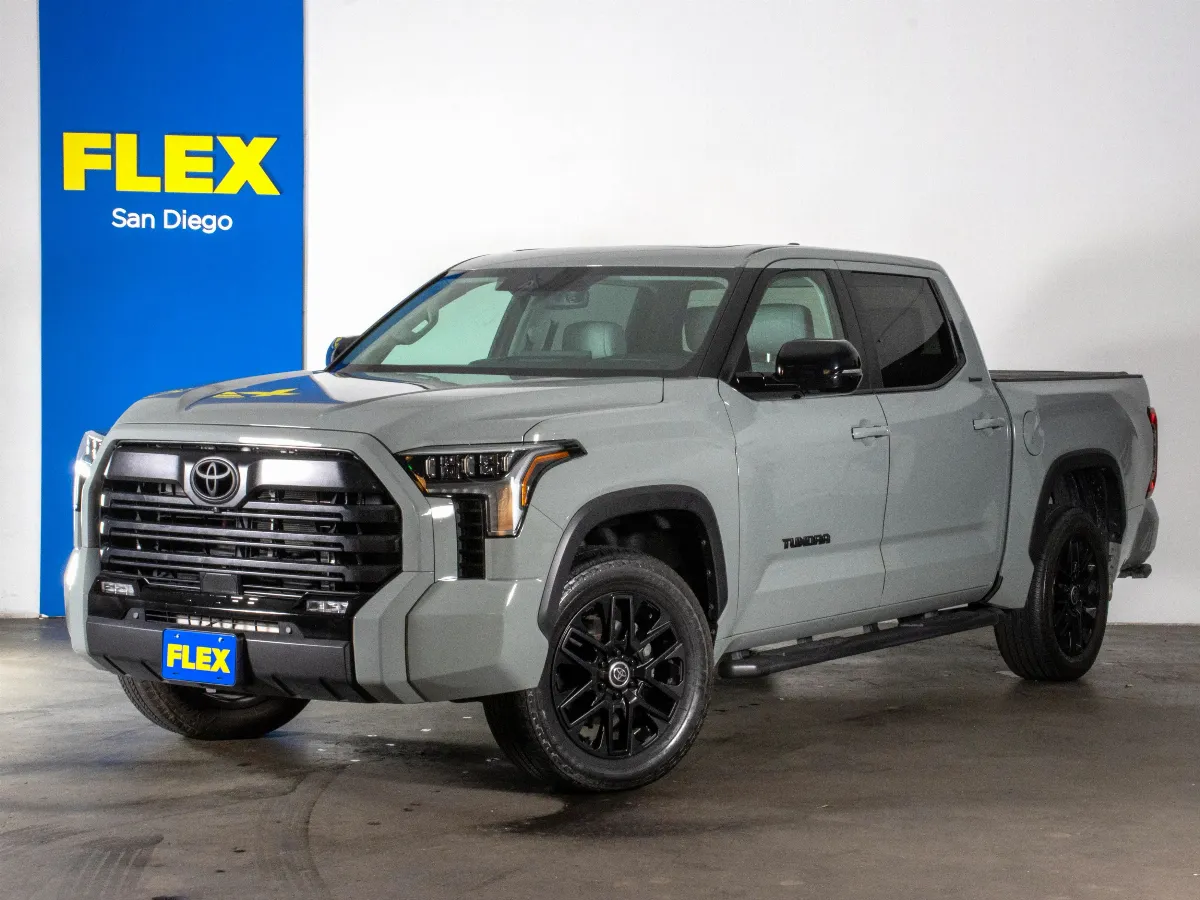
For example, performance-focused dealerships such as Flex San Diego have become known for working with Toyota trucks, including the Tundra and Tacoma platforms. Their approach often goes beyond standard dealership offerings, focusing on customized builds, lifestyle-oriented upgrades, and helping customers find the right truck for their needs.
In addition to customization work, they also support the broader truck ecosystem by buying and selling used Toyota Tundras in the San Diego market, helping enthusiasts upgrade into newer builds or more personalized configurations. With a strong and growing inventory of Toyota trucks, they have become part of the wider culture surrounding Toyota’s full-size pickup lineup.
Recently, Flex San Diego also completed its first Creator Series event, where the Toyota Tacoma took center stage as the highlight build. Events like these show how strong the demand is for Toyota-based trucks in the enthusiast community—and it naturally raises an interesting question: could the next Creator Series event feature the Toyota Tundra instead? Well, for that we’ll have to wait and see which SUV or pickup truck would be the star of the show for the next Creator Series event.
Toyota Tundra for sale
Don’t Just Look — Feel the Drive
Take your favorite model for a spin through the streets of San Diego. Feel the performance firsthand.